
Baking several cakes
You want to make more than one cake for the school fair and are comparing suitable baking trays and tins. Having several shelf positions doesn’t automatically mean that multiple baking trays are included.


If you’re baking one lemon cake for a school fair, focus on whether your cake tin will fit in the oven’s usable interior and on the available cooking settings. A compact freestanding oven could be suitable if your tin fits inside. For several cakes, you could consider a larger freestanding oven or a built-in oven that fits your kitchen unit, but the capacity in litres and the number of shelf positions don’t prove that your tins will fit at the same time or bake evenly. The Netherlands Nutrition Centre advises reducing the temperature by about 10% when converting a recipe from conventional top and bottom heat to a fan setting.
You want to make more than one cake for the school fair and are comparing suitable baking trays and tins. Having several shelf positions doesn’t automatically mean that multiple baking trays are included.
You don’t have a suitable built-in space, or you’re looking for a freestanding oven. You’ll need to consider both where the appliance will go and whether your cake tin will fit inside it.
You want to convert a recipe that uses conventional top and bottom heat to a fan setting, and are looking for clear cooking settings and an adjustable temperature.
Suitable for: a kitchen without a suitable built-in space, as long as your cake tin fits in the oven’s usable interior. The Severin TO 2058 is one example, with a 42-litre capacity, a fan setting and top and bottom heat; Severin lists four shelf positions.
Keep in mind: the capacity and shelf positions alone don’t tell you how many cake tins will fit at the same time.
Suitable for: anyone who doesn’t want a built-in oven but needs more usable space for a larger tin or to bake cakes one after another. Inventum lists a 60-litre capacity for the OV607B, along with a fan setting and top and bottom heat.
Keep in mind: Inventum lists one baking tray as included. Check whether you’ll need additional compatible trays for your plans.
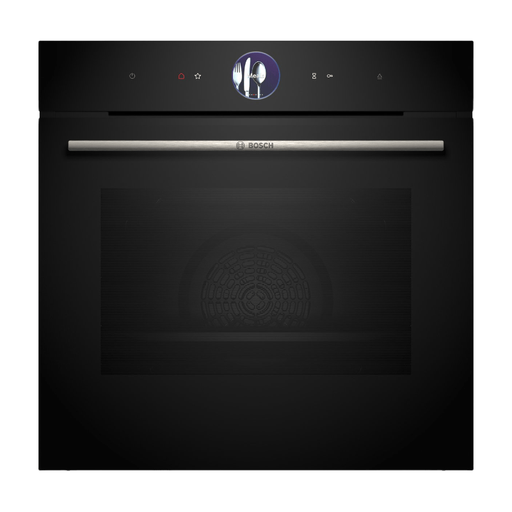
Suitable for: a kitchen with a suitable built-in space, particularly if you’ll continue using the oven after the school fair. Bosch lists a 71-litre capacity for the HBA534EB3, with top and bottom heat and 3D Hotair for up to three shelf levels.
Keep in mind: check the dimensions of the built-in space and make sure you have compatible trays and tins. The listed shelf levels don’t guarantee a good result when baking several lemon cakes.
| What matters when buying | What should you check? | Who is this for? |
|---|---|---|
| Cooking settings and temperature | Check whether the exact model has a fan setting and top and bottom heat. The Netherlands Nutrition Centre advises reducing the temperature by about 10% when switching to a fan setting; keep an eye on the cake towards the end of the baking time. | If I’m following a recipe, I want to be able to choose the right setting and know how to adjust the temperature. Around 36% of consumers rank cooking settings and temperature as their top concern when baking a cake. |
| Space for several cakes | Measure your cake tin and compare it with the oven’s usable interior dimensions. Also check how many compatible baking trays are included. | For the school fair, I want enough room and the right equipment for the number of cakes I’m making. Around 29% of consumers say capacity for several cakes is their main buying concern. |
| Positioning and size | For a built-in oven, check the required dimensions of the built-in space. For a freestanding model, compare the appliance dimensions, the usable interior and the positioning instructions. | If my kitchen has limited space, I want an oven that I can fit in and that will take my cake tin. Around 21% of consumers prioritise size and positioning. |
| Energy use and maintenance | For ovens with an applicable energy label, compare energy use per cycle using the same cooking programme. Consider cleaning features separately. | I also want to know what using and maintaining the oven will involve after the school fair. Around 14% of consumers put energy use or maintenance at the top of their list. |
An oven’s capacity doesn’t tell you whether your tin will fit. Similarly, a listing that mentions several shelf levels doesn’t confirm that the trays and tins you need can all be used at the same time.
Measure your cake tin and check the usable interior dimensions, the trays included and the guidance for your chosen cooking setting.
You may need additional compatible baking trays for several cakes, so check before choosing an oven.
Extra space isn’t necessarily useful if you usually bake one cake at a time. Milieu Centraal advises choosing an oven that’s no larger than you need and comparing energy use per use.
Choose a size that suits how you’ll use the oven after the school fair. Where available, compare energy use in kWh per cycle on the same basis.
According to the Netherlands Food and Consumer Product Safety Authority (NVWA), food sold at an event must be prepared, stored and served safely and hygienically. Buyers must also be able to get information about allergens present.
Keep a record of the ingredients you actually use and decide in advance how you’ll give buyers allergen information.
Freestanding ovens for anyone who doesn’t need a built-in model. The OV607B is one example, with a 60-litre capacity, a fan setting and top and bottom heat.
Freestanding mini ovens for baking and toasting. The TO 2058 is one example, with a 42-litre capacity and a fan setting and top and bottom heat, which can be used separately or together.
Built-in ovens for kitchens with a suitable space. The HBA534EB3 is one example, with a 71-litre capacity and a choice of cooking settings.
Built-in ovens, including the OM165ZT with turbo fan cooking and top and bottom heat.
This Joybuy selection includes built-in and freestanding ovens, so you can compare cooking settings, oven space and the room available in your kitchen. For each model, check whether the listed cooking function suits your recipe and whether the oven will take your cake tin.
 No image available
A built-in option if you have a suitable space and need room for cake tins.
The product title lists 60 cm, 70 L and 3 kW. The product description mentions fan cooking, grill and pizza functions.
 No image available
A built-in option to compare if you have a suitable space and want both a fan setting and top and bottom heat.
The product description lists a 71-litre capacity and both cooking settings. The product title gives a size of 60 × 60 cm; check the required dimensions of the built-in space.
 No image available
A freestanding option if you don’t want a built-in oven and your cake tin fits in the usable interior.
The product title lists a 35-litre capacity and a four-level baking rack. The number of levels doesn’t prove that several cake tins will fit at the same time.
 No image available
A built-in option if you have a suitable space and want an oven with a fan setting for baking cakes.
The product title lists a 71-litre capacity, 3D HotAir and an A+ energy rating. The description mentions baking on up to three levels; check that your tins and trays will fit.
 No image available
A freestanding option if you want to be able to choose top and bottom heat; check whether your recipe needs a fan setting.
The product description lists top heat, bottom heat and a combination of both, an adjustable temperature up to 250 °C, a baking tray and a rack.
If a recipe uses conventional top and bottom heat, the Netherlands Nutrition Centre advises reducing the temperature by about 10% for a fan setting. Check the cake towards the end of the stated baking time; this is a guideline, not a guarantee of an exact cooking time.
According to the Netherlands Food and Consumer Product Safety Authority (NVWA), a food safety plan and registration are required if you sell food several times a year. If you sell food once a year, registration isn’t required under the NVWA’s step-by-step guidance. Even for a one-off sale, you must prepare, store and serve food safely and hygienically.
According to the Netherlands Food and Consumer Product Safety Authority (NVWA), you must provide information about the allergens in the cake. For unpackaged cake, you can give this information in writing or verbally. If you provide it verbally, make it clear that buyers can ask you for it. Base the information on the ingredients you actually use.
No, the rules on oven energy labels don’t apply to every type of oven. The European Commission lists small and portable ovens as outside the scope of these rules. For ovens with an applicable label, compare energy use per cycle using the same programme; the absence of a label doesn’t automatically mean a poor energy rating.
Contact the retailer. According to the Dutch government, there’s no fixed statutory guarantee period in the Netherlands: what you can expect from a product depends on the circumstances. A manufacturer’s guarantee is an extra benefit and doesn’t replace your statutory rights.