
Cooking with one large oven dish
Your main priority is making sure your largest dish will fit. The Consumentenbond recommends checking the internal dimensions rather than relying on the capacity in litres alone.


Compare your largest dish, including its handles, with the usable internal dimensions before choosing an oven: the capacity in litres alone won’t tell you whether it will fit. If you regularly cook with several dishes, check the fan setting and usable shelf positions. Choose between a built-in and a freestanding oven based on the available housing or space. The NVWA states that electrical products covered by the applicable regulations must carry a CE marking. For prepared dishes, safe chilling and reheating until piping hot are also important, according to the Voedingscentrum.
Your main priority is making sure your largest dish will fit. The Consumentenbond recommends checking the internal dimensions rather than relying on the capacity in litres alone.
You want to cook several portions at once, so check the fan setting and usable shelf positions specified for the exact model. The manufacturer’s specifications don’t guarantee that every arrangement of full dishes will cook in the same way.
You’re looking for a freestanding oven and have a sturdy spot with enough space for ventilation. Inventum explains the placement requirements in the OV607B manual.
Start by checking the size of your dish. Then decide whether you want to cook with one or several dishes at once, and see which type of oven will suit your kitchen.
| What to consider | What should you check? | Who is this important for? |
|---|---|---|
| Room for your largest oven dish | Measure the dish, including its handles, and compare it with the internal dimensions and the space taken up by the shelves. | I want to make sure my largest dish fits first; around 31% of consumers make dish fit their top purchase priority. |
| Cooking with several dishes at once | Check the fan setting, usable shelf positions, dish dimensions and guidance for the exact model. | If I want to cook several dishes at once, I want to know what arrangement the model specifies; around 25% of consumers prioritise cooking several dishes at the same time. |
| Positioning in the kitchen | For a built-in oven, measure the housing according to the installation diagram. For a freestanding model, check the placement and ventilation instructions. | If I don’t have a suitable housing, I need to check whether there’s room for a freestanding oven; around 19% of consumers make kitchen placement their top priority. |
| Energy use over time | Where possible, compare the stated energy use per cooking session on a like-for-like basis; don’t choose based solely on capacity or the energy label. | For everyday meals, I don’t want to choose a size I’ll rarely need; around 13% of consumers make energy use over time their top priority. |
| Preparing ahead and reheating | Plan how you’ll chill and reheat the food, taking the quantity into account, and make sure you can handle the dishes safely. | If I prepare the casserole ahead of time, I want to be able to store and reheat it safely; around 12% of consumers make this their top priority. |
The usable internal space may be smaller than the stated capacity, so a large dish might not fit after all.
Measure the dish, including its handles, and compare its dimensions with the internal space of the exact model.
The Consumentenbond points out that a combination microwave may not have bottom heat or different shelf heights.
Check the oven functions, shelf positions and space for your dish in the specifications for the exact model.
A large casserole needs plenty of room, but afterwards you may mainly use the oven for smaller dishes. Milieu Centraal recommends considering the size and energy use per cooking session, not just the energy label.
Choose a size that fits the dishes you need, and compare energy-use figures on a like-for-like basis for the way you expect to use it.
The OV607B is a freestanding fan oven for anyone who doesn’t want a built-in model.
The HBA3140B4 is a built-in oven to compare if you’re considering cooking on several shelf levels.
The NBU5P401LB is a built-in alternative to consider if you want to factor in pyrolytic cleaning.
The HB457G0B3F is a built-in model with a 3D fan setting listed by Siemens.
This selection includes freestanding ovens, built-in ovens and a built-in oven with a microwave function. Check the space for your dish and the cooking setting you need for each model.
 No image available
A worktop model to compare if you’re looking for a fan oven.
The product name lists a capacity of 35 L, a four-level rack, a thermometer and an LED display.
 No image available
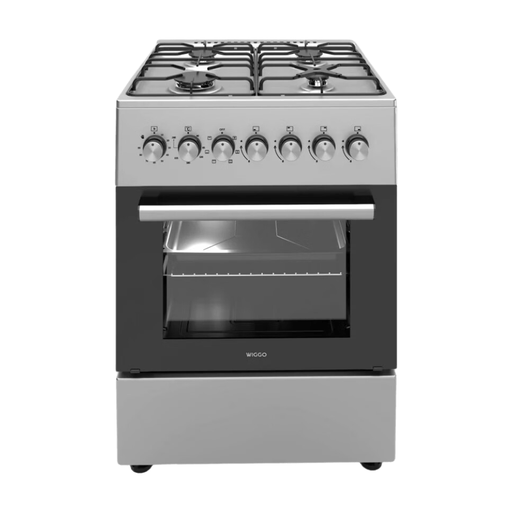
A freestanding gas oven to compare if you’re not looking for a built-in model.
The product information lists a capacity of 66 L. It also states that the gas connection must be fitted by a qualified technician and that the kitchen must be well ventilated.
 No image available
A freestanding model to compare if you’re considering a 65 L oven.
The product name lists a turbo fan and a power rating of 2000 W.
 No image available
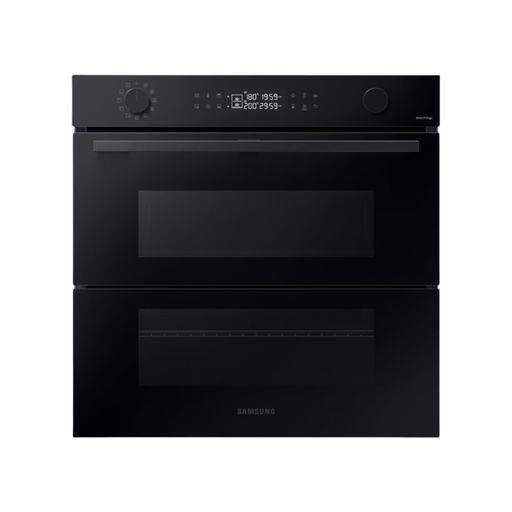
A built-in model to compare if you want to take the stated Dual Cook feature into account.
The product information lists independently operating upper and lower zones, as well as pyrolytic cleaning. Check the manual to see which arrangements are suitable for your dishes.
 No image available
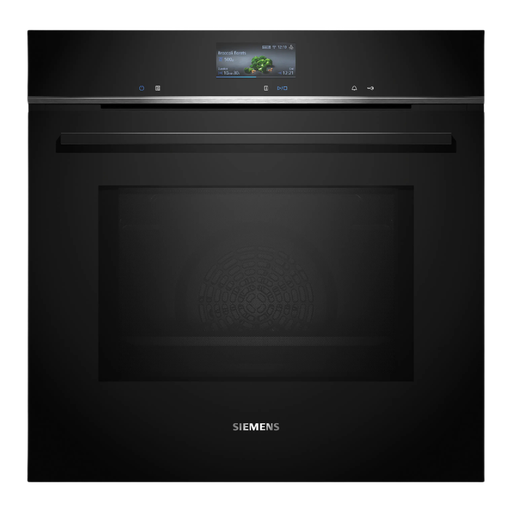
A built-in oven with a microwave function to compare if you’re looking for both features.
The product name lists 4D HotAir; the product information also mentions a microwave function.
Measure the dish, including its handles, and compare it with the usable internal dimensions, not just the capacity in litres. Shelves and other parts may take up space.
It depends on the dimensions and the guidance for the exact model. Bosch and Siemens list fan cooking on up to three shelf positions for the models discussed here; that doesn’t guarantee that every combination of full dishes will cook in the same way.
Follow the manual for the exact model. For the OV607B, Inventum specifies a sturdy, level surface and enough space around the oven for ventilation.
The Voedingscentrum advises cooling leftovers within two hours and storing them in a sealed container in the fridge at 4 °C. Eat chilled leftovers within two days. When reheating, heat them until piping hot throughout, and don’t reheat food again after it has already been reheated.
The NVWA states that electrical products covered by the applicable regulations must carry a CE marking. Check the marking and safety information for the appliance you’re considering.