
Baker preparing large batches for a sale
You want to bake lots of fruit turnovers within the time available for preparation, so you’re comparing the number of trays, shelf positions and how evenly the oven bakes.


If you’re baking lots of fruit turnovers in a short time, focus on the usable baking tray space, the number of supported shelf positions and the trays included. Capacity in litres alone won’t tell you how many turnovers will fit at once. A spacious built-in oven with multi-level fan cooking could work if you have a suitable housing unit, while a freestanding or more compact model may suit smaller batches or a limited kitchen space. Test your recipe and tray layout before the sale, and plan hygienic preparation and storage separately, in line with the Netherlands Food and Consumer Product Safety Authority’s requirements.
You want to bake lots of fruit turnovers within the time available for preparation, so you’re comparing the number of trays, shelf positions and how evenly the oven bakes.
You’re choosing between an oven that fits a built-in housing unit and a worktop model. Both the external dimensions and the usable interior space matter.
You want to bake puff pastry in successive batches, so you’re looking at the fan setting and how it performs with your baking tray.
A good fit if: you want to use several trays per batch and have a suitable built-in housing unit.
Keep in mind: the number of supported shelf positions doesn’t guarantee that fruit turnovers will bake the same on every level.
A good fit if: you don’t want a built-in oven but need space for larger batches.
Keep in mind: the capacity in litres doesn’t show how many fruit turnovers will fit on the tray supplied.
A good fit if: you bake small batches and worktop space matters more than the quantity you can bake at once.
Keep in mind: a sale may mean baking more separate batches, so check the usable tray size.
| What to consider | What to look for | Who it matters more to |
|---|---|---|
| Output per batch | Measure your turnovers and the usable baking tray; compare the number of trays supplied with the supported shelf positions. | If I want to bake lots of turnovers within the time available for preparation, I focus on the usable space per batch. Around 33% of consumers prioritise output per batch. |
| Consistent baking results | Check the fan setting, temperature range and shelf positions; test your recipe with the planned tray layout. | When I bake puff pastry in several batches, I want to be able to check and repeat my recipe. Around 25% of consumers prioritise consistent baking results. |
| Suitable placement | Compare the housing unit dimensions or external dimensions, as well as the interior space for the baking tray you want to use. | If my kitchen has limited space, the oven needs to fit on the worktop or in the available housing unit, even if that means smaller batches. Around 25% of consumers choose primarily based on placement and size. |
| Care and service | Check the accessories, cleaning instructions and warranty terms for the exact model. | After the sale, I want the oven to be easy to care for and to know what support is available. Around 17% of consumers prioritise care and service over capacity per batch. |
The usable space may be smaller than the stated capacity, and an oven with several shelf positions doesn’t necessarily come with the same number of baking trays.
Measure your turnovers and compare the interior and tray dimensions. Also check which accessories are included with the exact model.
A smaller usable tray may mean extra batches. You may also need to buy suitable additional trays to use several levels.
A recipe for one tray doesn’t prove that filled puff pastry treats will bake evenly on several levels. An Albert Heijn Allerhande recipe using two trays says to swap them over halfway through.
Before the sale, try a batch using your own recipe and the tray layout you plan to use.
Allow time for a test batch and to check during baking whether the trays need swapping.
A larger oven doesn’t remove the need to plan for hygienic preparation, storage and selling.
Check which trays are included, and plan preparation, storage and allergen information separately.
Your plans may also need to include suitable baking trays and an appropriate approach to safe storage.
The ETNA OM316MZ is a built-in option if you want to use several shelf positions. ETNA lists a capacity of 77 litres and five shelf positions for this model.
For the HBF011BA2 built-in oven, Bosch specifies 3D fan cooking on up to three shelf levels and a capacity of 66 litres.
According to Inventum, the freestanding Inventum OV607B has a net capacity of 60 litres, a fan setting, and conventional top and bottom heat.
The freestanding Severin TO 2068 is a compact option with a fan setting and, according to Severin, a capacity of around 20 litres.
These ovens are designed for fan cooking, with options for several shelf positions and for smaller batches. Check that the dimensions suit your kitchen and baking plans.
 No image available
Worth considering if you want to use a fan setting and need several shelf positions.
The product name lists a capacity of 35L and a four-level baking rack.
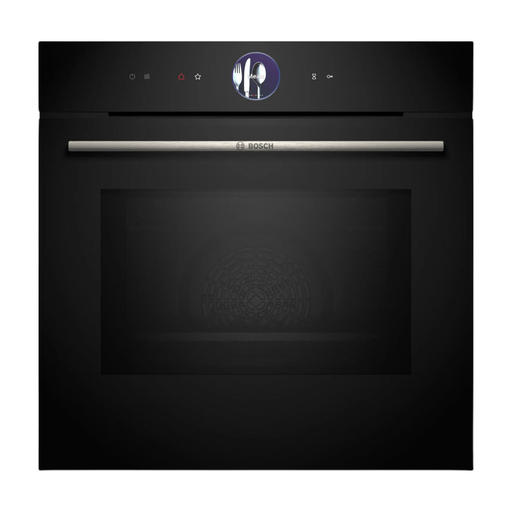 No image available
A built-in option to consider if you want to use several shelf positions. Check that your available housing unit is suitable.
The product name lists 71L and 3D fan cooking.
 No image available
A built-in option to consider if you want to use 3D fan cooking. Measure the housing unit and check the tray size for your turnovers.
The product name lists 71L and 3D fan cooking.
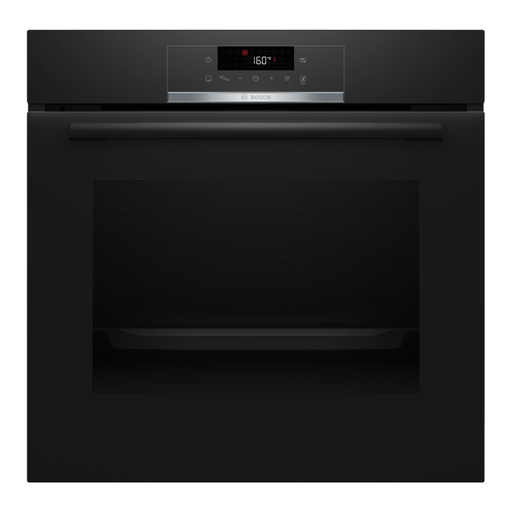 No image available
A built-in option to consider if you’re looking for an oven with Air Fry and steam functions. Check that the housing unit is suitable.
The product name lists 71 L, Air Fry, steam cooking and pyrolytic cleaning.
 No image available
A freestanding option to consider for smaller batches. Check that the usable baking tray is large enough for your fruit turnovers.
The product name lists baking, toasting and grilling functions, and a power rating of 1200W.
Follow the recipe you’re actually making and test the settings in your own oven first. Koopmans recommends 210 °C on the fan setting, with the tray in the middle of the oven, for its apple turnover recipe. For a different recipe, Albert Heijn Allerhande describes using two trays and swapping them over halfway through. These instructions won’t necessarily apply to a different filling, oven or tray layout.
According to the Netherlands Food and Consumer Product Safety Authority, anyone who prepares and sells food several times a year must have an HACCP food safety plan. Whether your sale meets this condition depends on how often you sell. Safe and hygienic preparation, storage and selling are still essential.
The Netherlands Food and Consumer Product Safety Authority says allergen information for pre-packed products must be included on the label. For non-prepacked products, information can be provided in writing or verbally, before purchase, subject to certain conditions. Check the ingredients in the pastry, glaze and filling for your sale; don’t assume all apple turnovers contain the same allergens.
No. According to ACM ConsuWijzer, consumers may have a legal guarantee in addition to the manufacturer’s warranty; Dutch law doesn’t set a fixed duration for this. What you can expect from an oven depends on factors including the product, its price and normal use. The retailer is your point of contact.
For an opened apple turnover, Voedingscentrum’s consumer advice is to keep it in the fridge for three days or in the freezer for three months. If you’re selling them, also consider the ingredients, preparation and rules for safe storage. This general storage advice doesn’t replace a food safety plan if one is required for your activity.