What should you look for when choosing?
First, measure your baking dish and the space available. Then compare the cooking modes and the practical differences between free-standing and built-in ovens.
| What to consider |
What to look for when buying |
Who is this important for? |
| Baking results and adjustments |
Check that the oven has a fan setting and conventional top-and-bottom heat. Adjust the setting to suit the recipe and oven. |
When I bake a cobbler for lunch, I want the fruit filling to cook through without the top getting too dark. Around 36% of consumers say baking results are their main priority for this type of cooking. |
| Baking dish and portions |
Measure the dish and compare its external dimensions with the usable interior space, including racks or trays. |
For a lunch with friends, I want to fit my chosen dish in the oven in one go. Around 28% of consumers prioritise space for their dish and portions. |
| Where it will go in the kitchen |
For a built-in oven, check the housing dimensions and connection; for a free-standing model, check its external dimensions and installation instructions. |
If I don’t have a suitable built-in housing, the oven needs to fit the space available. If I do have a housing, I want to make sure the model will fit it. Around 22% of consumers say their kitchen space is the main factor in their choice. |
| Energy use and cleaning |
Where available, compare the energy use per cycle and check what cleaning method the model offers. |
If I use the oven regularly, I want to know how much energy each baking cycle uses and how much cleaning it involves. Around 14% of consumers focus mainly on energy use and maintenance. |
Joybuy products
This selection focuses on built-in ovens for kitchens with a suitably sized housing. Before buying, check both the housing dimensions and the size of your baking dish.
 No image available
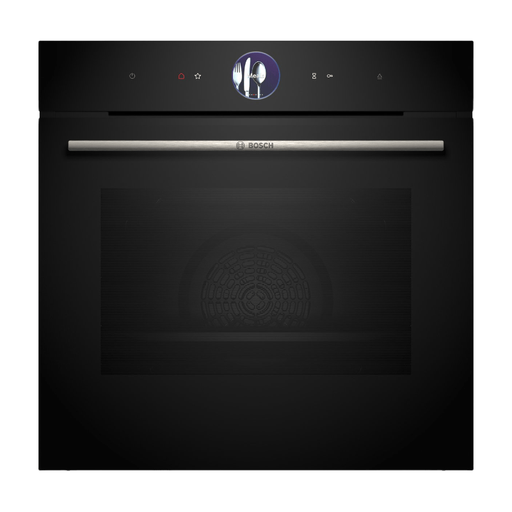
Bosch HSG7364B1 Series 8 built-in steam oven, 60 cm
An option if you’re looking for a built-in oven with fan cooking and conventional top-and-bottom heat. Check that your housing and dish will fit.
The product description lists 21 heating methods and hydrolytic cleaning assistance.
View at Joybuy
 No image available
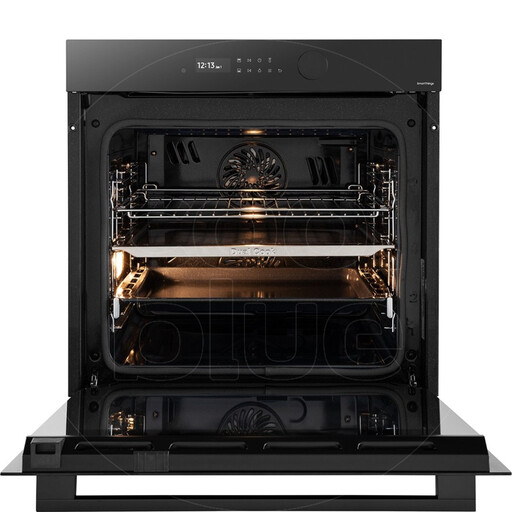
Samsung NV7B5655SCK/U1 built-in oven, 76 l, Dual Cook
A good fit if you’re looking for a built-in oven with Dual Cook and an AirFry function. Check the housing dimensions and that the oven space is suitable for your dish.
The product name lists a 76 l capacity and pyrolytic cleaning; the product description mentions two oven compartments for cooking at the same time.
View at Joybuy
 No image available
Bosch HBF133BR0 built-in oven, 66 l
An option if you want a built-in oven with 3D fan cooking and conventional top-and-bottom heat. Measure the housing and baking dish first.
The product name lists 5 cooking programmes, ecoClean and rapid preheating.
View at Joybuy
 No image available
Bosch HBA534BB3 Series 4 built-in oven, 60 cm, 71 l, 3D HotAir
An option for a suitably sized built-in housing if you want to be able to choose 3D fan cooking and conventional top-and-bottom heat.
The product name lists a 71 l capacity, EcoClean Direct and energy rating A+; the product description mentions a telescopic rail.
View at Joybuy
 No image available
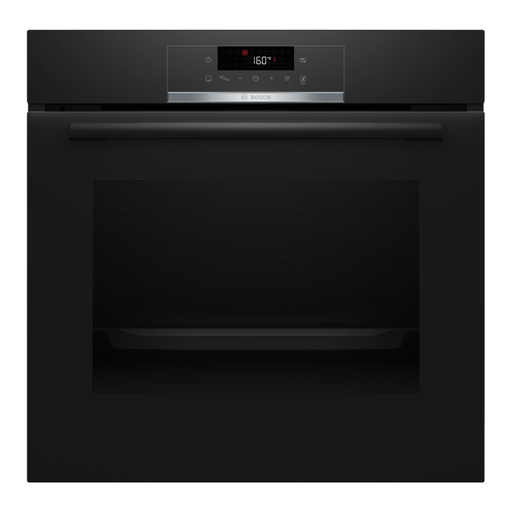
Bosch HQG572EB3 built-in oven, 71 l
An option if you want steam assistance as well as fan cooking and conventional top-and-bottom heat. Check the housing dimensions and the space for your dish.
The product name lists a 71 l capacity, Air Fry and pyrolytic cleaning.
View at Joybuy
Frequently asked questions
Should I use the same temperature for a fan-oven cobbler as a recipe gives for a conventional oven?
Not without adjusting it. The Netherlands Nutrition Centre recommends setting a fan oven around 10% lower. Use the recipe and your oven manual as a starting point, and check the result as it bakes. The Netherlands Nutrition Centre’s apple crumble recipe gives 200 °C and 15 minutes for that specific dish, not as a universal setting for cobbler.
Is the oven’s stated capacity enough to tell me whether my baking dish will fit?
No. The Consumers’ Association recommends checking the internal dimensions, as the usable space may be smaller than the stated capacity. Measure your dish and compare it with the oven’s interior.
What should you do with leftover cobbler after lunch?
Let the dish cool, then cover it and put it in the fridge within 2 hours. The Netherlands Nutrition Centre recommends keeping leftovers there for no more than 2 days. Bear in mind that ingredients which spoil more quickly, and the information on ingredient labels, may affect this.
Are you automatically entitled to exactly two years’ statutory warranty on an oven in the Netherlands?
No. According to the Government of the Netherlands, there is no fixed statutory warranty period in the Netherlands. You’re entitled to a product that works as it should; a manufacturer’s warranty is additional cover.
Do you need to be able to connect a built-in oven yourself?
Not simply because it’s a built-in oven. Before buying, check the installation instructions, housing dimensions and connection requirements for the exact model, and make sure it’s installed in line with those instructions. The available information doesn’t support a general requirement in the Netherlands to use an installer.


