Choose an oven that fits your tart tin and has settings suited to your recipe. As well as a fan setting, conventional top and bottom heat gives you another option for delicate bakes. For a built-in oven, measure the housing too. If you usually bake small portions, compare the oven space you need and the electricity used per bake, as Milieu Centraal recommends. An oven won’t keep a custard filling chilled after baking, so make separate arrangements for storing and transporting it in line with the advice for your filling.
Who is this buying guide for?
Baker of delicate tarts
Looking for a baking setting to suit the recipe as well as a fan setting, and mindful of a moist filling making the base soggy. Heel Holland Bakt explains that blind baking can help with some pastry bases and fillings; it depends on the recipe.
Baker with limited kitchen space
Weighing up the worktop space needed against the available built-in housing, and keen to make sure the tart tin will fit in the oven. The Consumentenbond recommends checking the internal dimensions and the largest baking tin you use.
Baker making treats for a lunchbox
Wanting to bake a small portion and needing to consider how to keep a perishable filling chilled. The Voedingscentrum offers advice on safe chilling and storage.
What should you look for when choosing?
Freestanding fan oven
Choose this if: you don’t have suitable built-in housing and are looking for a freestanding oven.
Bear in mind: the worktop space it needs; the capacity in litres doesn’t tell you whether your tart tin will fit.
Built-in fan oven
Choose this if: you have suitable housing and the oven settings match your baking recipe.
Bear in mind: both the installation dimensions and the usable internal space for your baking tin.
Combination oven or microwave combination oven
Choose this if: you need a microwave function as well as an oven for baking.
Bear in mind: oven functions vary by model, so check the settings and the space available for your tart tin.
| What to consider |
What should you check? |
Who is this important for? |
| Baking setting and tart base |
Check the individual settings and follow the recipe for the baking setting and, if needed, blind baking. |
If I’m baking a delicate tart with a moist filling, I want to choose a setting that suits my recipe. Around 33% of consumers prioritise suitable baking settings and checking the base. |
| Space for the tin and oven |
Measure the tart tin and the usable internal space; for a built-in oven, measure the housing too. |
If my kitchen has limited space, both the oven and the tart tin need to fit. Around 27% of consumers prioritise the right location and tin size. |
| Energy use for small portions |
Compare suitable oven sizes and, where available, the electricity used per bake. |
If I usually bake a small portion, I don’t want to choose a larger oven without comparing it with my needs. Around 20% of consumers prioritise energy-efficient baking. |
| Taking a perishable filling with you |
Follow the storage advice for the filling you’re using and check whether it can be kept chilled until it’s time to eat. |
For a tart in my lunchbox, I also need to be able to keep it chilled after baking. Around 20% of consumers prioritise taking food with them safely chilled. |
Common pitfalls
-
Choosing based only on capacity in litres
The usable internal space may be smaller than the stated capacity, so a particular tart tin might not fit.
Measure the tin and oven space before buying; if you’re considering a built-in model, check the housing too.
If the tin or housing doesn’t fit, you may need a different tin or appliance.
-
Assuming the fan setting is the only suitable one for tarts
Air circulation can dry out delicate bakes more quickly. The right setting depends on the recipe.
Check whether the model also has separate top and bottom heat settings if your recipe calls for them.
-
Confusing oven choice with safe storage
An oven bakes a tart, but it won’t keep the filling chilled afterwards. The right storage advice depends on the filling you’ve used.
Follow the storage advice for your filling and check whether it can be kept chilled until it’s time to eat.
If suitable refrigeration isn’t available while you’re travelling, you may need a separate cooling solution.
Brands to compare
Inventum
The freestanding OV457B is listed as having a 45-litre capacity, a fan setting and top and bottom heat.
- The listed settings give you options for different recipes.
- The capacity in litres doesn’t tell you whether your tart tin will fit; the specifications don’t show an independent baking test for custard tart.
Bosch
The HBG578EB7 built-in oven is listed as having 3D Hotair and top and bottom heat.
- Bosch states that the 3D Hotair setting can be used on up to three shelf levels.
- This is a feature claim from the manufacturer, not an independent custard tart test; also check the housing and usable internal space.
AEG
The OU5AB2W0CK built-in oven is listed as having conventional top and bottom heat, multi-level fan cooking and a net oven capacity of 65 litres.
- The manufacturer also lists a bottom heat setting.
- Check the installation dimensions and whether your baking tin will fit in the oven; the specifications don’t give an independent assessment of the baking results.
Siemens
The HB278GEB7F built-in oven is listed as having 3D Hotair, top and bottom heat and a capacity of 71 litres.
- You can compare the listed settings with the needs of your recipe.
- Check the housing height and usable internal space for your tart tin before choosing a model.
Ovens for baking tarts
This selection includes freestanding and built-in ovens with listed features for baking tarts; check whether the tin and the baking settings you need are suitable for each model.
 No image available
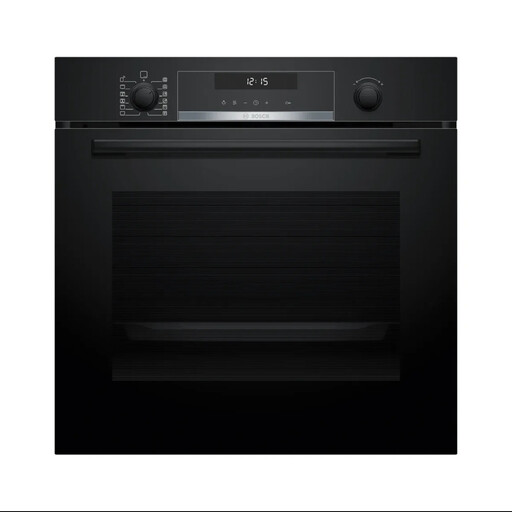
Bosch HBG578EB7
A built-in model to compare if you want both a fan setting and top and bottom heat.
The product description lists a capacity of 71 litres and 3D Hotair for up to three shelf levels. Check that the housing and internal space suit your kitchen and tart tin.
View at Joybuy
 No image available
Rommelsbacher BGS 1400
A freestanding mini oven to compare if you want top and bottom heat as well as a fan setting.
The description lists a capacity of 22 litres and baking tins up to 25 cm in diameter. Check the size of your own tin.
View at Joybuy
 No image available
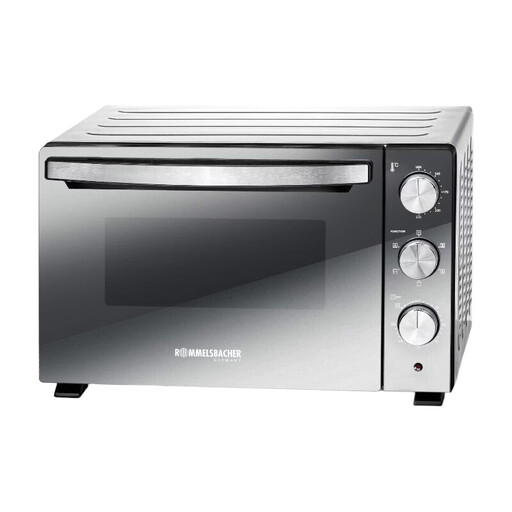
Rommelsbacher BGS 1500
A freestanding model to compare if you want to choose between a fan setting and top and bottom heat to suit your recipe.
The product description lists a net capacity of 30 litres and a maximum temperature of 250 °C. Manual cleaning is also mentioned.
View at Joybuy
 No image available
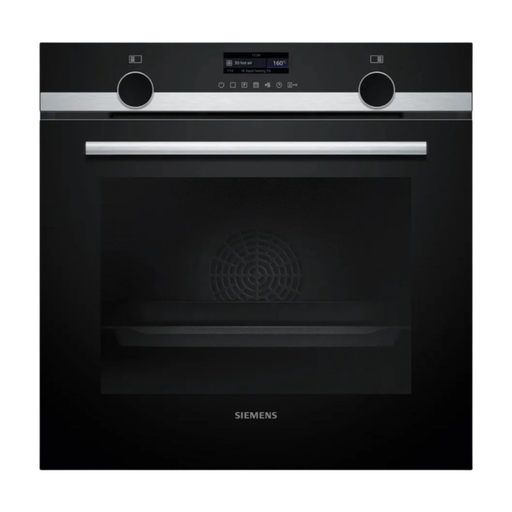
Siemens iQ500 HB579GBR3
A built-in oven to compare if you want a fan setting and top and bottom heat.
The product description lists a capacity of 71 litres and a temperature range of 30–275 °C. Check that the housing and internal space suit your kitchen and baking tin.
View at Joybuy
 No image available
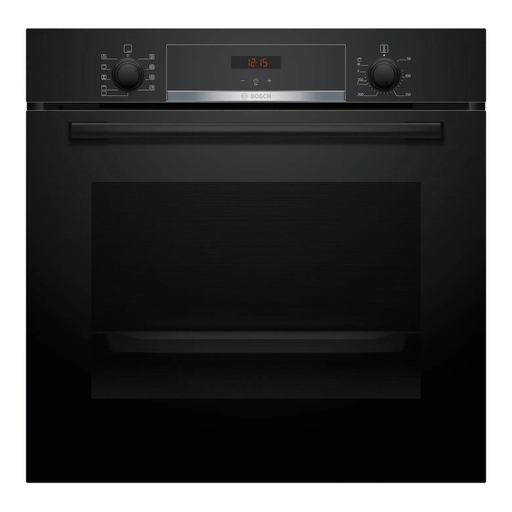
Bosch Serie 4 HBA534EB3
A built-in oven with a convection function to compare if you’re looking for a setting that circulates hot air.
The product description lists a capacity of 71 litres, seven cooking programmes and a maximum temperature of 275 °C. Check the housing and the space available for your tart tin.
View at Joybuy
Frequently asked questions
Do I always need to use the fan setting for a custard tart?
No, follow the baking setting in your recipe. An oven with both a fan setting and top and bottom heat gives you the choice between circulating heat and a setting without a fan. Check how the exact model operates these functions.
When should I blind bake the tart base?
It depends on the pastry and the filling. Heel Holland Bakt mentions blind baking for shortcrust pastry cases for tartelettes, among other things, and for bases that might stay soggy under a wet filling. Follow the method in your specific recipe.
How can I check whether a built-in oven will fit?
Compare the exact model’s installation dimensions with your housing, then measure to check whether the tart tin will fit in the usable oven space. The capacity in litres alone isn’t enough.
Can I take a tart with a perishable custard filling to lunch without keeping it chilled?
Don’t assume that it’s safe to do so. The Voedingscentrum recommends setting your fridge to 4 °C and not leaving food that spoils quickly out of the fridge for more than 2 hours. Check the storage advice for your filling and whether it can be kept chilled until it’s time to eat; advice for plain pastry cream doesn’t automatically give you the storage time for a whole tart.
Does a two-year manufacturer’s guarantee mean my rights end after that?
No. According to the Rijksoverheid, the Netherlands has no fixed statutory guarantee period. If a product is faulty, the retailer is your point of contact; what you’re entitled to expect depends, among other things, on the product and normal use.


