
Bakers short on worktop space
You’re looking for a freestanding oven that fits on your worktop without making your small kitchen difficult to use. Check the exterior dimensions and the clearance required in the installation instructions.


First, choose an oven with an interior that fits your tart tin, and exterior dimensions and clearance that work in your kitchen. The capacity in litres alone won’t tell you whether your tin will fit. For a custard tart, it’s useful to check whether the oven offers conventional top and bottom heat as well as fan-assisted cooking, so you can follow the setting specified in your recipe. If your filling contains raw egg, follow the recipe and cook the dish thoroughly, as advised by the Voedingscentrum.
You’re looking for a freestanding oven that fits on your worktop without making your small kitchen difficult to use. Check the exterior dimensions and the clearance required in the installation instructions.
You want to know in advance whether your existing tin will fit inside the oven. Capacity in litres doesn’t tell you the usable width, depth or height.
You want to follow the setting specified in your recipe, so you may be looking for both fan-assisted cooking and conventional top and bottom heat. Check which functions are actually listed for the full model number.
Best for: a kitchen with space available on the worktop and a tart tin that fits inside the oven with a little room to spare.
Bear in mind: a compact exterior can mean limited interior space; check the installation instructions too.
Best for: a larger tart tin, provided you have enough worktop space in your kitchen.
Bear in mind: more interior space can mean larger exterior dimensions; measure the space before you choose.
Best for: a kitchen with a suitable housing unit, or one that’s being refitted.
Bear in mind: the housing unit, connection and installation must be suitable for the model; a built-in oven isn’t a freestanding countertop model.
| What matters when buying? | What should you check? | Who is this important for? |
|---|---|---|
| Will the tart tin fit? | Measure the tin and compare it with the interior dimensions; also check the clearance at the shelf position you plan to use. | I want to be able to put my regular tin in and take it out easily, even when it’s full. Around 31% of consumers say the fit of their tin is their main concern when buying. |
| Will the oven fit in my kitchen? | Measure the exterior dimensions and the space needed for the oven door; follow the model’s installation instructions. | With limited worktop space, I want to know in advance where the oven can go or whether I need a built-in housing unit. For around 31% of consumers, the space available is the main consideration. |
| Can I adjust the heat? | Check separately whether the model offers fan-assisted cooking and conventional top and bottom heat; use the setting specified in your recipe. | I want to be able to choose a setting that suits the recipe for the pastry base and filling. Around 23% of consumers give their choice of oven settings top priority. |
| Is the oven practical to use? | Compare the timer duration with the recipe’s cooking time and check which parts can be removed. | Once I’ve found the right size and settings, I focus on the controls, cleaning and aftercare. For around 15% of consumers, ease of use and aftercare are their main concerns when buying. |
Capacity in litres won’t tell you whether a specific tart tin will fit. Inventum lists separate interior dimensions for the OV207B and OV307B, which differ between the models.
Measure the outside of your tin and compare it with the listed interior dimensions. Also check the available height at the shelf position you want to use.
Severin doesn’t list a fan function for the TO 2052, even though a Joybuy product title describes it as a ‘fan oven’. The capacity and power details on that product page also differ from Severin’s specifications.
Before buying, check the full model number and heating settings in the manufacturer’s specifications.
A compact built-in oven must be suitable for your kitchen housing unit and installation. The Consumentenbond recommends checking the housing unit and connection.
Choose this option only after checking the housing unit dimensions, the manual and the connection required.
Bear in mind that you may need a suitable housing unit or additional installation work.
According to ACM ConsuWijzer, your statutory guarantee is separate from any guarantee offered by the manufacturer or retailer.
Keep your proof of purchase and contact the retailer if something goes wrong.
These brands offer models with different interior dimensions, exterior sizes and heating settings. The specifications listed come from the manufacturers and aren’t based on independent baking tests.
The freestanding OV207B and OV307B are worth comparing if both the interior dimensions and the space available in your kitchen matter.
The freestanding TO 2068 is an oven with a capacity of around 20 litres, offering fan-assisted cooking and conventional top and bottom heat.
The freestanding 112754 is a 45-litre oven for anyone considering a larger tin and with enough worktop space.
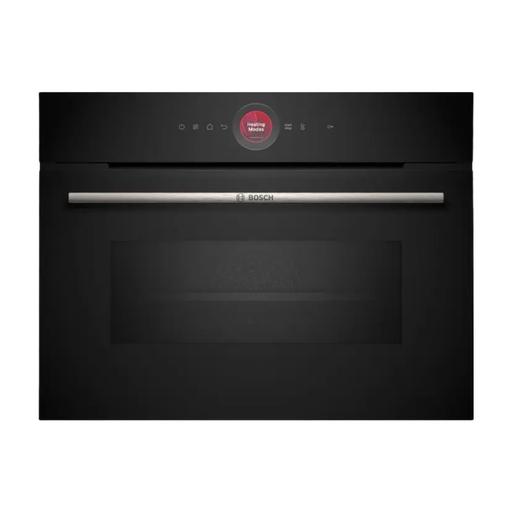
The CBG7341B1 is a compact built-in oven for a kitchen with a suitable housing unit, not a freestanding countertop model.
This selection includes freestanding models with baking or fan-assisted functions, as well as a built-in combination oven. Choose based on the space available, your tart tin and the oven settings you need.
 No image available
Suitable for a kitchen with a suitable housing unit, and for anyone who wants to use both convection and conventional top and bottom heat.
45 litres; specified housing unit dimensions 45,5 × 56 × 55 cm. The product name also lists a microwave power of 900 W.
This is a built-in model; check the housing unit and installation requirements.
 No image available
A freestanding model to consider if you have room on your worktop and want to use different heating settings.
45 litres and 2000 W; the product description lists convection and conventional top and bottom heat.
 No image available
Suitable for anyone looking for a freestanding model to use with a tart tin up to 25 cm.
22 litres; the product description lists five heating settings, including conventional top and bottom heat and settings combined with fan-assisted cooking. It’s designed to be placed on a flat, heat-resistant surface.
 No image available
A small freestanding model to consider if your baking tray or tin is no larger than 20 cm.
10 litres; adjustable from 80–230 °C. The product description lists conventional top and bottom heat and exterior dimensions of 23 × 38,5 × 27 cm.
 No image available
A freestanding model with a baking function and air circulation, worth comparing if you’re looking for these features.
30 litres; the product description lists a temperature range of 30–230 °C and exterior dimensions of 456 × 430 × 365 mm.
Follow the oven setting specified in your recipe; the words ‘fan oven’ alone don’t tell you which other settings are available. The Consumentenbond lists conventional top and bottom heat as a setting for dishes including cakes, so check whether the specific model has this function.
Only do so if the model’s manual allows the setup you have in mind. Measure the oven and the space available, and check the room needed for the door and the specified installation requirements.
The Voedingscentrum advises cooking dishes containing raw egg thoroughly. Follow the recipe; choosing a particular oven model won’t, by itself, guarantee a safe result.
According to ACM ConsuWijzer, statutory guarantee is separate from any manufacturer’s guarantee; contact the retailer if something goes wrong. For a standard online product purchase, you’ll generally have a statutory cooling-off period of up to 14 days after delivery, subject to exceptions you can check before buying.
Yes. The Netherlands Food and Consumer Product Safety Authority classifies kitchen equipment as electrical appliances subject to statutory safety requirements. According to the NVWA’s guidance, CE marking is compulsory for electrical products; it isn’t an independent baking test or a safety test of a specific model.