
Bakers with a favourite clafoutis dish
You’ll want to check first that your ovenproof dish will fit in the oven. For example, an Albert Heijn Allerhande recipe uses a dish with a diameter of 24 cm; this isn’t a required size for every recipe.


First, measure your clafoutis dish and check that the oven will fit in your shared kitchen, with the recommended clearance for heat to escape. The capacity in litres doesn’t tell you whether your dish will fit. Choose a model with a fan function confirmed for that exact model, and check whether conventional top and bottom heat is available if you’d like to use that setting too. CE marking is compulsory for electric ovens sold in the Netherlands, so check the marking on the specific appliance being offered, as advised by the Netherlands Food and Consumer Product Safety Authority.
You’ll want to check first that your ovenproof dish will fit in the oven. For example, an Albert Heijn Allerhande recipe uses a dish with a diameter of 24 cm; this isn’t a required size for every recipe.
You need an oven that fits on the shared worktop while leaving enough room for heat to escape. Brandweer Nederland (the Netherlands Fire Service) stresses that heat from appliances must be able to escape.
You want to be able to choose between fan and conventional top and bottom heat, without assuming that the fan setting is always right for baking. Koopmans often recommends an electric oven setting for baked goods, if that option is available.
Start by checking that your own dish will fit and that you have a safe place to position the oven. Then compare the oven settings and cleaning requirements.
| What to consider | What should you check? | Who is this important for? |
|---|---|---|
| Will my dish fit? | Measure your dish, including the handles, and compare it with the usable internal dimensions and the rack. The Consumentenbond recommends checking the internal dimensions; an Albert Heijn Allerhande recipe specifies a dish measuring Ø 24 cm. | I want to use my own clafoutis dish, so I check its size before choosing an oven. For consumers mainly looking for an oven that will fit their dish, this is the first thing to consider; around 36% say it’s their top priority. |
| Can I position the oven safely? | Measure the worktop space and follow the clearance specified in the model’s manual. Brandweer Nederland points out that heat from an oven must be able to escape. | In a shared kitchen, I want to know whether the oven can sit in a permanent spot with enough space around it. Around 29% of consumers put a safe, suitable position first. |
| Which oven setting? | Check that the exact model has a fan function and whether you can also select conventional top and bottom heat. Follow the setting and temperature in your recipe; Koopmans often recommends an electric oven setting for baked goods, if available. | If I want to choose the right setting for my batter, I check which heating settings the oven actually has. For around 21% of consumers, this is their main buying consideration. |
| Cleaning and size | Check which parts can be removed and how the manual says they should be cleaned. Choose a capacity that suits your dish and how you plan to use the oven; Milieu Centraal recommends choosing an oven of a suitable size. | When sharing an oven, I want to be able to clear up crumbs and spilled batter easily, without choosing an unnecessarily large appliance. Around 14% of consumers put ease of maintenance and a suitable size first. |
The capacity in litres doesn’t tell you whether your dish will fit on the rack. The Consumentenbond recommends checking the internal dimensions.
Measure your dish, including the handles, and compare its dimensions with the usable internal space of the complete model.
Severin doesn’t list a fan function for the TO 2052, while a Joybuy listing describes the model as a fan oven. This discrepancy applies to this specific model.
Check the function with the manufacturer, using the full model number. Don’t treat the TO 2052 as a confirmed fan oven.
The appliance may fit on the worktop, but there might not be enough clearance for heat to escape. Brandweer Nederland recommends allowing heat from appliances to escape.
Add the model-specific clearance to the external dimensions, then check that the space and power connection are suitable.
The wattage stated isn’t a measure of the energy used during a complete baking session. Milieu Centraal recommends choosing a suitable size and comparing energy use per cooking session on a like-for-like basis.
Choose extra capacity only if your dish or how you plan to use the oven calls for it. Compare energy-use figures only when they’re based on the same measurements.
Tristar describes the OV-3652 as a freestanding 20 L convection oven for baking, grilling and toasting.
Inventum describes the OV307B as a freestanding 30 L oven and the OV457B as a 45 L model. According to the manufacturer, both have a fan function and conventional top and bottom heat.
Princess describes the 112751 Hetelucht Oven DeLuxe as a freestanding 32 L model with convection settings.
Severin describes the TO 2058 as a freestanding 42 L baking and toasting oven with a fan function, and also provides its external dimensions.
Tefal describes the Optimo OF484811 as a 39 L oven with a fan function, conventional settings and a baking setting.
These Joybuy products include freestanding and built-in ovens, as well as a gas cooker with an oven. A fan function hasn’t been confirmed for every model, so check the exact model version, the fit and the CE marking on the appliance being offered before you decide.
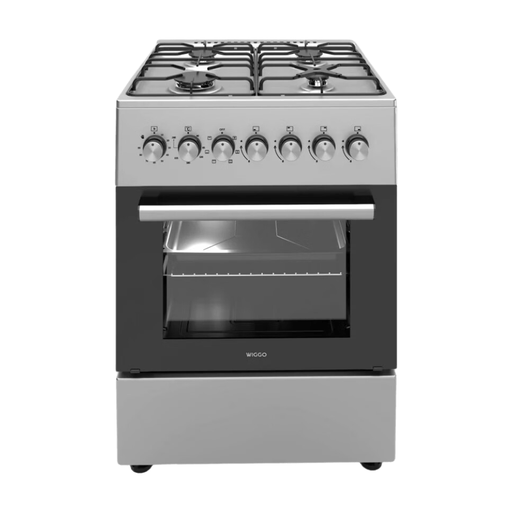 No image available
This is a freestanding gas cooker with an oven. Consider it for clafoutis only if the oven function and the installation requirements are suitable for your circumstances.
The product description lists an oven capacity of 66 L and a grill function. The appliance must be installed and connected to the gas supply by a qualified professional.
 No image available
This freestanding oven is suitable for making clafoutis only if the fan function is confirmed for this exact model and your dish will fit.
The product description lists baking, grilling and toasting, six cooking functions, a 90-minute timer and four rack positions.
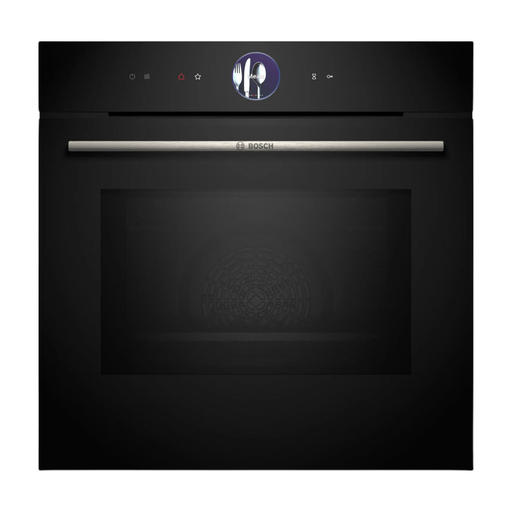 No image available
This built-in model is an option only if your shared kitchen has a suitable built-in space and your dish will fit.
The product description lists 4D fan cooking and 20 heating settings. Check the required built-in dimensions and the settings on the exact model.
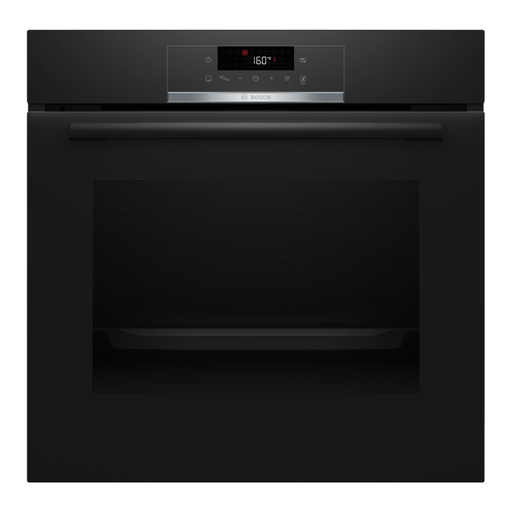 No image available
This built-in oven is only suitable if your shared kitchen has a suitable built-in space. Check that your dish will fit too.
The product description lists 3D fan cooking, conventional top and bottom heat, and telescopic rails.
 No image available
This freestanding mini oven has convection and a hob. It could suit you if you need both functions and have a suitable space and connections.
According to the product description, you can set convection and conventional top and bottom heat separately or together.
Not necessarily; follow the settings in the recipe you’re using. The 24Kitchen blueberry clafoutis recipe specifies 170 °C but doesn’t mention an oven setting in the text consulted, while another Albert Heijn Allerhande recipe specifies a dish measuring Ø 24 cm and a temperature of 190 °C. Don’t automatically use these temperatures as fan settings. Koopmans often recommends an electric oven setting for baked goods if you have a choice. Check that the clafoutis is cooked through as it bakes.
Put the oven on a suitable, level surface and leave the clearance specified in the manual for that model. Brandweer Nederland recommends allowing heat from ovens to escape and, where possible, plugging high-powered appliances directly into a socket rather than using a cable reel or extension lead. Agree with your housemates to keep the ventilation openings and hot oven door clear.
Let the appliance cool down safely and follow the manual for the exact model. Inventum says the OV457B can be cleaned with a soft, damp cloth and lists some supplied parts as dishwasher-safe. Don’t apply these instructions to other models without checking first.
No. According to the Dutch government, the Netherlands has no fixed statutory warranty period: you’re entitled to a product that works properly, and the retailer is your point of contact if something is wrong. A manufacturer’s warranty or an extended warranty comes on top of those statutory rights.
Yes. The Netherlands Food and Consumer Product Safety Authority states that CE marking is compulsory for electrical products sold in the Netherlands. Check the marking on the specific appliance being offered; CE marking doesn’t indicate how well an oven will bake a clafoutis.