
Baking one cake for a school event
You mainly want to check that your cake tin fits and that the oven has the setting specified in your recipe.


If you’re baking one cake, choose an oven that fits your tin and offers the setting specified in your recipe. Fan mode isn’t automatically right for every cake. If you bake regularly or need several cakes, pay particular attention to the usable space and number of shelf positions. A compact freestanding oven takes up less worktop space, but may limit the size of your tin and the number of batches you can bake.
You mainly want to check that your cake tin fits and that the oven has the setting specified in your recipe.
You want to compare the usable baking space and shelf positions so you can plan batches for the sale.
You need to consider the space available and decide whether a freestanding model, a built-in oven or an appliance with a microwave function suits the way you’ll use it.
First, check that the oven has the setting specified in your recipe and that your cake tin fits. Then work out how much baking space you need and where the oven will go. Heel Holland Bakt explains the difference between fan and conventional heat, while the Consumentenbond recommends checking the internal dimensions.
| What to consider | What to look for when buying | Who this matters to |
|---|---|---|
| Setting for the base and filling | Check whether the exact model offers both fan and conventional heat as the settings you need. Follow the setting specified in your recipe. | If I want to bake the base and filling according to my recipe, I’ll prioritise the right oven setting. Around 36% of consumers say this is their main reason for buying. |
| Tin size and quantity | Measure your cake tin and compare it with the usable interior space and rack. If you’re using several tins, check the shelf positions too. | If I’m planning several cakes for the sale, I want to know how many tins will fit and how many batches I’ll need to bake. Around 29% of consumers put baking space and capacity first. |
| Space and installation | For a built-in oven, check the dimensions of the housing unit. For a freestanding model, measure the space available and follow the installation instructions. | If the space in my kitchen determines my choice, I want to know in advance where the oven can be safely placed or built in. Around 21% of consumers say installation is their top priority. |
| Extra features and aftercare | Only consider a microwave function if you’ll use it too. Check separately that the oven settings and layout suit your cake. | If I also want to use the oven for reheating, I’ll weigh up that extra feature against its baking options and how I’ll use it after buying. Around 14% of consumers give versatility and aftercare top priority. |
The stated capacity won’t tell you on its own whether your cake tin will fit on the rack. If the interior is too small, you may be limited in your choice of tin or need to bake extra batches.
Measure your largest tin and compare its dimensions with the usable interior space and rack.
Fan and conventional heat distribute heat differently. And not every appliance with an oven function offers the settings your recipe calls for.
Check the features of the exact model and follow the setting specified in your recipe.
A suitable oven doesn’t replace careful preparation, storage and sale of your cake. The NVWA states that food at events must be prepared, stored and sold safely and hygienically.
Choose storage and transport methods that suit the ingredients. If you’re offering the cake unpackaged to consumers, make sure information about the allergens it contains is available, as required by the NVWA.
Inventum makes freestanding ovens. The OV457B is a model with a stated capacity of 45 litres.
Severin makes compact freestanding ovens. According to the product specifications, the TO 2068 has a capacity of 20 litres.
Bosch offers built-in ovens. The HBA534BS3 is one example, with conventional heat and 3D fan cooking.
This selection includes built-in ovens and a convection oven with several shelf positions, as well as a built-in model with a microwave function.
 No image available
A good option if you’re looking for a built-in oven with fan circulation and several shelf positions. Check that it fits your housing unit.
The product name lists 60 cm and 70 litres. The product description mentions fan circulation and baking on several levels.
 No image available
A good option if you’re considering a convection oven with several rack positions. Compare the oven space with the size of your cake tin.
The product name lists a capacity of 35 litres and a four-level rack. The product description mentions hot air circulation.
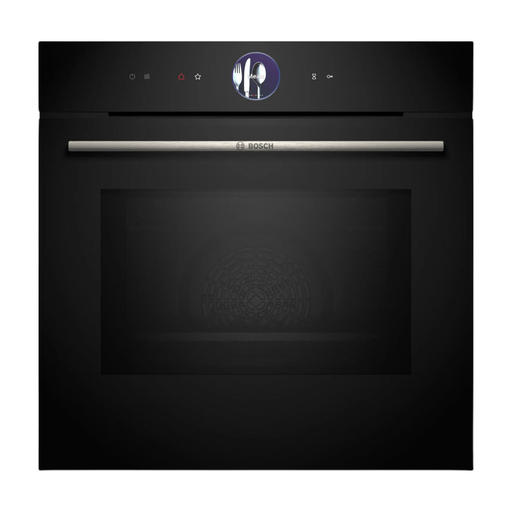 No image available
A good option if you’re looking for a built-in oven with a microwave function. Check that its oven settings suit the setting specified in your recipe.
The product description lists a microwave function alongside oven settings. Check the dimensions for the exact model’s housing unit before buying.
 No image available
A good option if you’re looking for a freestanding model with fan and conventional heat. Measure the space available and your cake tin.
The product name lists a capacity of 45 litres. The product description mentions separate top heat, bottom heat and convection. Place the oven on a stable, heat-resistant surface and keep the ventilation openings clear.
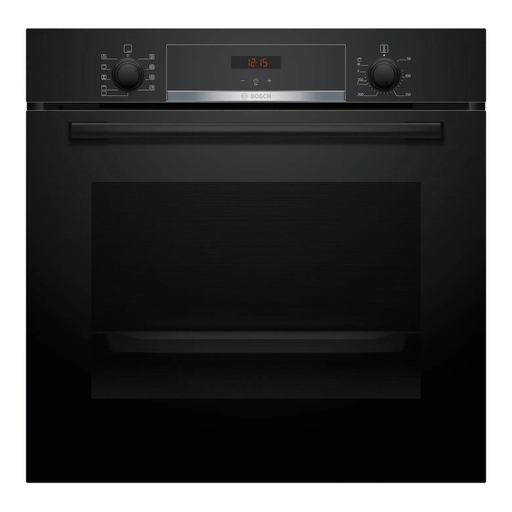 No image available
A good option if you’re considering a built-in oven with convection cooking. Check the housing unit dimensions and the settings needed for your recipe.
The product description mentions convection cooking and seven cooking programmes. The product name lists a capacity of 71 litres.
No. Follow the setting in your recipe: fan and conventional heat distribute heat differently. Heel Holland Bakt recommends reducing the set temperature by 20% when adapting a recipe from conventional to fan cooking. Check the result, as ovens can vary.
Compare the dimensions of your tin with the usable interior measurements and the space on the rack. The stated capacity in litres alone isn’t enough to tell you.
Store the cake according to the guidance that applies to its ingredients. The Voedingscentrum recommends keeping opened chocolate cake in the fridge. The NVWA emphasises that food for sale at an event must be stored according to the relevant guidance and kept chilled where necessary. Make sure the way you transport and display the cake is suitable.
Tell buyers about the allergens in your cake before they buy it. The NVWA lists, among others, cereals containing gluten, egg, milk, soya, peanuts and nuts. The relevant allergens depend on your ingredients and any cross-contamination.