Who should consider this choice?

A family cooking a full tray

You want to cook chicken and vegetables at the same time, so you’ll need to check that your baking tray actually fits in the oven. The Consumentenbond advises comparing the internal dimensions with those of your largest roasting tin.

A cook without a built-in space

You’re looking for a freestanding fan oven for family meals and want to check in advance that there’s room for both the appliance and the baking tray. Inventum lists a baking tray as included with the OV457B; measure it to see if it’s suitable for your dish.

A regular oven roaster

You roast regularly and are weighing up easy cleaning against the preparation and maintenance involved with extra features. AEG Support explains that, before pyrolytic cleaning, accessories and removable rails must be taken out of the oven.

What should you look for when buying?

What to consider What to look for when buying Who is this important for?
Will the baking tray fit? Measure your largest tray or roasting tin and compare it with the internal dimensions. The Consumentenbond also recommends considering the usable capacity. I want to roast chicken and vegetables together on one tray and need to know it will really fit; around 29% of consumers put tray space first.
Roasting and doneness Check that the oven has a fan setting. Use a meat thermometer to check the chicken; the Voedingscentrum recommends a minimum of 75 °C for meat and chicken. When roasting chicken, I want to be able to choose the right oven setting and check that it’s cooked through; around 23% of consumers prioritise roasting results.
Positioning and connection For a built-in oven, measure the housing space and check the model-specific electrical connection. According to the Consumentenbond, some ovens may require a special plug and connection. I want to know in advance whether the oven will fit in my kitchen and can be connected; around 18% of consumers give positioning top priority.
Cleaning after roasting Check which cleaning function the model has and which accessories need to be removed before pyrolytic cleaning, as stated in the manual. After roasting regularly, I want to know how much cleaning will still be needed; around 18% of consumers put ease of maintenance first.
Energy use and additional costs For ovens covered by EU rules, compare the energy use per cycle for the same cooking setting. Also check for any installation costs and what the service includes. I want to weigh up the purchase price against the running costs; around 12% of consumers say cost is their main concern when buying.

Common pitfalls

  • Comparing only the stated capacity in litres

    The usable internal space and shape of the oven also affect whether your baking tray or roasting tin will fit. A high capacity doesn’t guarantee a good fit.

    Measure your tray and compare it with the internal dimensions and the size of any included accessories. You may need a different baking tray.

  • Assuming a browned chicken is cooked through

    The colour of the skin doesn’t tell you whether the chicken is hot enough in the middle. The Voedingscentrum advises cooking chicken thoroughly and recommends a minimum of 75 °C for meat and chicken.

    Use a meat thermometer to check the thickest part, taking care not to touch the bone.

  • Assuming ‘self-cleaning’ means no maintenance

    For the AEG pyrolytic cleaning described, accessories and removable rails must be taken out of the oven first. Once the programme has finished, you need to wait for the oven to cool and wipe away the residue.

    Check the manual for your exact model for preparation instructions and how to clean it afterwards.

  • Checking the installation only after ordering

    An oven may not be suitable if the housing space or electrical connection doesn’t match the model specifications. The Consumentenbond says some ovens may need a special plug and connection.

    Measure in advance, read the installation details and ask for installation advice if you’re unsure.

Brands and models to consider

Bosch

The HBA514BS3 built-in model combines several oven settings with a cleaning aid.

  • Bosch lists a 71-litre capacity and a hydrolytic cleaning system for this model.
  • Bosch’s description of its heat distribution is a manufacturer’s claim, not an independent comparison. Check that the included tray will fit.

AEG

The BPK742380B combines fan cooking with pyrolytic cleaning and telescopic rails.

  • The Consumentenbond lists 65.3 litres of usable capacity, pyrolytic cleaning and telescopic rails for this model.
  • These features don’t indicate how all AEG ovens perform. Pyrolytic cleaning requires preparation and a separate cleaning cycle.

Electrolux

The KOFGH40BK is a built-in fan oven to consider if extra cleaning features aren’t a priority.

  • The Consumentenbond lists 56.1 litres of usable capacity for this model.
  • According to the Consumentenbond, this model has no self-cleaning function or telescopic rails. Check the internal dimensions against your baking tray.

Inventum

The OV457B is a freestanding fan oven for kitchens without a suitable built-in space.

  • Inventum lists a net capacity of 45 litres and an included baking tray.
  • This doesn’t prove that the tray is suitable for every family-sized portion. Measure the tray and check the space available for the appliance.

Siemens

According to Siemens, the HB457G0B3F comes with several accessories and telescopic rails.

  • Siemens lists a 71-litre capacity, telescopic rails and a universal roasting tray for this model.
  • Siemens’ claim about even heat distribution is not an independent comparison. Check that the accessories are suitable for your baking tray and how you plan to use the oven.

Joybuy products

This selection includes built-in ovens and a built-in steam oven to compare for use with a family-sized baking tray.

Comfee built-in oven, 60 cm

Comfee built-in oven, 60 cm, 70 l

Compare the internal dimensions with your family-sized baking tray before choosing.

The product title lists a 70 l capacity, 3 kW, Rotating Heat, a grill, a pizza function, AquaClean steam cleaning and a timer.

View at Joybuy
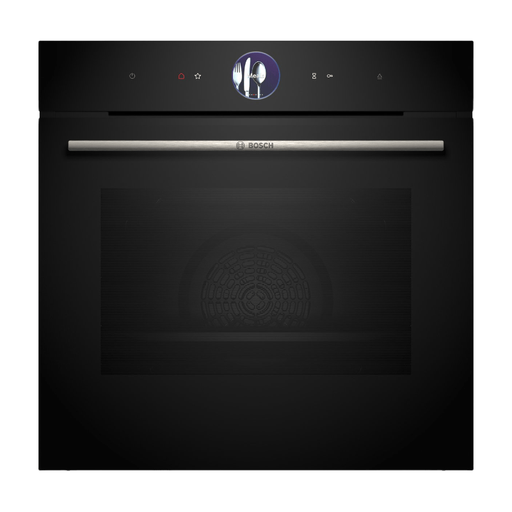
Bosch HSG7364B1 Series 8 built-in steam oven

Bosch HSG7364B1 Series 8 built-in steam oven, 60 × 60 cm

An option to consider if you’re looking at a built-in steam oven; check that the cooking settings on the exact model are suitable for your chicken dish.

The product title lists a size of 60 × 60 cm and an Air Fry function.

View at Joybuy
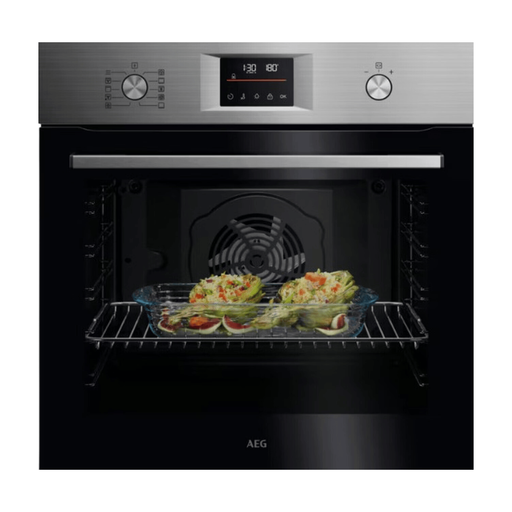
AEG OU5PB40SM built-in oven

AEG OU5PB40SM built-in oven, 72 l

An option to compare if you want an oven with pyrolytic cleaning after regular roasting; follow the model-specific cleaning instructions.

The product title lists a 72 l capacity, pyrolytic cleaning, 45 cooking programmes and an A++ energy rating.

View at Joybuy
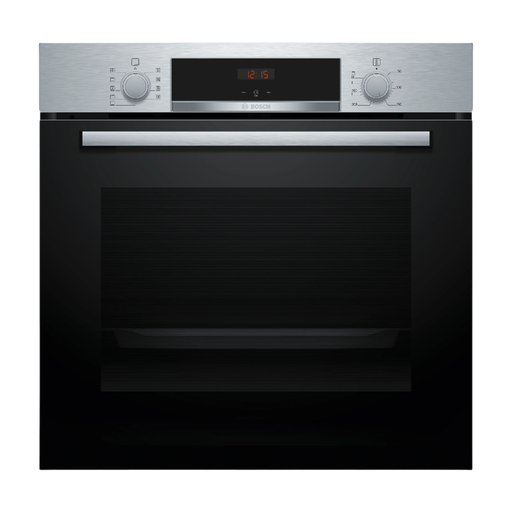
Bosch HBA514BS3 built-in oven

Bosch HBA514BS3 built-in oven, 71 l

Compare the internal dimensions with your baking tray and check which cleaning function is available on the exact model.

The product title lists a 71 l capacity, hydrolytic cleaning, Turbo Hot Air and a maximum temperature of 275 °C.

View at Joybuy

Bosch HBA534BB3 Series 4 built-in oven

Bosch HBA534BB3 Series 4 built-in oven, 71 l

Compare the stated oven dimensions and features with your baking tray and how you plan to use the oven.

The product title lists a 71 l capacity, 3D HotAir, EcoClean Direct and an A+ energy rating.

View at Joybuy

Frequently asked questions

Is an oven with a capacity of around 65 litres big enough for our baking tray?

That also depends on the internal dimensions and the size of your baking tray. The Consumentenbond says around 65 litres of usable space is enough for most households, but recommends comparing your largest roasting tin with the internal dimensions.

Which oven setting should I use for chicken and vegetables on a baking tray?

The fan setting uses a fan to circulate heat around the oven. A grill provides more direct heat and can help brown the food; follow your oven’s manual for rack positions and settings.

How can I check that chicken is cooked through?

Use a meat thermometer to check the internal temperature of the meat, without touching a bone. The Voedingscentrum advises cooking chicken thoroughly and recommends a minimum of 75 °C for meat and chicken; the colour of the skin alone doesn’t prove that the chicken is cooked through.

Can I simply connect a built-in oven to my existing power supply?

Don’t assume so: check the housing space and electrical connection for the exact model. According to the Consumentenbond, some ovens may require a special plug and connection. Ask for installation advice if you’re unsure.

What does the energy use on an oven label tell me?

For ovens covered by EU energy labelling rules, the label shows the energy use per cycle for conventional cooking and, where available, for fan cooking. The European Commission describes this as a standardised figure, not the measured energy use for your chicken dish. The rules have exceptions, including small ovens and appliances with microwave heating.
