Who is this choice relevant to?

Host baking lots of scones

You want to bake several batches ready for the same mealtime. Compare the usable baking tray space and the shelf levels specified by the manufacturer for each model; these specifications don’t guarantee how many scones will fit. Bosch and AEG list these model-specific capabilities.

Home baker who follows recipes closely

You want to be able to select the oven setting specified in your cheese scone recipe, or make a considered adjustment. Recipes from Laura’s Bakery and Arla specify different settings and temperatures, so follow the instructions for the recipe you’re using.

Baker with limited kitchen space

You’re looking for a freestanding oven and can bake in several batches if needed. The usable baking tray and a suitable position with room for heat to escape are important; the Fire Service highlights the need for heat to escape from ovens and built-in appliances.

What should you look for when choosing?

What to consider What to look for Who should prioritise this?
Baking several portions at once Measure the shaped scones on the baking tray and check how many trays are included and which shelf levels are supported. If I want to serve the scones all at once, I need to know how many will actually fit on the tray. Around 36% of consumers prioritise the number of portions they can serve at one time.
Oven setting for your recipe Check whether the model has both a fan setting and conventional top-and-bottom heat, and whether its temperature range suits your recipe. If I want to follow a recipe step by step, I need to be able to use the specified oven setting. Around 29% of consumers give the right setting for their recipe top priority.
Size and positioning Measure the kitchen unit or the available space for a freestanding model, and follow the installation instructions for heat clearance. If my kitchen has limited space or an existing built-in unit, the oven needs to fit. Around 21% of consumers let the space available in their kitchen determine their choice.
Use and maintenance Where available, compare energy consumption per use and check the cleaning method and warranty terms. If I mainly bake small batches, I want the oven’s size and use to suit my routine, and I need to know how to clean it. Around 14% of consumers prioritise use, maintenance or after-sales service.

Common buying mistakes

  • Assuming the oven’s capacity in litres tells you how many scones you can bake at once

    An oven’s capacity doesn’t tell you how many shaped scones will fit on the baking tray. Even a model that supports several shelf levels may come with fewer trays than you need for your baking plans.

    Measure the tray and the scones, leaving space between them, and check how many trays are included before planning how many batches to bake.

    A smaller usable baking tray may mean more batches; you may need to buy extra trays to use multiple shelf levels.

  • Using a recipe temperature for conventional heat unchanged with the fan setting

    The cheese scone recipes reviewed specify different oven settings and temperatures. They aren’t necessarily interchangeable.

    Follow the setting in your recipe. Only adapt a conventional recipe for a fan oven if you’re doing so deliberately; Laura’s Bakery offers general guidance on making this adjustment.

  • Comparing energy labels for built-in and mini ovens as if they use the same criteria

    Small and portable ovens fall outside the scope of the European energy label rules mentioned here. Milieu Centraal also recommends comparing ovens by their energy consumption per use or per year.

    Where the information is available, compare energy consumption on the same basis and choose a size that suits how you’ll use the oven.

  • Assuming an extended warranty replaces your statutory rights

    An extended warranty doesn’t remove your statutory rights when buying as a consumer. According to ACM ConsuWijzer, the retailer remains responsible if a product doesn’t do what you could reasonably expect under normal use.

    Check your statutory rights first, then compare any additional cover and its terms.

Brands to consider

AEG

The built-in OU5PB40WSM is worth considering if you want to use several baking trays.

  • AEG specifies that this model supports up to three baking trays, has a 72-litre capacity and features pyrolytic cleaning.
  • One baking tray is listed as included. Check the dimensions of your kitchen unit and whether you’ll need extra trays.

Bosch

The HBA3540B4 is a built-in model with several specified oven settings and shelf levels.

  • Bosch specifies that this model’s 3D Hotair function works on up to three shelf levels. It has a 71-litre capacity and a temperature range of 50–275 °C.
  • These specifications apply to this model; check that the kitchen unit dimensions and accessories suit your kitchen and baking plans.

Inventum

The freestanding OV307B is an option if you don’t have a built-in unit and can bake in smaller batches.

  • Inventum specifies that this model has a net capacity of 30 litres, a fan setting and conventional top-and-bottom heat. One baking tray is listed.
  • Check that the baking tray is large enough for your portions, and follow the positioning instructions to allow heat to escape.

Severin

The freestanding TO 2056 is an example of a mini oven, but its suitability as a fan oven isn’t clearly specified.

  • Severin lists a 30-litre capacity for this model.
  • The product page describes a fan function, but the technical specifications say ‘Fan function: no’. Ask for clear information about the model before counting on this setting.

Joybuy ovens for this purpose

This Joybuy selection includes Bosch built-in ovens with a fan setting. Check the available space in your kitchen unit and the usable baking tray area for your portions for each model.

Bosch HBA514BB3 built-in oven, 71 litres

Bosch HBA514BB3 built-in oven, 71 litres

Ideal if you’re looking for a built-in oven with a fan setting and conventional top-and-bottom heat.

The product listing specifies a 71-litre capacity, 3D Hotair on up to three levels, and conventional top-and-bottom heat. It’s a built-in model and requires a suitably sized kitchen unit.

View at Joybuy

Bosch HBG536EB4 built-in oven, 71 litres

Bosch HBG536EB4 built-in oven, 71 litres

Ideal if you’re looking for a built-in oven with 3D Hotair for baking on several shelf levels.

The product listing specifies a 71-litre capacity and 3D Hotair on up to three levels. Check that it will fit your kitchen unit.

View at Joybuy

Bosch HBF133BR0 built-in oven, 66 litres

Bosch HBF133BR0 built-in oven, 66 litres

Ideal if you want to be able to select conventional top-and-bottom heat as well as the fan setting for your recipe.

The product listing specifies a 66-litre capacity, a temperature range of 50–275 °C, 3D Hotair on three levels, and conventional top-and-bottom heat. Check the space required for installation.

View at Joybuy

Bosch HBA534BB3 Series 4 built-in oven, 71 litres

Bosch HBA534BB3 Series 4 built-in oven, 71 litres

Ideal if you’re looking for a built-in oven with 3D Hotair for baking on several shelf levels.

The product listing specifies a 71-litre capacity and 3D Hotair on up to three levels. Check the kitchen unit dimensions and whether the included accessories suit your baking plans.

View at Joybuy
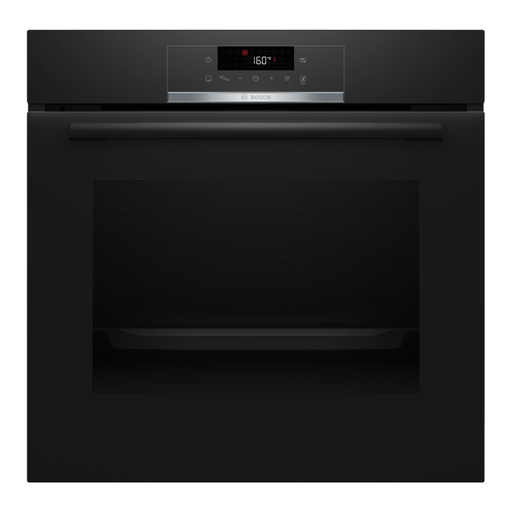
Bosch HQG572EB3 built-in oven, 71 litres

Bosch HQG572EB3 built-in oven, 71 litres

Ideal if you want to be able to use both a fan setting and conventional top-and-bottom heat in a built-in oven.

The product listing specifies a 71-litre capacity, a temperature range of 30–275 °C, a fan setting and conventional top-and-bottom heat. It also lists 3D Hotair on up to three levels and pyrolytic cleaning. Check the space required for installation.

View at Joybuy

Frequently asked questions

What temperature should I set for cheese scones?

Follow the oven setting and temperature specified in the particular recipe you’re using. Laura’s Bakery recommends 220 °C with conventional top-and-bottom heat for a recipe making eight cheese scones; Arla recommends 225 °C with a fan setting for a different recipe. Don’t use these temperatures for another recipe without following its instructions.

What should I consider when positioning an oven?

Follow the installation instructions for the exact model and make sure heat can escape. The Fire Service highlights the need for heat to escape from ovens and built-in appliances. For a built-in oven, also check that the specified kitchen unit dimensions suit your kitchen.

Does every oven need an energy label?

No. According to the European Commission, small and portable ovens fall outside the energy labelling scope for domestic ovens. So don’t automatically compare a built-in oven’s label with the absence of one on a mini oven; check the relevant product information instead.

Which product safety rule applies to an electric oven in the Netherlands?

According to the Netherlands Food and Consumer Product Safety Authority, CE marking is compulsory for electrical products; its guidance states that a separate product inspection isn’t generally compulsory. This doesn’t establish whether an individual oven model meets the applicable requirements.

What warranty and cancellation period apply to online purchases?

For consumer purchases in the Netherlands, statutory guarantees apply alongside any manufacturer’s warranty. ACM ConsuWijzer states that if a product doesn’t do what you could reasonably expect under normal use, the retailer must repair or replace it free of charge, or refund you if necessary. For ordinary online product purchases, you generally have 14 days from delivery to change your mind; statutory exceptions and returns policies may apply.
