First, measure your square baking tin and choose an oven that will fit it: the stated capacity in litres doesn’t tell you whether the tin will fit inside. That’s why the Consumentenbond recommends comparing the oven’s internal dimensions with your baking tin. A freestanding model may be suitable if you don’t have a suitable built-in space. Choose a built-in oven only if the housing and electrical connection are suitable, and if you’re baking several batches, check how many shelf positions and baking trays the exact model offers. For a recipe using conventional heat, the Consumentenbond generally recommends starting with a fan-oven temperature around 20 °C lower. Always follow the recipe and oven manual too.
Who is this oven guide for?
Baking for the whole neighbourhood
You want to make enough square portions and need to decide whether one tin will do or whether you’ll need to bake several batches. Rutger Bakt’s recipe uses a 20 × 20 cm tin and makes around 40–50 small squares. That’s the recipe yield, not a guarantee of how many portions you’ll get.
Home baker with limited kitchen space
You want an oven that suits your kitchen, without an unsuitable built-in space or an oversized appliance taking up worktop room. The Consumentenbond recommends comparing the oven’s internal dimensions with your baking tin. For built-in models, the housing and the installation requirements for the exact model matter too.
Baker who wants to control the crust
You want to choose a setting that suits the recipe and remember to let the Dutch butter cake cool before cutting it. Rutger Bakt’s recipe includes cooling the cake in the tin.
What should you look for?
Freestanding fan oven
Suitable for: a kitchen without a suitable built-in space, if there’s enough safe room on the worktop.
Keep in mind: the capacity in litres doesn’t tell you whether your tin will fit. Measure the available space too, and check which baking trays are included.
Built-in fan oven
Suitable for: a kitchen with suitable housing and an electrical connection, particularly if you regularly prepare several batches.
Keep in mind: a manufacturer’s claim that an oven has several shelf positions doesn’t prove that your tins will fit at the same time or cook evenly.
Combination microwave oven
Suitable for: anyone looking for a microwave function as well as an appliance for a smaller kitchen.
Keep in mind: the Consumentenbond points out that combination microwave ovens often have fewer oven settings or shelf positions, and sometimes no bottom heat. Check the specifications for each model.
When baking Dutch butter cake for a neighbourhood gathering, you’ll need to consider the baking tin, the oven setting and the space available in your kitchen. Energy use and cleaning may also affect your choice.
| What matters when buying |
What to look for |
Who is this important for? |
| Space for your tin and portions |
Measure the tin, including its edges, and compare it with the usable internal dimensions. If you’re baking several batches, check how many suitable trays are included. |
I want to make enough squares for the gathering and find out first whether one tin will do; around 36% of consumers focus on space for the tin and the number of batches. |
| Oven setting and results |
Check whether the exact model has both fan and conventional heat settings. The Consumentenbond recommends starting with a fan-oven temperature around 20 °C lower than for conventional heat. |
If I want to get the crust right for my recipe, I check the available settings and allow time for the cake to cool. Around 29% of consumers prioritise the oven setting and control over the results. |
| Positioning and connection |
For a built-in model, measure the housing and consult the installation manual for the exact model. For a freestanding appliance, check the required clearance around it. |
I want to know in advance whether the oven will fit in my kitchen and can be connected properly; around 21% of consumers prioritise a suitable position and connection. |
| Energy use and cleaning |
Where an energy label applies, compare the energy use per conventional and fan cycle on the same basis. Check the cleaning method too. |
I’m mindful of electricity use and want to know what cleaning the model requires; around 14% of consumers say energy use and cleaning are their main buying considerations. The European Commission explains which household ovens fall within the scope of energy labelling. |
Common mistakes when choosing an oven
-
Choosing based on capacity in litres alone
The capacity doesn’t tell you whether your baking tin will fit inside. The Consumentenbond recommends comparing the oven’s internal dimensions with your tin.
Measure your tin, including its edges, and check the usable interior space before choosing a model.
If one tin won’t make enough for the number of portions you need, you may have to bake extra batches.
-
Confusing multiple shelf positions with multiple included baking trays
The ETNA and AEG models mentioned include one baking tray, even though the manufacturers list several shelf positions.
Check how many baking trays are included and whether your tins will fit at the same time. Don’t rely on the number of shelf positions alone.
You may need extra suitable baking trays to bake on multiple levels. Check which trays fit the model.
-
Leaving the connection and positioning checks until after you buy
The housing, plug and required clearance can all affect where you can position an oven.
Measure the housing or available space, and consult the installation manual for the exact model before buying.
-
Using a recipe setting unchanged for fan cooking, or cutting the cake while it’s still warm
A recipe for conventional heat won’t necessarily use the same setting for fan cooking. Dutch butter cake also needs to cool before you cut it.
Follow the recipe and oven manual, and allow time for the cake to cool.
Brands to consider
Inventum
Inventum describes its freestanding OV607B as a 60-litre fan oven with conventional heat.
- Inventum lists a baking tray and oven rack as included.
- Measure your tin and check the internal space. The oven’s capacity doesn’t prove that a particular tin will fit.
ETNA
ETNA lists the built-in OM316MZ as having a 77-litre capacity and five shelf positions.
- ETNA lists hydrolytic cleaning and one included baking tray.
- Check whether suitable trays are included or available, and whether your tins will fit at the same time.
Bosch
For model HBG578EB7, Bosch lists 3D hot air cooking on up to three shelf levels.
- Bosch lists pyrolytic cleaning for this model.
- The number of shelf levels alone doesn’t tell you whether your Dutch butter cake tins will fit at the same time.
AEG
AEG lists the built-in OU5AB21CM as having a 65-litre capacity and baking on two levels.
- According to AEG, this model has multi-level fan cooking and conventional heat, and comes with one baking tray.
- Check which tins and accessories suit your baking plans. These are model specifications, not a guarantee of your baking results.
Joybuy ovens for the job
The Joybuy products below include freestanding and built-in models. Compare your baking tin, the capacity you need and the space in your kitchen with the specifications for the exact model.
 No image available
Comfee built-in oven, 60 cm, 70 L
A built-in option if you’re looking for a fan oven. Check that the housing and your baking tin are suitable for the model.
The product name lists 60 cm, 70 L and 3 kW.
Also listed: grill, pizza function, AquaClean steam cleaning, timer and ECO mode.
View at Joybuy
 No image available
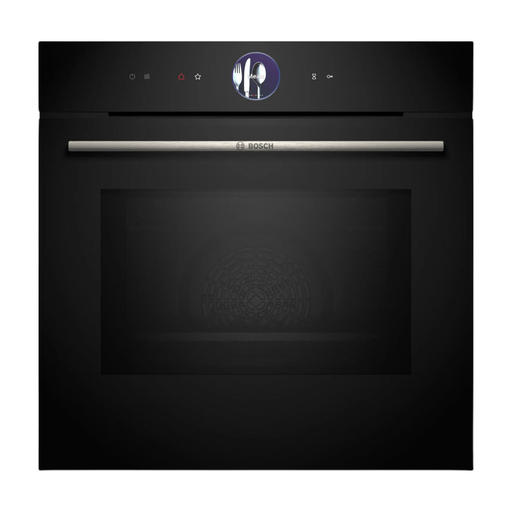
Bosch HMG7361B1 built-in oven, 71 L
A built-in model for anyone looking for fan cooking. Measure the housing and check that your baking tin will fit inside the oven.
The product name lists a 71 L capacity, 3D hot air cooking and pyrolytic cleaning.
Also listed: Home Connect.
View at Joybuy
 No image available
ROUNY air fryer oven, 6,5 L
A freestanding option with hot air cooking. Check whether the 6,5 L capacity is suitable for your baking tin.
The product name lists a viewing window, dial controls and 360° hot air.
Also listed: stainless steel finish and cooking without turning food halfway through.
View at Joybuy
 No image available
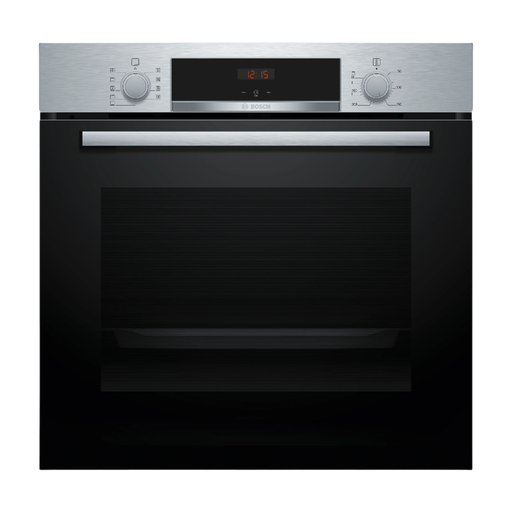
Bosch HBA514BS3 built-in oven, 71 L
A built-in fan oven for anyone with suitable housing. Check your baking tin and the installation requirements.
The product name lists a 71 L capacity, Turbo Hot Air and hydrolytic cleaning.
Also listed: touch controls and a maximum temperature of 275 °C.
View at Joybuy
 No image available
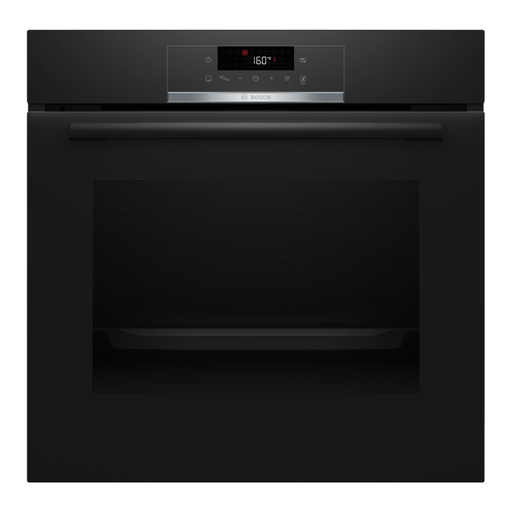
Bosch HQG572EB3 built-in oven, 71 L
A built-in option if you’re looking for an oven with hot air cooking. Check that the housing and your baking tin are suitable for the model.
The product name lists 71 L, an air frying function, steam cooking and pyrolytic cleaning.
The product name also specifies a black finish.
View at Joybuy
Frequently asked questions
Can I use the same temperature for a recipe with conventional heat when cooking with a fan oven?
Not necessarily. The Consumentenbond recommends setting a fan oven around 20 °C lower than for conventional heat. Use this as a starting point, and check the instructions for your recipe and oven. The Dutch butter cake recipe mentioned uses 170 °C but doesn’t specify a separate fan-oven setting.
When can I cut Dutch butter cake into squares?
Rutger Bakt’s recipe says to leave the cake to cool in the tin for at least six hours after baking before cutting it into pieces. Allow for this cooling time before the gathering.
What should I check before positioning and connecting an oven?
For a built-in oven, measure the housing and follow the installation manual for the exact model. The Consumentenbond points out that some ovens may need a special connection. The Netherlands Fire Service recommends connecting high-power appliances directly to a socket where possible and keeping ventilation space clear. Check the guidance for your appliance.
Does a household oven need an energy label?
It depends on the type of product. The European Commission sets out energy-labelling rules for household ovens within scope, and identifies small ovens and appliances with microwave heating as exclusions. So first check whether the rules apply to the appliance you’re considering.


