
Baking one savoury tart
You want your tart tin to fit and to be able to match the baking setting in your recipe to the oven.


First, measure your tart tin and the space available in your kitchen. Then check that the exact model really has a fan oven setting and whether you also want conventional top and bottom heat. A freestanding oven may suit you if you don’t have a suitable built-in space, while a built-in oven may offer more room for a larger tin or several dishes. Capacity in litres alone doesn’t prove that your tin will fit.
You want your tart tin to fit and to be able to match the baking setting in your recipe to the oven.
You don’t have a suitable built-in space or have limited worktop room, so you need to check both the tin and where the oven can be safely placed.
You want to bake something alongside your tart, so you’re looking at usable space and shelf levels.
Right for you if: you don’t have a suitable built-in space and can find a safe spot for an appliance.
Bear in mind: measure your tin and check the clearance around the specific model. Its capacity in litres doesn’t guarantee a good fit.
Right for you if: you have a suitable built-in space and may want to cook a larger tart or several dishes.
Bear in mind: measure both the space and the tart tin. Extra features are most useful if you’ll actually use them.
Right for you if: you’re looking for a smaller model or want to reheat as well as bake.
Bear in mind: the interior may limit the size of tin you can use. Check the cooking settings for each model rather than relying on the category name alone.
| What to consider | What should you check? | Who is this important for? |
|---|---|---|
| Tart tin and oven space | Measure the outside dimensions and height of your tin, then compare them with the interior dimensions and available shelf height. | If I mainly want to know whether my tin will fit, I’d rather measure it than rely on the oven’s capacity in litres. Around 33% of consumers rank tart tin fit as their top buying priority. |
| Cooking settings and tart base | Check that the exact model offers both a fan setting and the setting specified in your recipe. Follow the recipe instructions and check the tart towards the end of cooking. | If I want to follow the cooking setting in my recipe and keep an eye on the base, I check which settings the oven has. Around 27% of consumers prioritise cooking settings and being able to monitor the tart base. |
| Space for more dishes | Check the usable interior space, the racks supplied and the model-specific guidance for cooking on multiple levels. | If I want to bake something alongside the tart, I look at whether there’s room for both dishes and which shelf levels are usable. Around 20% of consumers put space for several dishes first. |
| Placement and energy use | Compare each model’s dimensions and placement instructions. Where energy labels apply, also compare energy use per cooking cycle. | If I have limited space or want to keep an eye on energy use, I take placement and energy information into account. Around 20% of consumers make this their top buying priority. |
If your recipe specifies conventional top and bottom heat but you use the fan setting, Voedingscentrum recommends reducing the temperature by around 10%. Check towards the end of cooking that the tart is done. The cooking time also depends on the recipe and the oven.
Severin doesn’t list a fan function for the TO 2052, even if a product listing suggests otherwise. For this choice, the exact model number and its functions are what matter.
Before choosing an oven, check the full model number and cooking settings in the manufacturer’s information.
The stated capacity alone doesn’t tell you whether your tin will fit in the oven. Consumentenbond points out that racks, trays and other parts affect the usable interior space.
Measure your tin and compare it with the interior dimensions and rack position before you buy.
The Inventum OV457B manual requires 10 cm of clearance all around and warns against covering the ventilation openings. This clearance doesn’t automatically apply to other models.
Measure the space, including the clearance specified in the manual for your chosen model.
An energy label rating alone doesn’t tell you which model suits your needs. Milieu Centraal points out that a small A+ oven may use less energy than a large A+++ oven. A cleaning function also tells you nothing about whether your tart tin will fit.
Check the fit and cooking settings first, then look at the applicable energy use and any features you’ll actually use.
Inventum offers freestanding ovens. The OV457B is one example, with a 45-litre capacity, a fan setting and conventional top and bottom heat.
Severin makes compact freestanding ovens. The manufacturer says the TO 2068 has a fan setting and a capacity of around 20 litres.
Bosch offers built-in ovens. For the HBA534BB3, Bosch lists a 71-litre capacity, conventional top and bottom heat and 3D Hot Air.
According to Siemens, the HB534ABR3 built-in oven combines a 71-litre capacity with 3D Hot Air and conventional top and bottom heat.
AEG lists a 72-litre capacity, a fan setting and pyrolytic cleaning for the NBU5P40SK built-in oven.
This selection includes compact combination microwaves and mini ovens, as well as built-in ovens. For each model, check the cooking settings, whether your tart tin will fit and how much space you have in your kitchen.
 Image unavailable
A combination of microwave, grill and convection to consider if you want a microwave function as well as the option to bake.
The product name lists 25 L, a grill and convection.
Check that the interior space and cooking settings suit your tart tin and recipe.
 Image unavailable
A built-in model to consider if you have a suitable space. Remember to measure your tart tin and check the usable interior space, too.
The product name lists 71 L and 3D Hot Air.
Before buying, check that the space and cooking settings you need suit your kitchen and recipe.
 Image unavailable
A freestanding model to consider if you don’t have a built-in space. Make sure you have a suitable spot for it and check the cooking settings for your recipe.
The product name lists 2000 W and 45 L.
The placement instructions call for a stable, flat and heat-resistant surface.
 Image unavailable
A compact model to consider if you’re short on kitchen space. Compare the room available for your tin with the interior dimensions.
Check that the cooking settings available match the instructions in your recipe.
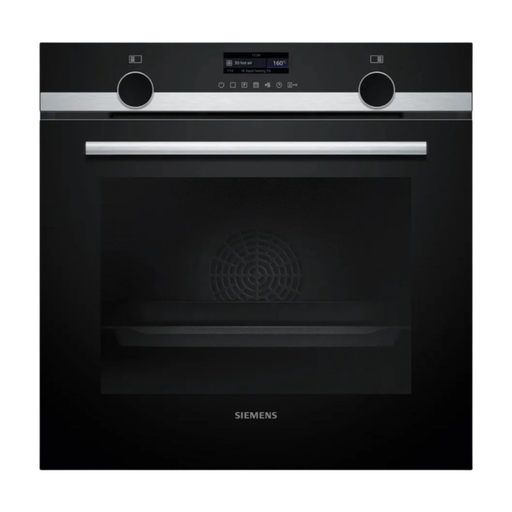 Image unavailable
A built-in model to consider if you have a suitable space. Compare the room it needs with the space available in your kitchen and the size of your tart tin.
The product name lists 71 L.
Check the cooking settings for the exact model and make sure they suit your recipe.
No. Follow the cooking setting in your recipe if your oven offers it. If the recipe specifies conventional top and bottom heat but you use the fan setting, Voedingscentrum recommends reducing the temperature by around 10%. Check towards the end of cooking that the tart is done.
Measure the outside dimensions and height of your tin, then compare them with the interior dimensions and the chosen rack position. Consumentenbond points out that racks and other parts can reduce the usable space, so the stated oven capacity alone isn’t enough to check whether your tin will fit.
Follow the manual for the exact model and don’t cover the ventilation openings. The Inventum OV457B manual requires 10 cm of clearance all around. Don’t assume the same clearance applies to other ovens without checking their manuals.
No. According to the Dutch government, buyers are entitled to a product that works properly, and there is no fixed statutory guarantee period in the Netherlands. If a product is faulty, the seller is responsible for finding a solution. A manufacturer’s guarantee may offer additional cover.
No. The European Commission states that small and portable ovens fall outside the scope of energy labelling rules for domestic ovens. Check which product category applies and, for labelled ovens, compare the stated energy use per cooking cycle as well.