
Baking several batches
You want to use several tins or trays for your gathering. Measure your tins and check how many baking trays and shelf positions you can use; the Consumentenbond recommends matching the oven’s internal space to your bakeware.


Start by working out how many muffins you need and measuring the outside dimensions of your tin or tins. Then check how many suitable baking trays and shelf positions you can use at once. A freestanding fan oven may be suitable if you don’t have a suitable built-in space, while a built-in oven is an option if you do and want to compare models with multiple shelf positions. Capacity in litres or a claim about baking on multiple levels doesn’t guarantee that your tins will fit or that the muffins will bake evenly.
You want to use several tins or trays for your gathering. Measure your tins and check how many baking trays and shelf positions you can use; the Consumentenbond recommends matching the oven’s internal space to your bakeware.
You’re looking for a freestanding fan oven and need to check both the space on your worktop and whether your muffin tin will fit. The Inventum OV607B is one example, with a net capacity of 60 litres and one baking tray included.
As well as baking for this gathering, you’re considering the oven’s size, energy use and ease of cleaning for repeated use. Milieu Centraal recommends choosing an oven size that suits how you’ll use it.
A good fit if: you don’t have a suitable built-in space and can place the oven somewhere appropriate.
Keep in mind: check the internal dimensions and how many suitable baking trays you’ll need for several batches.
A good fit if: you have a suitable built-in space and want to compare shelf positions for baking several batches.
Keep in mind: check the housing dimensions, usable internal space and included trays; features and claims vary by model.
| What to consider | What should you check? | Who is this most important for? |
|---|---|---|
| Batches per baking session | Measure your tin and compare it with the usable internal dimensions; check the trays and shelf positions too. | If you want to bake with several tins for your gathering, what actually fits is the key consideration. Around 36% of consumers prioritise the number of muffins per batch. |
| Oven setting for muffins | Check the fan setting, shelf positions and guidance in the oven manual. | If you’re mainly looking for a suitable setting and usable shelf positions, check the features of the exact model. Around 29% of consumers prioritise this baking function. |
| Positioning and size | For built-in ovens, compare the housing dimensions; for freestanding ovens, check the external dimensions. Measure your baking tin too. | If space is limited or you have a fixed housing, the oven and tin need to fit the available space. Around 21% of consumers prioritise positioning and size. |
| Energy use and cleaning | Choose a suitable size; where applicable, compare energy use per cycle and the cleaning method. | If you use the oven regularly, energy use and cleaning may matter as well as baking for your gathering. Around 14% of consumers prioritise running costs and maintenance. |
The capacity in litres won’t tell you whether your muffin tin will fit through the oven door or have enough room inside. Measure your tin and check the usable internal dimensions.
If your tin doesn’t fit, you may need to bake in extra batches.
Measure your tin and check the door opening and included trays before you choose.
A manufacturer’s claim for a specific model doesn’t, on its own, prove how many of your tins will fit at once or how evenly your muffins will bake.
Check the manual, accessories and tin placement for the exact model.
You may need extra suitable baking trays to bake several batches at once.
A combination microwave may have different oven functions or fewer shelf positions; some models may not have a bottom heating element.
Compare the oven settings, shelf positions and space for your tin before choosing a combination appliance.
Freestanding fan ovens for those without a built-in space.
Built-in options for those with a suitable housing who want to compare shelf positions.
Built-in fan ovens offer a way to compare features and positioning across models.
A built-in alternative with model-specific features for baking on multiple shelf levels.
A compact freestanding alternative if you’re looking for a smaller oven.
This selection includes built-in and freestanding fan ovens. For each model, check the space available for your tin and how many shelf levels you want to use.
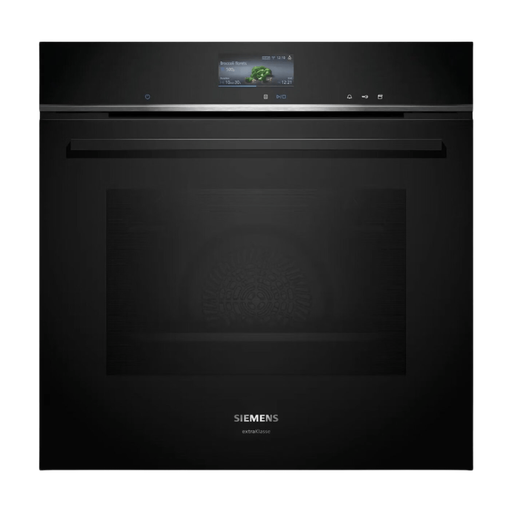 No image available
A built-in option if you have suitable housing and want to compare models with multiple shelf levels.
The product information lists 4D hot air and five shelf positions.
The stated temperature range is 30–250 °C; check the housing dimensions and whether your muffin tin will fit.
 No image available
A built-in option if you have suitable housing and want to compare shelf positions for baking several batches.
The product information lists a capacity of 71 litres, 3D Hotair for up to three levels, a baking tray and an Air Fry function.
Check the housing dimensions and whether the included baking tray and your tins will fit.
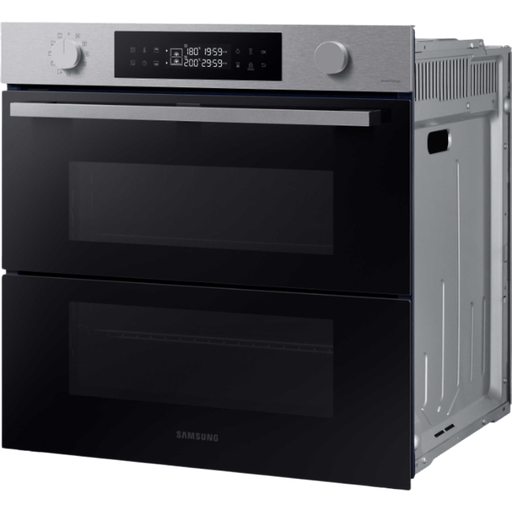 No image available
A built-in option with an ECO fan setting; check whether its features suit your baking plans.
The title lists a capacity of 76 litres. The product information mentions two oven compartments, a steam function and a catalytic cleaning system.
Check the housing dimensions and the space available for your muffin tins.
 No image available
A freestanding alternative if you’re looking for an oven without built-in housing and its compact interior is large enough.
The product information lists a capacity of approximately 30 litres, a temperature range of 100–230 °C, a fan function, and top and bottom heat.
Check whether your muffin tin fits and place the oven on a stable, heat-resistant surface.
 No image available
A freestanding option if you don’t have built-in housing; allow for the space it needs and check the dimensions of your tin.
The product title lists a capacity of 45 litres and 2000 W. The product information mentions top and bottom heat and a fan function.
Place the oven on a stable, heat-resistant surface.
Only if both tins fit according to the internal dimensions and positioning instructions, and the oven supports the shelf levels you want to use. Check how many trays are included separately from any claim about baking on multiple levels.
Follow your chosen recipe and the oven manual. The European Commission recommends preheating when the recipe or instructions say to do so; don’t automatically use the temperature or baking time from another recipe.
For ovens within its scope, the label shows information including the energy class and energy use per cycle for conventional and fan-assisted cooking. According to the European Commission, small ovens and appliances with microwave heating are outside the stated scope, so don’t automatically interpret the absence of a label as an indication of efficiency.
In the Netherlands, statutory guarantees apply: the product must meet what you can reasonably expect, and the seller is your point of contact if there’s a fault, according to the Rijksoverheid. In many cases, online purchases from a business also come with a 14-day cooling-off period; check the applicable terms and exceptions.
The Voedingscentrum recommends storing muffins in the fridge for three days or in the freezer for three months; their quality may deteriorate after that. If you’re adding a topping or filling, check the storage guidance for those ingredients too, as this general advice doesn’t confirm how long every homemade variation will keep.