
Weekend cake baker
You usually bake one cake at a time and want to match the recipe setting and cake tin to your oven.


Start with the recipe and the dimensions of your cake tin. Check that the oven has the required setting and that the tin fits with enough space around it. Good Food recommends 180 °C for a conventional oven and 160 °C for a fan oven for its lemon drizzle cake recipe; Bosch warns that food can dry out more quickly when cooked using a fan setting. A freestanding model needs worktop space, a built-in oven needs a suitable housing unit, and a combination oven also needs a separate oven setting to bake this cake.
You usually bake one cake at a time and want to match the recipe setting and cake tin to your oven.
You’re weighing up the worktop space available against a suitable built-in housing unit. Both the external dimensions and the usable internal space matter.
You want to heat or defrost food as well as bake, so you’re comparing a standard oven with a combination oven that has a separate fan setting.
First measure your cake tin and check the required oven setting. Then choose a freestanding, built-in or combination model to suit your available space and the other tasks you want to use the oven for.
| What to consider | What should you check? | Who is this important for? |
|---|---|---|
| Oven setting and recipe | Check whether the oven has a separate fan setting and, if you want to use it, a conventional setting with heat from the top and bottom. | If I want to follow the recipe setting exactly, I check which settings the oven offers separately. The oven setting is the main consideration for around 40% of consumers. |
| Room for your cake tin | Compare your tin with the usable interior and shelf dimensions, as well as the placement instructions for the exact model. | I want to know whether my own tin fits on the shelf with space around it; the capacity in litres alone won’t tell me that. Around 30% of consumers are mainly concerned with whether their tin will fit. |
| Where it will go in your kitchen | Measure the space available. For a built-in oven, check the housing dimensions and ventilation clearance required for the model you’ve chosen. | If worktop space is limited, I need to decide whether a freestanding oven will fit or whether I have a suitable built-in housing unit. Kitchen space is the deciding factor for around 20% of consumers. |
| Energy use and extra features | When comparing ovens covered by the relevant energy label rules, compare the same type of energy use and the same setting. For a combination oven, check whether you can select the oven function on its own. | I want to heat or defrost food as well as bake, or I’m keeping an eye on energy use for the setting I use. Versatility or energy use comes first for around 10% of consumers. |
The capacity in litres doesn’t tell you whether your cake tin will fit on the shelf. The recipe we looked at uses a tin measuring around 14 × 24 cm.
Measure your tin and check the interior and shelf dimensions of the exact model before you order.
If your current tin doesn’t fit, you may need a different cake tin.
Good Food gives different temperatures for a conventional oven and a fan oven in its recipe. Bosch warns that food can dry out more quickly when cooked using a fan setting.
Follow the temperature for the oven setting specified in your chosen recipe, and check the cake with a skewer towards the end of the baking time.
A built-in oven needs to fit the housing unit and have the required ventilation clearance.
Check the housing dimensions and installation instructions before ordering. If necessary, ask what installation costs would apply to your situation.
A built-in oven may involve installation costs as well as the cost of the oven. These depend on the supplier and your circumstances.
An energy label covers energy information for ovens that fall within the relevant rules; an extra programme alone doesn’t prove that a cake will bake better.
Assess the oven setting and whether your tin will fit separately from energy use and extra features.
The freestanding OV307B and OV607B are options to consider if you don’t want a built-in model and have space for an oven on your worktop.
The freestanding Optimo OF4958 is a 60-litre oven worth comparing if you’re also interested in other cooking settings.
The built-in HBG578EB7 is worth considering if you have a suitable housing unit and want to compare different heating systems.
The built-in OM316MZ is an option to look at if you’re after a model with a stated capacity of 77 litres and five shelf positions.
This selection includes freestanding fan ovens, a combination microwave with convection and a built-in oven. Choose one to suit your available kitchen space and the separate oven setting you need for baking.
 Image unavailable
A freestanding option if you’re looking for a fan oven with temperature control; check whether your cake tin will fit in the available interior space.
The product name lists a thermometer, a four-level rack and an LED display.
 Image unavailable
An option if you want microwave and grill functions as well as baking; use the separate convection function for cake.
The product name lists convection, grill and microwave functions, and a capacity of 20 litres. Check whether your cake tin will fit.
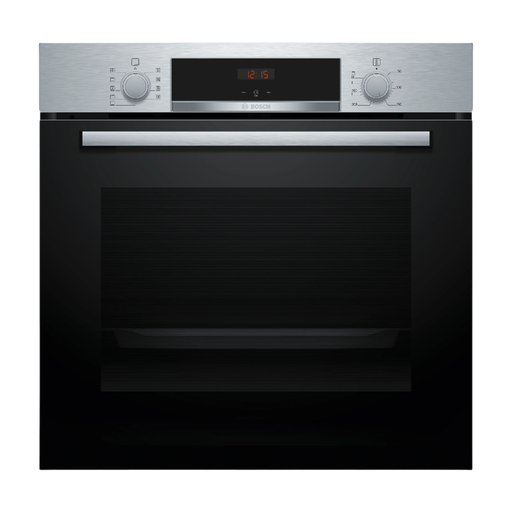 Image unavailable
A built-in option if you have a suitable housing unit; check the specified housing dimensions and ventilation clearance before choosing.
The product name lists Turbo Hot Air, hydrolytic cleaning, touch controls and a maximum temperature of 275 °C.
 Image unavailable
A freestanding option if you want to compare different baking settings; bear in mind the worktop space the appliance will take up.
The product name lists 2000 W, a capacity of 45 litres and a white finish. The product description mentions convection, top heat and bottom heat.
 Image unavailable
A compact oven to compare if you’re short on worktop space; measure your cake tin and check the usable interior before you buy.
The product description lists a capacity of 22 litres, a 60-minute timer and baking tins up to 25 cm in diameter. There are five settings, including top and bottom heat with a fan.
Follow the oven setting in the recipe you’re using. Good Food recommends 180 °C for a conventional oven and 160 °C for a fan oven for its recipe, with a baking time of 45–50 minutes for the specified cake tin. Check whether the cake is baked through with a skewer; these settings won’t necessarily suit every oven or tin.
A combination microwave with a separate fan or oven function can be used for baking. Check that your tin fits and choose the oven setting that your recipe calls for, rather than automatically using a combined microwave setting.
For a built-in oven, check the housing dimensions and the ventilation clearance required. For a freestanding appliance, make sure there’s enough space and that the socket and cable length are suitable. Follow the installation instructions for your chosen model.
No. The European Commission excludes small and portable ovens from the scope of energy labelling rules for domestic electric and gas ovens. So don’t assume that every type of oven carries the same label; compare the stated energy use and setting of models that fall within the scope of the rules.
According to ACM ConsuWijzer, your statutory rights exist alongside any manufacturer’s or seller’s warranty. If a product develops a fault too soon under normal use and doesn’t meet the standard you could reasonably expect, the seller must offer an appropriate solution at no cost. There is no single fixed statutory warranty period that applies to every oven.