
Baker with limited worktop space
You want to be able to set up and put away your own oven without permanently taking over the shared kitchen. So measure the external dimensions and allow for the specified ventilation clearance.


Start by checking the internal dimensions: your square baking tin must fit in the way specified in the instruction manual. If you mainly bake butter cake and don’t have a suitable built-in space, compare freestanding fan ovens by their external dimensions and required ventilation clearance. A combination microwave is worth considering if you also want to use the same appliance for reheating. Milieu Centraal reports that a large oven uses around 20% more energy than a medium-sized oven to cook one dish.
You want to be able to set up and put away your own oven without permanently taking over the shared kitchen. So measure the external dimensions and allow for the specified ventilation clearance.
You want to check first whether your square tin will fit in the oven as instructed. Rutger bakt, for example, uses a 20 × 20 cm tin; the Consumers' Association recommends checking the internal dimensions with the dish you plan to use.
You want to reheat food as well as bake, so you’re considering a combination microwave with a fan oven function. The Consumers' Association distinguishes between the oven or fan function for baking and the microwave function.
First measure your tin and the space available; then compare the oven functions and how you expect to use the appliance day to day.
Choose this option: if you mainly want to bake and don’t have a suitable built-in space.
Bear in mind: the space it takes up on the worktop and the ventilation clearance it needs; capacity in litres doesn’t guarantee that your tin will fit.
Choose this option: if you want one appliance for both baking and reheating.
Bear in mind: you’ll need an oven or fan function to bake butter cake, and the tin must fit in the appliance as described in the instruction manual.
Choose this option: if there’s a suitable built-in space and everyone using the kitchen can agree on the installation.
Bear in mind: the niche dimensions and ventilation; this option doesn’t take up worktop space.
| What to consider | What to check before buying | Who this matters most to |
|---|---|---|
| Suitable tin and baking function | Measure the tin and check the internal dimensions, shelf position and permitted placement. Check that the model has an oven or fan setting. | I want to use my square tin without having to guess whether it will fit. Around 29% of consumers prioritise a suitable baking tin and baking function. |
| Space and positioning | Measure the available space and storage area; follow the model-specific instructions for ventilation and connection. | If the worktop is shared, I want to know where the oven can be placed safely and whether I can put it away afterwards. Around 29% of consumers prioritise limited worktop space. |
| Baking and reheating | Check the oven or fan function on the exact model and whether your tin can be positioned as described in the instruction manual. | I want one appliance for baking butter cake and reheating food. Around 24% of consumers say this combination is their top priority. |
| Energy use and cleaning | Compare energy use on a like-for-like basis and check which parts can be cleaned according to the instruction manual. | If I use the oven regularly, I also want to know how much energy it uses and what I’ll need to clean after baking. Around 18% of consumers prioritise energy use and cleaning up. Milieu Centraal reports that a large oven uses around 20% more energy than a medium-sized oven to cook one dish. |
The stated capacity doesn’t tell you by itself whether a square baking tin will fit as instructed. For butter cake squares, the usable internal space is what matters.
Measure your tin, check the internal dimensions and see where the shelf can be positioned before choosing a model.
Finding a suitable tin could become an extra consideration if your current one doesn’t fit in the oven you choose.
The microwave function alone isn’t the oven function you need to bake butter cake.
Check whether the exact model has an oven or fan function, and use the setting specified in the recipe and instruction manual.
Heat from electrical appliances needs room to escape, so take extra care when placing one on a shared worktop.
Follow the manufacturer’s positioning instructions and keep the specified clearance around the appliance free. The Fire Service advises that heat from appliances must be able to escape.
Freestanding baking and toast ovens, including the TO 2058, with a stated capacity of 42 litres.
Freestanding fan ovens, with the OV457B as an example of a model offering a net capacity of 45 litres and six stated oven programmes.
Freestanding fan ovens, including the OV-3660, with a stated capacity of 38 litres.
Compact freestanding fan ovens, including the 112751, with a stated capacity of 32 litres.
Built-in combination ovens, such as the CMA485GB2, which Bosch says combines microwave, fan oven and grill functions.
This selection includes freestanding fan ovens, combination microwaves with a fan oven function and built-in ovens. For each model, check whether your tin will fit and whether it’s suitable for the shared kitchen.
 No image available
A freestanding oven to consider if you’re looking for a separate fan oven for baking.
The product name lists a 35-litre capacity, a thermometer, a display and a baking rack with four levels. Check the internal dimensions and permitted shelf position for your baking tin.
 No image available
An option if you’re looking for one appliance for both reheating and baking with an oven or fan function.
The product name lists a capacity of 25 litres and microwave, grill and fan functions. Check whether your tin can be positioned as described in the instruction manual.
 No image available
A combination microwave to consider if you want to bake and reheat using the same appliance.
The product name lists a capacity of 20 litres, along with grill and convection functions. Check the internal space and positioning instructions for your square tin.
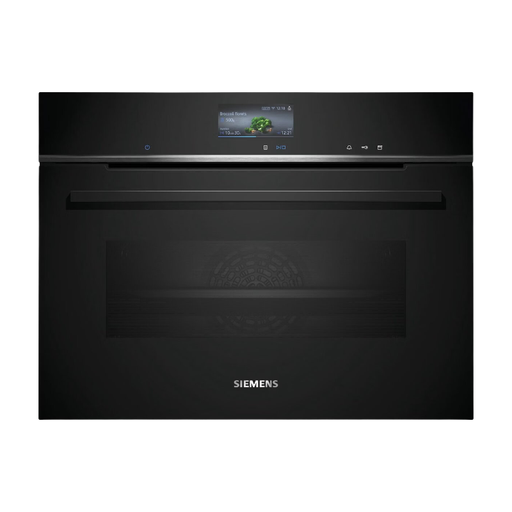 No image available
A built-in option if the shared kitchen has a suitable space and everyone has agreed on the installation.
The product name lists a 47-litre capacity, 4D fan cooking, pyrolytic cleaning and Home Connect. Check the niche dimensions, ventilation and instruction manual for positioning your tin.
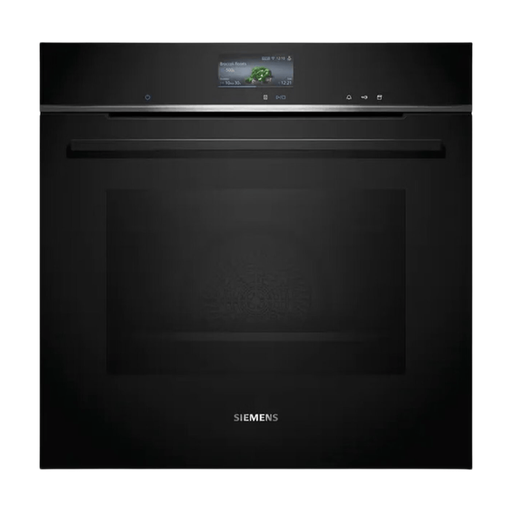 No image available
A built-in oven to consider if there’s a suitable space and you want to agree on an oven with the other people using the kitchen.
The product name lists a 60-litre capacity, 4D fan cooking, pyrolytic cleaning and Home Connect. Check the niche dimensions and ventilation, and whether your tin will fit as described in the instruction manual.
No. Rutger bakt uses a 20 × 20 cm tin as an example for butter cake squares. If you use a different tin, you can adjust the amount of dough to keep the thickness roughly the same. Also check that your chosen tin fits in the oven.
Yes, if the model has an oven or fan function and you can position the tin as described in the instruction manual. The microwave function alone isn’t for baking; check which setting the recipe and instruction manual specify.
Follow the positioning and cleaning instructions for the exact model, and keep the specified ventilation clearance free. The Fire Service advises that heat from appliances must be able to escape.
According to ACM ConsuWijzer, statutory guarantees apply in the Netherlands alongside any manufacturer’s guarantee. If the product doesn’t do what you could reasonably expect, the seller is responsible for providing an appropriate solution free of charge; this doesn’t mean every oven has a fixed guarantee period.
No. According to Business.gov.nl and the Netherlands Enterprise Agency, electrical equipment covered by the rules must meet product safety requirements; the manufacturer must apply the required CE mark and draw up an EU declaration of conformity. A CE mark isn’t an independent quality mark or a baking test.