What should you look for?
If you have a suitable built-in space and often bake large quantities, a spacious built-in oven may be right for you. Without a built-in space, a freestanding model is an alternative. Whichever you choose, first compare whether your dishes will fit, where the oven will go and how much you usually bake.
Spacious built-in fan oven
A good fit if: you have a suitable built-in space and often want to use a large dish or cook several things at once. Check the internal dimensions, shelf heights and space between deep dishes.
Trade-off: extra capacity is useful only if you make use of it. Milieu Centraal warns that larger ovens can use more energy.
Freestanding mini fan oven
A good fit if: a built-in oven isn’t an option and you can confirm that your lasagne dish fits inside. Severin lists a 42-litre capacity for the TO 2058.
Trade-off: a freestanding model takes up worktop space. Check the dimensions and installation requirements of the model you choose.
Built-in oven with pyrolysis
A good fit if: you have a suitable built-in space and want to consider pyrolytic cleaning if you bake regularly. AEG lists this feature for the OU5PB40WSM.
Trade-off: pyrolysis is a different cleaning method from the hydrolysis found on the Bosch and ETNA models reviewed; these features don’t prove a difference in baking results. Also check the connection details.
| What to consider |
What should you check? |
Who is this important for? |
| Capacity and cooking several dishes at once |
Measure your dish, including its handles, and compare it with the usable internal space and the distance between shelf levels. |
If I want to cook several dishes at once, I look at the available space and the gap between them; around 40% of consumers prioritise batch capacity. |
| Built-in or worktop |
For a built-in oven, check the niche dimensions and connection. For a freestanding model, compare its dimensions with the available worktop space. |
If I don’t have a suitable built-in space, I look for a model that fits safely on my worktop; around 20% of consumers prioritise where the oven will go. |
| Cleaning after repeated baking |
Compare the cleaning function and the steps involved in the instructions for the exact model. |
If I bake often, I want to know how much cleaning will be left afterwards; around 20% of consumers prioritise ease of maintenance. |
| Energy use for your usual batch |
Where available, compare energy use per fan-oven cycle and oven capacity with the amount you usually bake. |
If I usually bake one smaller dish, I want to avoid choosing an oven with more unused space than I need; around 20% of consumers prioritise energy use. |
Joybuy products
These Joybuy picks are built-in ovens for anyone looking to cook a large batch or considering a cleaning function. Before buying, check that your dish will fit, along with the niche dimensions and connection.
 No image available
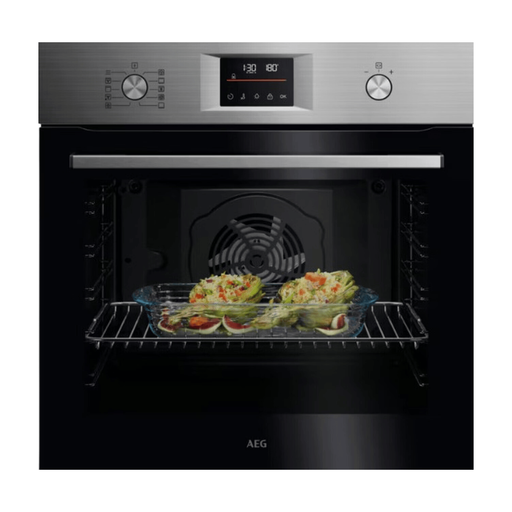
AEG OU5PB40SM built-in oven, 72 L, pyrolytic cleaning
An option if you’re considering pyrolytic cleaning as well as a spacious oven for batch cooking.
72 L; pyrolytic cleaning.
Joybuy
 No image available
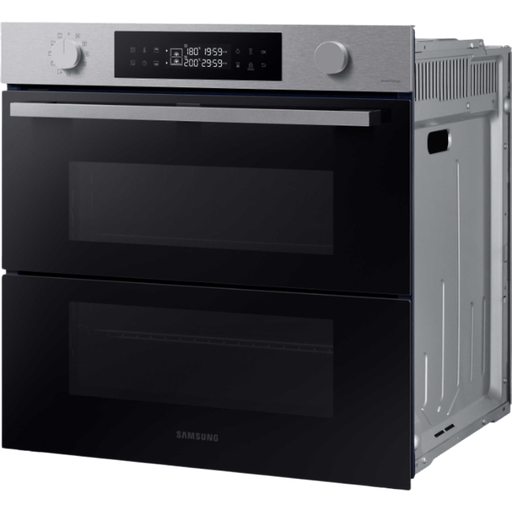
Samsung NV7B4540VAS built-in oven, 76 L, Flex Dual Cook
An option if you’re also considering the Flex Dual Cook function when planning a large batch.
76 L; Flex Dual Cook; hydrolytic cleaning.
Joybuy
 No image available
Bosch HQG572EB3 built-in oven, 71 L
An option if you want to plan several dishes and are considering pyrolytic cleaning.
71 L; pyrolytic cleaning.
Joybuy
 No image available
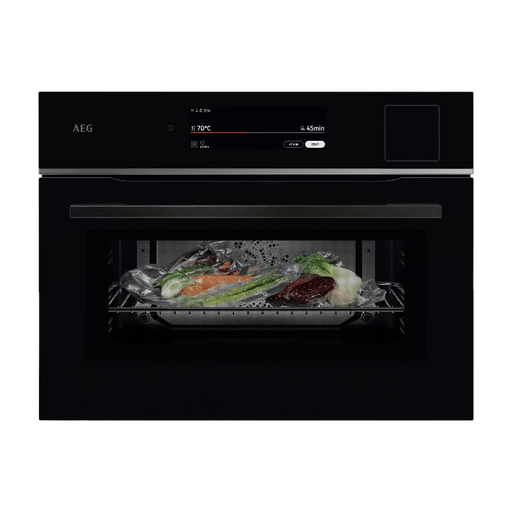
AEG TP9SK821B built-in oven, 71 L
An option if you want to cook a large batch and are considering pyrolytic cleaning.
71 L; pyrolytic cleaning; four heating functions.
Joybuy
 No image available
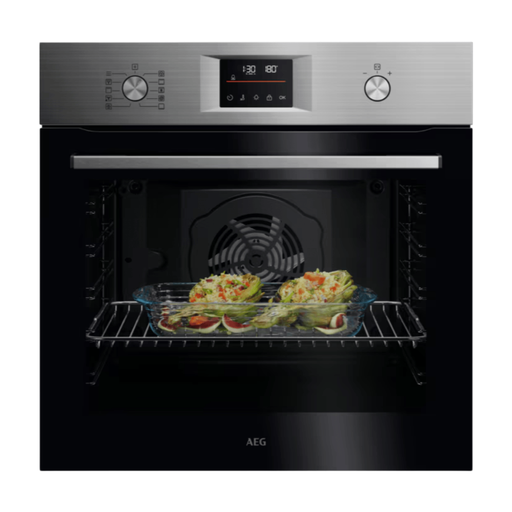
AEG OU5PB40ZSM Series 5 oven
An option if you’re considering pyrolytic cleaning for regular baking.
Pyrolytic cleaning.
Joybuy
Frequently asked questions
How can you tell whether two lasagne dishes will fit at the same time?
Measure both dishes, including their handles, and compare them with the usable internal space and the distance between shelf levels. A manufacturer’s claim that an oven can cook on several levels doesn’t confirm that deep lasagnes will fit or cook evenly.
How should you store and reheat lasagne you’ve cooked in advance?
According to the Voedingscentrum, let cooked leftovers cool within two hours and store them covered in the fridge at 4 °C. Eat them within two days or freeze them. When serving, heat a portion all the way through until steaming hot, and preferably don’t reheat leftovers a second time.
How should you compare ovens’ electricity use?
For ovens covered by the EU energy label, compare factors including energy use in kWh per fan-oven cycle and capacity. This figure doesn’t directly predict the energy used for every lasagne dish, so also consider how much of the oven space you usually use.
Does the EU energy label apply to every oven?
No. The European Commission distinguishes between ovens within the scope of the rules and, among others, smaller ovens that fall outside it. So check whether the label applies to the model you’re considering before comparing its figures with those of a built-in oven.
What can you do with your old oven when you buy a new one?
For private purchases, the Dutch government describes a like-for-like take-back scheme: the retailer must take back an old, similar electrical appliance free of charge, including for an online purchase. Arrange how the collection will work when your new oven is delivered.


