
Workshop leader running several batches
You want to know whether your baking tins will fit your recipe and how many batches you can make within the time available.


Start by measuring the outside of your baking tin and working out how many batches will fit into your workshop schedule. The oven’s capacity in litres won’t tell you how many tins will fit at once. Choose a freestanding model if you don’t have a suitable built-in space, or compare built-in ovens with multiple shelf levels if your kitchen is designed for one. Check the instructions for installation and connection, then test your chosen set-up with your own recipe beforehand.
You want to know whether your baking tins will fit your recipe and how many batches you can make within the time available.
You don’t have a permanent built-in space, so you need to place and connect a freestanding oven somewhere suitable.
You may be able to use an existing built-in space and want to weigh up shelf levels, controls and cleaning.
Measure your tin first, then check the model’s set-up requirements, baking settings and cleaning options.
| What to consider | What should you check? | Who is this important for? |
|---|---|---|
| Baking space per batch | Compare the outside dimensions of your tin with the usable baking tray and oven space, then plan how many batches you’ll need. | If you want to bake enough bars during the workshop without running over time, having enough space for your tins is the most important factor. Around 33% of consumers prioritise capacity per batch. |
| Positioning and connection | Check the external dimensions, required clearance and connection instructions in the manual, and make sure the heat can escape. | If you don’t have a suitable permanent built-in space, the oven needs to fit safely in your available workspace. Around 27% of consumers give suitable positioning top priority. |
| Baking settings | Check whether the model has a fan setting, a suitable temperature range and practical shelf levels, then test your recipe beforehand. | If you want to see how your own recipe responds to the chosen setting and load, flexible controls and a test batch are important. Around 27% of consumers focus mainly on having control over the baking process. |
| Cleaning and aftercare | Check which parts are dishwasher-safe according to the model information and what service terms apply. | When making several batches, you’ll want to know how to clean your baking tray and oven afterwards, and who to contact if something goes wrong. Around 13% of consumers prioritise maintenance and aftercare. |
The capacity in litres won’t tell you whether your baking tin will fit on the tray. Misjudging this could mean extra batches and a longer workshop.
Measure your own tin and compare it with the stated tray and oven dimensions before planning your schedule.
A built-in oven needs a suitable cabinet, while a freestanding model needs an appropriate place where heat can escape.
Decide first how you’ll position the oven, then check the instructions and connection requirements for the exact model.
A built-in installation may require changes to the workshop space.
A manufacturer’s claim about air circulation isn’t a test using your recipe, tins and oven load. You may need a test batch to assess your baking schedule.
Test the complete set-up before the workshop and assess the results for each tin.
A manufacturer’s warranty is different from your statutory rights when buying as a consumer. The manual for the Inventum OV607B excludes industrial use.
Check the terms of use for the exact model and, if you’re buying for business use, ask which service terms apply.
Compare the freestanding OV-3640 if a stated baking area would help you assess whether it suits your workshop.
The freestanding OV307B and OV607B come in two sizes to compare against your planned number of batches.
Compare the HBA534BB3 built-in oven if your workshop kitchen has a suitable permanent space for one.
The freestanding TO 2058 is a size worth comparing if you’re considering a smaller baking set-up.
Compare a built-in model such as the HB437G0B3 if your permanent workshop kitchen is designed for one.
These products are options to compare for baking oat bars in a workshop. Check that the permitted use for each model is suitable for your workshop.
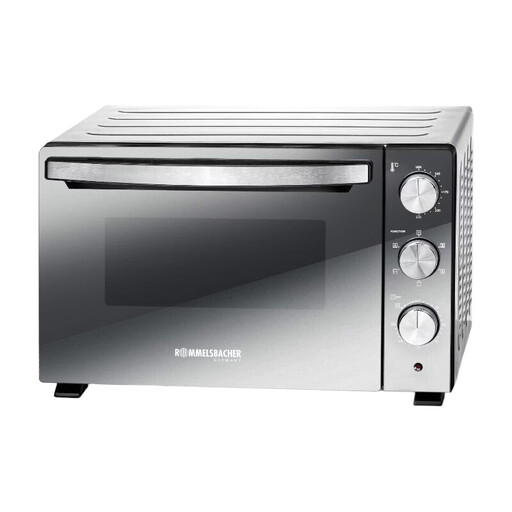 Image unavailable
The listed fan and baking functions are worth comparing for baking bars. According to the product information, this appliance is for household use only, not commercial use.
The product information lists a capacity of 30 litres and three shelf levels.
 Image unavailable
The product information lists a baking programme. Compare its settings with your own recipe and baking tin before planning your workshop.
The product information lists a capacity of 30 litres, a temperature range of 30–230 °C, 360° air circulation and six accessories. Clean the inside after use and keep the appliance away from flammable materials while it’s in use.
Measure the outside of your tin, including any handles, and compare it with the usable baking tray and oven space. Use the dimensions of the tin in your own recipe as your starting point.
Only if the tins and suitable baking trays fit on the available shelf levels and the manual allows this. Bosch lists up to three shelf levels with 3D Hotair for the HBA534BB3, but that doesn’t prove how your bars will turn out. Test the set-up beforehand.
Follow the installation and connection instructions for the exact model, and make sure heat can escape. Before cleaning, check which parts are suitable for it and follow the manual’s instructions for handling a hot oven and baking tray.
When you buy as a consumer, the seller is responsible for your statutory rights if the product doesn’t meet what you can reasonably expect under normal use, as explained by the Netherlands Authority for Consumers and Markets. A manufacturer’s warranty is separate. If you’re buying for business use in a workshop, ask which service terms apply.
According to the Netherlands Food and Consumer Product Safety Authority, a business that handles food must work with a HACCP-based food safety plan or an approved hygiene code. Businesses providing non-prepacked food must inform consumers about allergens. Whether this applies to your workshop depends on how it is organised; it isn’t a general specification requirement for every oven.