What should you look for when choosing?
Start by checking the distance between the sofa and the fan. Then consider whether the breeze remains comfortable at a setting you can work with, and whether the controls suit where you’ll be sitting.
| What to consider |
What should you look for? |
Who is this important for? |
| Airflow from your seat |
Compare air movement at different settings and distances, and check that the oscillation reaches your seat. |
If you want to feel a breeze from the sofa without placing the fan right in front of you, this matters most to consumers who prioritise airflow. Around 25% of consumers put this first. |
| Noise while you work |
Compare noise and airflow at the same usable setting and distance. A noise rating for the lowest setting doesn’t tell you how noisy the other settings are. |
If you want a breeze that won’t distract you during calls or focused work, quiet operation is a priority for consumers who value this most. Around 25% of consumers choose a fan mainly on this basis. |
| Controls you can use from the sofa |
Check whether a remote control is included and exactly how the timer and oscillation settings work. |
If you want to adjust the settings without getting up, being able to control the fan from your seat makes all the difference to consumers who prioritise this. Around 19% of consumers put it at the top of their list. |
| Floor space and stable positioning |
Compare the full size of the base with the space available, and follow the instructions for placing the fan on a level surface and positioning the cable safely. |
If the fan needs to fit beside the sofa or near a walkway, a good fit and stable positioning matter most to consumers with limited free floor space. Around 19% of consumers make this their top priority. |
| Power consumption during extended use |
Check the wattage of the setting you use. Calculate consumption in kWh as watts × hours of use ÷ 1000. |
If the fan is often left on for long periods, you’ll want to know how much power your chosen setting uses. For consumers who prioritise energy use, this is the deciding factor. Around 12% of consumers start here. |
Fans at Joybuy
These are pedestal fans to consider if you’re looking for an alternative to a tower model, with adjustment options to suit the area around your seat.
 No image available
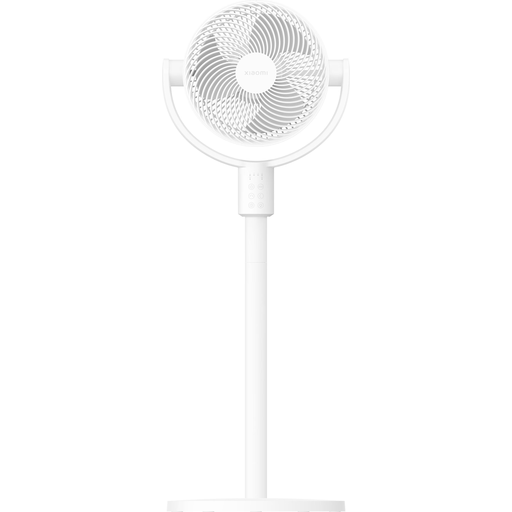
Xiaomi Smart Standing Air Circulation Fan
A pedestal model to consider if adjustable height and app control would suit your seating area.
The product name lists 3D oscillation, two modes, 100 speeds and a DC inverter motor. It also gives an airflow of 1440 m³/u, a range of 13 m and a noise level of 28 dB in sleep mode; compare such ratings only under similar conditions.
View product
 No image available
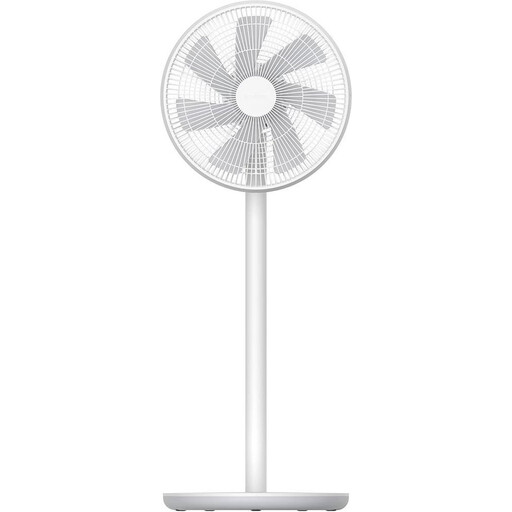
Xiaomi Smart Standing Fan 2
This pedestal model has app control, so you can adjust the settings from your seat.
The product name lists 100 speeds and dual blades. The description mentions automatic oscillation.
View product
 No image available
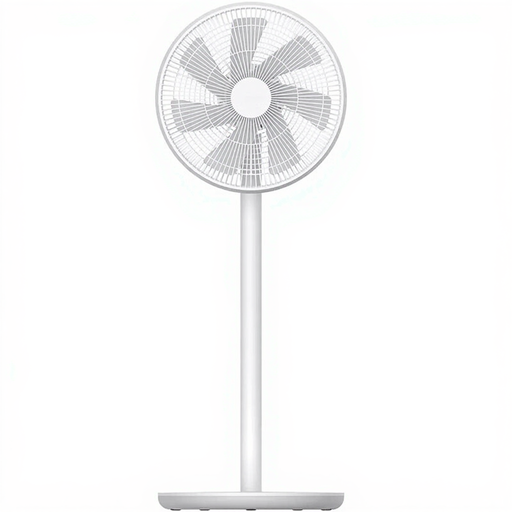
Xiaomi Smart Standing Fan 2 Lite
A pedestal option with app control and adjustable height to include in your comparison with a tower fan.
The product name lists seven blades, 90° oscillation and a stated airflow range of 12 m. Check that the airflow is sufficient for the distance you have in mind.
View product
 No image available
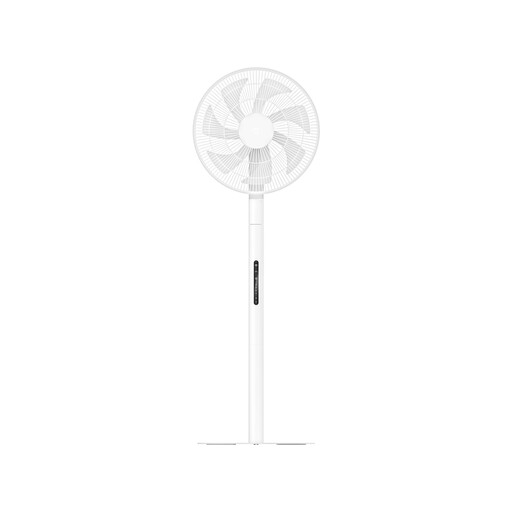
Xiaomi Mijia Smart Standing Fan Pro Slim
According to the product name, this pedestal model offers app, remote and touch controls.
The product name lists a DC inverter motor, Type-C charging and a stated airflow range of 14 m. Check which control option and positioning work best for you.
View product
Frequently asked questions
Will a tower fan make my home office colder or bring in fresh air?
No: the airflow can feel cooling without lowering the air temperature. Fresh air requires both air to come in from outside and stale indoor air to be removed. Simply circulating the air does not replace this, according to Milieu Centraal.
What should I consider when positioning a fan beside the sofa?
Follow the instructions for the exact version, and place the appliance on a suitable, level surface if the instructions require it. The Inventum VTO812WA manual also warns against sharply bending the cable and using the appliance if the cable, plug or appliance is damaged; these instructions apply to that model.
Am I automatically entitled to just a two-year legal guarantee in the Netherlands?
No. According to Rijksoverheid, the Netherlands does not have a fixed statutory guarantee period: a product must work properly for a reasonable length of time. If something goes wrong, contact the seller; a manufacturer’s guarantee is separate.
What should I look for when it comes to product safety?
Check the product information, markings and instructions for the version on offer. Rijksoverheid states that electrical appliances placed on the EU market must meet the applicable safety requirements, and mentions the CE marking for electrical appliances, among other products. A CE marking is not an independent performance test.
How can I estimate power consumption?
Use the wattage of the setting you plan to use: watts × hours of use ÷ 1000 gives consumption in kWh. Multiply this by your own price per kWh; the wattage for the lowest setting alone does not tell you how much power the other settings use.


