
Vandaag of morgen in huis

Kwaliteit gegarandeerd

Welkomstaanbiedingen ontgrendelen: GRATIS bezorging | Tot 80% korting | Gratis 30 dagen JoyPlus-proefperiode
Download de app
When the temperature drops, a fast and effective heat source is a necessity. A fan heater seems like the perfect solution: plug it in, and you get instant warmth. But the market is flooded with models that promise the world. Many consumers fall for marketing traps and end up with a heater that's noisy, consumes a lot of power, or starts malfunctioning after just a few months.
Before you make a purchase, it's smart to know what to look for. We'll discuss the most common pitfalls and help you understand the specifications that truly matter.
The Myth of the "Energy-Efficient" Heater: Many manufacturers label their product as an energy-efficient heater. In reality, nearly every electric heater with a 1500W output consumes the same amount of power to generate that 1500W of heat. The real savings don't come from the heating element itself, but from smart features like a precise thermostat and a timer. A heater that constantly runs at full power is never efficient.
Vague Claims About "Silence": A quiet fan heater is what everyone wants for a bedroom or office. Unfortunately, "quiet" is a subjective term. Without a specific decibel (dB) rating, it means very little. A model that's acceptable in the living room might sound like a jet engine in the silence of the night.
Inadequate Safety: "Protected against overheating" sounds good, but what does it really mean? For a space where children or pets are present, specific, active safety features are essential. Vague promises offer no real protection.
To avoid the pitfalls, focus on the technical details. These three points are crucial for a smart purchase.
Most modern fan heaters use ceramic heater technology, also known as PTC (Positive Temperature Coefficient). Unlike older models with glowing metal wires, a PTC element has several advantages:
Always opt for a model with a PTC ceramic heating element.
The power, expressed in Watts (W), determines how quickly a heater can warm up a room. For a heater for a small space (up to 20 m?) like a study or bedroom, a power output between 1500W and 2000W is typically sufficient as supplemental electric heating.
But power alone says nothing about efficiency. A heater with a thermostat is essential. This feature ensures the heater automatically shuts off when the desired temperature is reached and turns back on as it cools. This prevents unnecessary power consumption and keeps the temperature stable.
A good portable heater must come standard with two crucial safety mechanisms:
Always check that these two features are explicitly mentioned in the product description.
Based on these criteria, we have selected a few models that suit different user profiles.
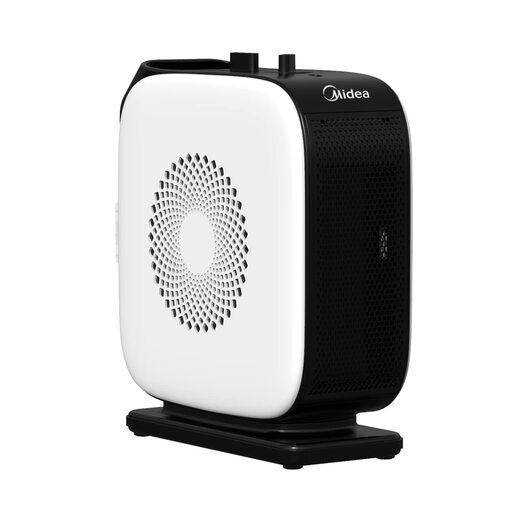
Why This Fits Their Persona: Ideal for a dorm room or a small home office. This model is compact, affordable, and does what it's supposed to do: quickly heat a small space without unnecessary frills.
This heater makes no empty promises about extreme silence or efficiency. It's an honest, portable heater with the necessary basic safety features (overheat protection) and an adjustable thermostat.
Simple dial controls and an oscillation function for better heat distribution in the room.

Why This Fits Their Persona: Perfect for those who value silence and comfort, such as in a bedroom or home office. This model is designed for the lowest possible noise level without sacrificing heat.
Instead of a vague claim about "silence," DREO specifies a noise level starting at 34dB. According to the manufacturer, this is quieter than a whisper, providing a concrete benchmark for the user.
Very quiet in operation, a precise digital thermostat (5-35°C), a 12-hour timer, and a remote control for maximum convenience.

Why This Fits Their Persona: When safety is the highest priority, this model offers extra peace of mind. Its comprehensive safety features make it a suitable choice for a busy household.
This model goes beyond standard safety claims. It offers not only tip-over and overheat protection but also a child lock on the controls to prevent unwanted adjustments.
Comprehensive safety features, including a child lock. The ECO mode automatically adjusts the power based on the room temperature for efficient use.
We have compiled a complete, up-to-date list of products that fully meet these strict selection criteria and safety regulations.
The cost depends on the heater's power and your electricity price. A simple calculation: a 1500W (1.5 kilowatt) heater running at full power for one hour consumes 1.5 kilowatt-hours (kWh). Multiply this by your current electricity rate (for example, $0.35 per kWh) to find the cost per hour. In this example, that's 1.5 kWh * $0.35 = $0.53 per hour. However, a model with a good thermostat won't run at full power constantly, which significantly reduces costs.
Yes, generally it is. A ceramic heater (PTC) regulates its own temperature better, and its housing often doesn't get as hot as traditional heaters with a heating coil. This reduces the risk of burns on contact and minimizes the chance of burning dust, which is especially beneficial for people with allergies.
Yes, provided you choose a model with the right safety features. Specifically, look for tip-over protection and overheat protection. A heater with a built-in timer and a reliable thermostat offers extra safety and comfort, as you can set it to turn off automatically after you've fallen asleep or when the room reaches the desired temperature. Never cover the heater and ensure there is adequate ventilation.
