
Conservatory users with several seating areas
You want air to move around the room without constantly blowing directly onto one chair. The direction of the airflow and how it moves around your particular layout are important.


If you want air to move around several seating areas, choose an adjustable air circulator that you can direct indirectly towards a wall or ceiling. For a single seat, a directional desk or pedestal fan may be enough. Compare air distribution and noise at the setting you’ll actually need, and check the positioning and stability. Milieu Centraal emphasises that a fan doesn’t lower the air temperature or replace ventilation that brings in fresh air and removes stale air.
You want air to move around the room without constantly blowing directly onto one chair. The direction of the airflow and how it moves around your particular layout are important.
You read or work for extended periods and want air movement without distracting noise. Compare the noise and airflow at the same useful setting.
You have limited space or rearrange your seating area, so you need to choose between a tabletop model, an adjustable pedestal fan and an appliance that’s easy to move.
Choose this if: you want air to move around several seating areas rather than blow directly onto one person.
Bear in mind: air distribution depends on the layout. An adjustable airflow doesn’t guarantee that it will reach every area equally.
Choose this if: you mainly want a breeze at one seat, or want to direct the airflow using a moving head.
Bear in mind: a direct draught may be uncomfortable for others in the room. A desk fan needs a suitable spot, while a pedestal fan takes up floor space.
Choose this if: the conservatory gets hot mainly because of direct sunlight, or the air feels stuffy.
Bear in mind: a fan moves air but doesn’t actively cool it, and without an air supply and extraction it won’t remove stale air. Milieu Centraal recommends tackling solar heat and ventilation separately.
Consumentenbond assesses factors including air distribution, noise, ease of use, stability and energy consumption. Compare these factors in the place and at the setting you actually plan to use in your conservatory.
| What to consider | What to look for | Who is this important for? |
|---|---|---|
| Distributing air | Check the adjustment options and airflow at the distance and setting you plan to use. | If I use several seating areas, I want air to move around the conservatory without one chair constantly getting the full force of the airflow. For about 29% of consumers, distributing air around the room is the top priority. |
| Noise while in use | Compare noise at different settings and distances, along with the airflow you need at each setting. | When I’m reading or working, I want useful air movement without distracting noise. For about 23% of consumers, quiet operation at a useful setting is the main priority. |
| Positioning and stability | Measure the available table or floor space and check the fan’s stability and grille. | When my seating area or available space changes, I want to position a fan without making the walkway awkward to use. Flexible and safe positioning is the top priority for about 18% of consumers. |
| A breeze in one spot | Check that the fan’s height, direction and head movement reach your seat. | If I mainly want to feel the airflow where I’m sitting, I don’t necessarily need air to be distributed throughout the conservatory. A direct breeze in one spot is a priority for about 18% of consumers. |
| Energy use and maintenance | Compare the power consumption at a relevant setting and check how to clean and maintain the model. | For regular use, I want to know how much energy the setting I need will use and how practical the maintenance is. Energy use and maintenance are top priorities for about 12% of consumers. |
CE marking is mandatory for electric fans sold on the Dutch market. The NVWA explains that it is the manufacturer’s declaration that the product meets the applicable requirements; the mark alone doesn’t prove that an independent testing body has tested that specific product.
Airflow may feel cool against your skin, but it doesn’t lower the air temperature. A fan on its own won’t tackle solar heat.
Consider shading and ventilation separately from your choice of air circulator. Milieu Centraal recommends letting in extra air when it’s cooler outside than indoors.
A high number of speeds doesn’t necessarily tell you much about the fan’s maximum airflow. A quiet lowest setting also doesn’t tell you how much noise the fan makes at the setting needed to reach several seating areas.
Compare airflow and noise under conditions that are as similar as possible. Consumentenbond assesses these factors separately.
Consumentenbond reported a grille issue with the older Duux Whisper DXCF03 and noted that the new version of this model had been updated. This finding isn’t a safety assessment of other Duux models.
If you’re buying a DXCF03, check which grille version you’ll receive and don’t assume the finding applies to other models. An affected older unit may need a replacement grille.
The battery is optional with the Duux Whisper Flex² version mentioned here. Duux specifies a particular Battery Pack for the Whisper Flex 2.
Before you buy, check the exact version, what’s included in the box and whether the battery is compatible.
The brands listed illustrate different types of fan. The features below apply to the specific models or versions mentioned and aren’t recommendations for the brand as a whole.
The MeacoFan 1056 is a desk fan designed for multidirectional air circulation.
The F120 is an air circulator with a manually adjustable head.
The Whisper Flex² No Wi-Fi version combines a desk and pedestal design with adjustable oscillation.
The Turbo Silence Extreme+ VU2740F0 is a desk fan for directing air near a seating area.
The models below range from a box fan to compact desk and adjustable pedestal fans. Check whether each model’s setup, airflow and operating conditions suit your conservatory.
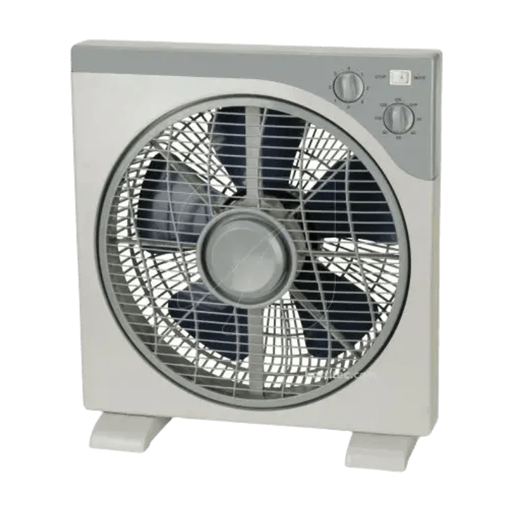 Image unavailable
The product description mentions air circulation in greenhouses, but specifies indoor use and advises against using it in very damp conditions. First check whether the conditions in your conservatory are suitable.
The description requires an earthed socket and a flat, stable, dry surface.
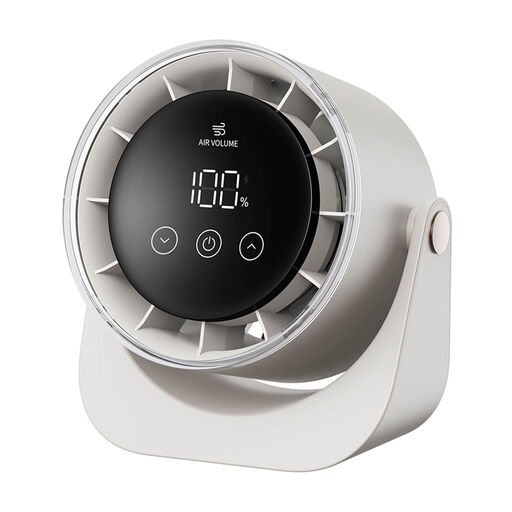 Image unavailable
This compact desk model may suit you if you want to direct air from a tabletop or need a fan you can move around.
The product title lists 100 speeds and a 90° tilt adjustment.
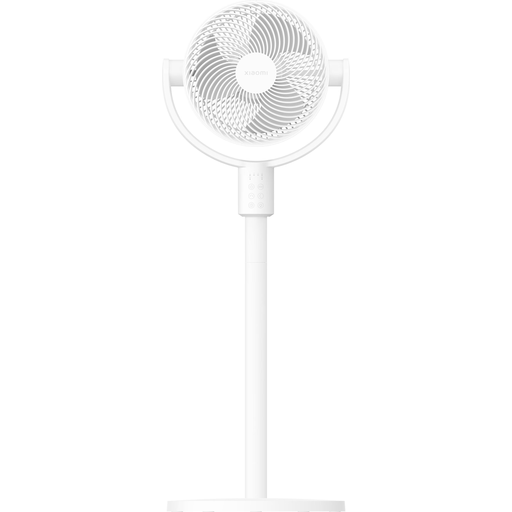 Image unavailable
An adjustable pedestal model may suit you if you want to reach seating at different heights. Check how the airflow works in your intended setup.
The product title lists 3D automatic oscillation, two modes, 100 speeds and adjustable height. It also states an airflow of 1440 m³/h, a range of 13 m and 28 dB in sleep mode. Check the measurement conditions before comparing these figures with other models.
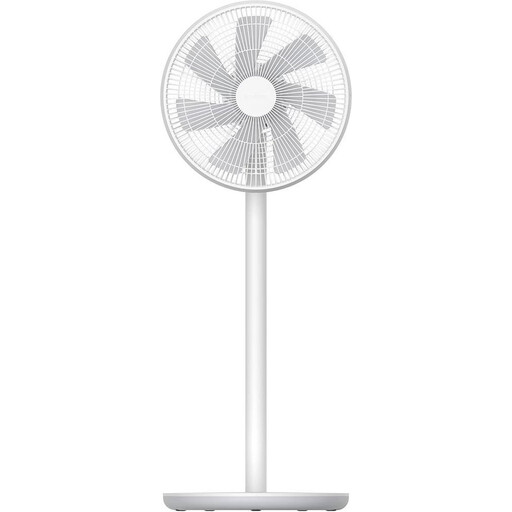 Image unavailable
This pedestal model may suit you if you’re looking for a fan with app control and adjustable speeds. Check that its position and airflow work for your seating areas.
The product title lists a DC inverter motor, dual blades and 100 speed levels.
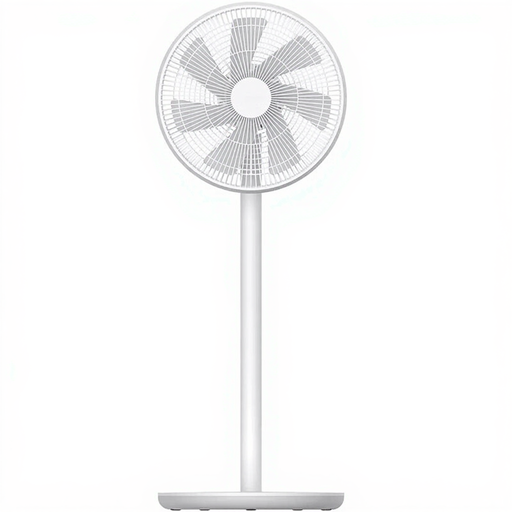 Image unavailable
This height-adjustable model may suit you if you want to direct air towards seats at different heights.
The product title lists seven blades, 90° oscillation, app control and an airflow range of 12 m. Check the conditions under which that range was measured.
No. A fan moves air and may feel cool against your skin as the air flows over it, but it doesn’t lower the air temperature. To manage heat from the sun, limit the sunlight coming in and let in extra air when it’s cooler outside than indoors. Milieu Centraal treats these measures separately from air circulation.
No. According to Milieu Centraal, ventilation requires both a supply of fresh air and the removal of stale air. A fan that only moves air around the conservatory doesn’t provide this exchange.
Try directing the airflow along a wall or ceiling and through the seating area, then adjust the speed to suit your comfort. Follow the instructions for the exact model when cleaning it or replacing the battery. Duux specifies a particular Battery Pack for the Whisper Flex 2.
According to the Dutch government, purchases made remotely from a business usually come with a 14-day cooling-off period. Separately, the product must meet the standard you’re entitled to expect: there’s no fixed statutory warranty period in the Netherlands, and the retailer is your point of contact if there’s a problem.
No. CE marking is mandatory for electric fans sold on the Dutch market, but the NVWA says it is the manufacturer’s declaration that the product meets the applicable European requirements. The mark alone doesn’t prove that an independent testing body has tested that specific product.