
Anyone sitting beside a chair
Looking for adjustable airflow where they sit, without having to place a large appliance beside the chair.


If you mainly want to feel the airflow while sitting in your chair, choose an adjustable desk or personal fan that you can place securely beside it. If you also want to circulate air around other parts of the bedroom, check the direction and range of the oscillation; a stated noise level may apply only to a particular setting. A fan circulates indoor air and does not replace ventilation with fresh air from outside.
Looking for adjustable airflow where they sit, without having to place a large appliance beside the chair.
You may want to use the fan close to your bed, so look for a low setting and, if it matters to you, a timer.
You want to direct the airflow towards other parts of the bedroom as well, rather than only towards the chair.
| What to consider | What to look for | Who is this important for? |
|---|---|---|
| Adjustable airflow at the chair | Check the speed settings, whether the head tilts and how the appliance can be positioned where you plan to use it. | If you mainly want a comfortable airflow by your chair, look for a setting that suits the distance and direction. Around 36% of consumers in this situation say this is their main priority. |
| Peace and quiet while relaxing or sleeping | Check the noise level at the setting you want to use, and see whether the model has a timer. | If you want to use the fan while relaxing or going to sleep, consider the combination of noise and airflow. Around 29% of consumers put this need first. |
| Circulating air around more of the room | Check whether the head moves or tilts horizontally and vertically, and whether you can switch the movement off. | If you want to circulate air beyond your seating area too, the direction in which the model distributes air matters. Around 21% of consumers prioritise this need. |
| Suitable positioning and controls | Measure the available space and check that the base is stable and the controls are within reach. | If there is little suitable space beside your chair or you want to adjust the settings easily, consider the size, stability and controls. Around 14% of consumers name this as their main priority. |
A fan circulates air around the bedroom, but it does not automatically remove moisture or polluted indoor air.
Treat air circulation and ventilation as two separate needs. The Dutch Government advises keeping enough trickle vents and top-hung windows open.
A manufacturer's figure may apply only to the quietest setting, while you may need a different setting to get the airflow you want.
When checking noise figures, always look at the exact model and setting they refer to. Don't compare figures as though they were independent measurements taken under the same conditions.
The airflow may then be too low to feel properly where you are sitting. Consumentenbond describes a table or desk fan as being intended for one person.
Measure in advance where the appliance can stand securely, and check whether you can direct the head towards the chair.
Dutch product information includes table models with different settings and types of oscillation.
The information about the CX3050/01R1 relates to a refurbished table fan with tilt, rotation, three speeds and a timer.
The manufacturer describes the VE-5725 as a table fan for directed air circulation, with tilt and horizontal oscillation.
Duux describes product lines including Whisper Essence and Whisper³, with different air distribution options.
The European manufacturer's website describes the MeacoFan 1056 as a table model with automatic horizontal and manual vertical direction adjustment.
This selection includes personal fans for a small space beside your chair, as well as pedestal models with adjustable airflow or oscillation. Check the dimensions of each model and make sure it will suit your room.
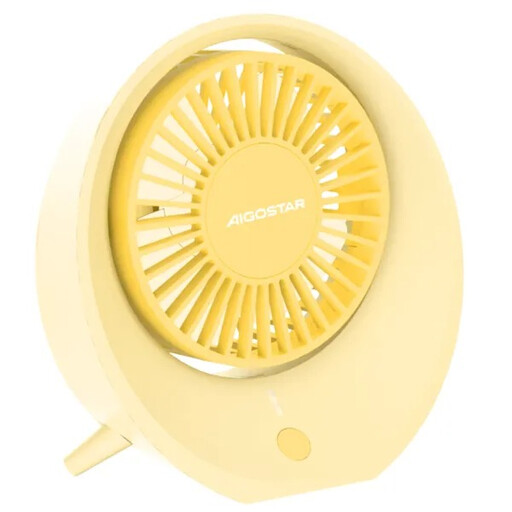 No image available
A clip-on model for personal airflow in a small space beside your chair.
Three speeds; stated coverage area: 2 m².
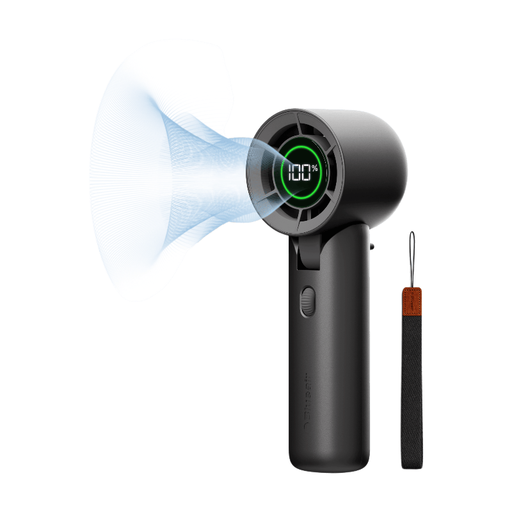 No image available
A portable personal model that lets you direct the airflow towards your chair.
0–100 speed settings and a head that tilts up to 75°. The product description states a minimum noise level of 23 dB and battery life of up to 32 hours on the low setting.
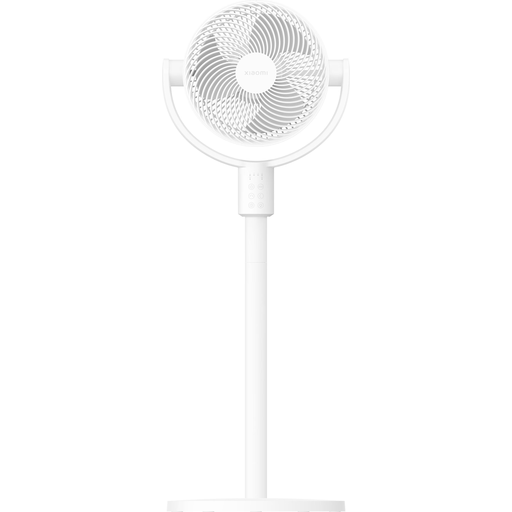 No image available
A height-adjustable model for anyone who wants to circulate air in other directions as well as around the seating area.
The product name lists 100 speeds, two modes, 3D automatic oscillation and a quiet sleep setting of 28 dB. The description mentions control via the Mi Home app.
 No image available
An adjustable pedestal fan for anyone who wants to control the airflow by their chair and use automatic oscillation too.
The product name lists 7+5 dual blades, a DC inverter motor and 100 adjustable speeds. The description mentions app control and automatic oscillation.
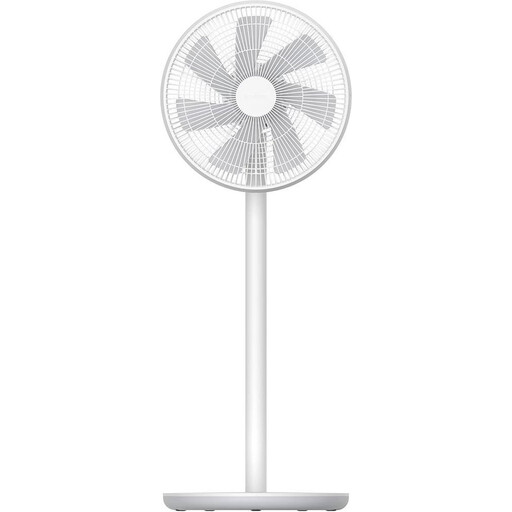
 No image available
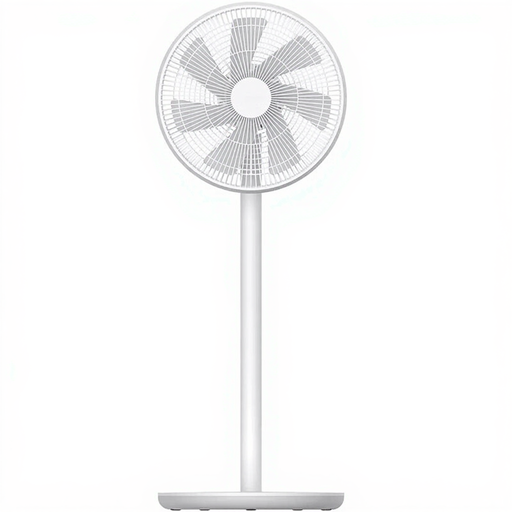
A height-adjustable model with oscillation to change the direction of the airflow.
The product name lists 7 blades, 90° oscillation, app control and an airflow range of 12 m.
No. An air circulator moves air around the room but does not automatically remove indoor air. The Dutch Government advises keeping enough trickle vents and top-hung windows open, even after sleeping. Choose a fan to circulate air, not as a replacement for fresh air from outside.
Place the model somewhere suitable and stable, and point the head towards your seating area. Consumentenbond warns that a table fan on the floor may be too low for you to feel the airflow properly.
Unplug the fan before cleaning it and follow the instructions for the exact model. Disassembly steps described for a Honeywell HT900 series do not necessarily apply to other fans.
No. According to ACM ConsuWijzer, if you use a product normally, you are entitled to one that works properly for as long as you could reasonably expect. If a product is faulty, the seller must offer an appropriate solution at no extra cost; the applicable period is not the same for every fan.
A CE mark is required when the relevant EU rules say it is for that product. The NVWA outlines the rules for electrical products, among others; the applicable requirements depend on the product. CE is the manufacturer's declaration of conformity, not an independent quality assessment.