
Families who share the same breakfast
If several people regularly eat the same product, compare the pack size with the number of portions you get through together. Also check whether you can store an opened pack properly.


A large pack is a good choice if your household eats the same cereal regularly and you can use it up in good time once opened. If everyone prefers different flavours or has a different breakfast routine, smaller packs or individual portions may be more practical. Before ordering a larger quantity, compare the number of portions, nutritional information and allergens for each product.
If several people regularly eat the same product, compare the pack size with the number of portions you get through together. Also check whether you can store an opened pack properly.
If a product is a regular part of your breakfast, the full nutrition table is worth checking. Compare sugars, fibre, fat and salt per 100 g, then consider what a typical portion means for you.
A large pack is less practical if not everyone likes the same flavour or can eat the product. Individual portions or several smaller packs give you more choice. If anyone has an allergy, always check the information for the specific variant.
First, work out how often you all eat the same product. This will help you decide whether one large bag, a multipack of individual bags or smaller portions best suits your breakfast routine.
| What to consider | What to check before buying | Who should pay particular attention? |
|---|---|---|
| Stock and waste | Compare the pack size and number of portions with how much you use; check how to store the product once opened. | If we often eat the same cereal together, we want enough in the cupboard without leaving an opened bag unused. Around 36% of consumers put planning their stock first. |
| Nutritional information | Compare sugars, fibre, fat and salt per 100 g; also read the ingredients list. | For a breakfast product we eat regularly, I want to know what’s in a typical portion. Around 29% of consumers put the ingredients first. |
| Preparation and variety | Check the preparation instructions and whether the pack contains individual portions. | If we don’t all have breakfast at the same time, we want to be able to grab a portion without being tied to one large pack. Around 21% of consumers put convenience first. |
| Allergens and suitability | Check the ingredients, allergens and any warnings about possible traces for the exact variant. | If someone in the household needs to avoid certain ingredients, I need to know whether the product is suitable for them before buying a larger quantity. Around 14% of consumers put this check first. |
The number of portions varies from product to product: Albert Heijn’s product pages list 12 portions for 360 g of Kellogg's Oaties and 10 portions for 400 g of AH Krokante muesli geroosterde noten.
Compare the stated number of portions with how much you actually use for breakfast.
Fibre is only one part of the nutritional information. For Kellogg's Extra Original, Albert Heijn’s product page lists 19 g of sugars per 100 g as well as fibre.
Read the full table per 100 g and the ingredients list before comparing products by their nutritional profile.
A product that one member of the family can’t eat isn’t an obvious choice for a shared stock-up. For example, according to its product page, AH Krokante muesli geroosterde noten contains almonds, hazelnuts and cashews.
Before ordering, check the allergen information for your chosen variant, then read the pack label when it arrives.
Products and pack formats vary across these brands. The features listed apply to the products described and not necessarily to the brand as a whole.
A brand to consider if you’re looking for ready-to-eat crunchy cereal.
Worth considering if you’re choosing between portion sachets of porridge oats and a multipack of crunchy cruesli.
An option to consider if you want to make up portions of porridge oats yourself for different people.
The own-brand range includes different types of crunchy muesli, which you should assess individually.
Worth considering if you’re comparing larger boxes of sweet, ready-to-eat cereal.
These products show different ways to stock up for breakfast: oats in one pack, cereal in sachets and granola in multipacks. For each product, check that the flavour, preparation and ingredients suit the people who eat it regularly.
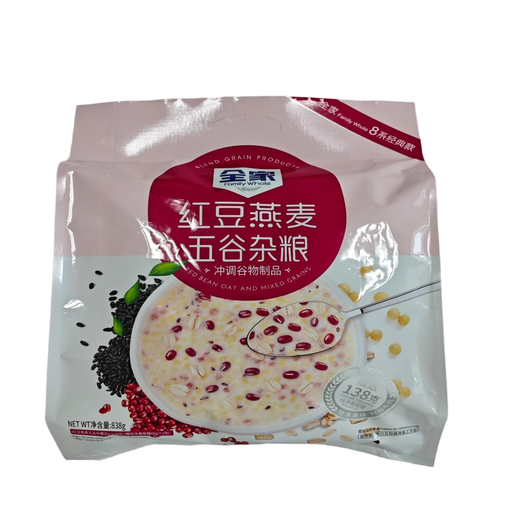 Image unavailable
For households that want to prepare cereal one portion at a time: the grain mix comes in 20 sachets of 35 g and, according to the description, is made with hot water.
The pack also contains two separate sachets of glucose. Compare the nutritional values of the grain mix and glucose separately, rather than treating them as one product. The grain mix contains wheat, oats, soya, rye, barley and sesame, among other ingredients.
 Image unavailable
For households that regularly make their own porridge and want to measure out portions for each person. The pack lists 11 portions and, according to the product information, contains 100% rolled oats.
You’ll need water or milk to prepare it. The product lists cereals containing gluten and possible traces of rye and wheat. Check the current packaging if anyone needs to avoid these ingredients.
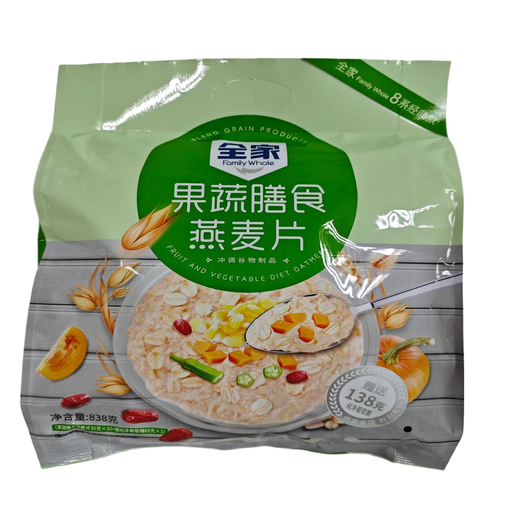 Image unavailable
For households that want to keep individual portions of fruit and vegetable porridge in stock. The oat mix comes in 20 sachets of 35 g, with a separate 138 g of glucose also included.
Sugar is listed in the ingredients, while the stated nutrition table shows 0.0 g of sugars. Check the current packaging before comparing the sugar content. The product contains wheat, oats, soya, rye, barley and sesame, among other ingredients.
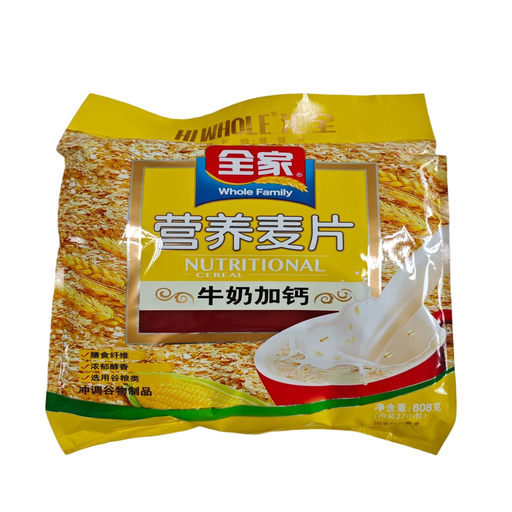 Image unavailable
If you’re looking for breakfast cereal in individual sachets, this pack contains 27 sachets and has a net weight of 808 g. The instructions say to mix one sachet with hot water.
Sugar is listed in the ingredients, while the nutrition table states 0 g of sugars; check the current packaging. The product contains wheat, oats, soya and milk.
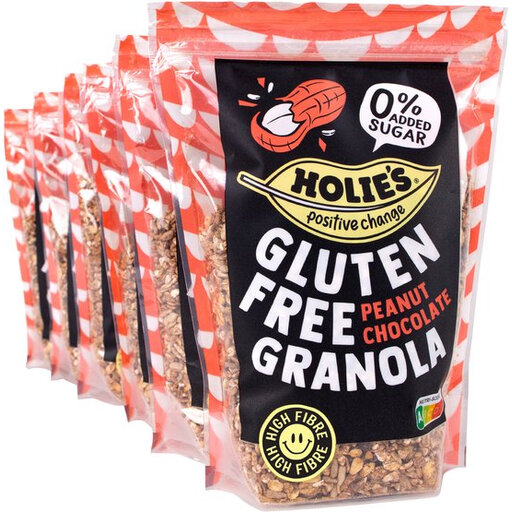 Image unavailable
For households that eat the same granola regularly and want to store their supply in separate packs. Check the use-by date and work out how many portions you’ll get from each pack.
The ingredients information lists peanuts and oats and warns of possible traces of other nuts and soya, among other ingredients. If you follow a gluten-free diet, check the claim and allergen information on the current packaging.
Compare the number of portions on the pack with how often the people who regularly eat it choose this particular product. Count how many breakfasts they have together each week, and remember that your portions may be larger or smaller than the stated serving size.
A multipack is a good choice if you eat the same variant regularly but don’t want to open every pack at once. Check that you have enough storage space and that you’ll use the individual packs before their use-by dates.
Don’t assume it is: check the claim and allergen information for the exact product. According to its product information, Brinta Havermout lists cereals containing gluten and possible traces of rye and wheat.
Before ordering, check the ingredients, allergens, nutritional values, pack size and any preparation instructions for your chosen variant. When it arrives, read the label too, so you can check the information on the product you received.