Who is this setup for?

Storyteller in a reverberant room

You want to record a family story clearly and can place the microphone close to the speaker. Pay attention to positioning and the room’s acoustics: Shure explains that a microphone can’t effectively separate direct speech from reflections in the room.

Family interviewer

You’re recording questions and answers and need to decide whether each speaker needs their own microphone. For multiple USB microphones, RØDE recommends considering the number of available ports and which recording software is compatible with your setup.

Looking for a simple setup

You want to get started quickly at your chosen location and check the recording as you go. Compare the connection, included stand or cable, and headphone output of the model you choose.

What should you consider when choosing?

One microphone for one storyteller

A good fit when: one person speaks at a time and can stay close to the microphone.

Bear in mind: the storyteller needs to stay in position; a directional pickup pattern won’t remove room echo.

A separate microphone for each speaker

A good fit when: several people ask questions, answer or share stories at the same time, and each can speak close to a microphone.

Bear in mind: you’ll need enough connections and software that can record all the microphones together.

What to consider What should you check? Who should pay particular attention?
Clarity in a reverberant room Can you position the microphone close to the storyteller and point it towards them? If possible, make a test recording at the location. If I want to record one story in a reverberant room, I need to be able to hear the speaker clearly without expecting the equipment to silence the room. Around 36% of consumers prioritise clear speech despite room echo.
Recording every speaker Work out how many people will speak at the same time, then check the available USB ports and software for using multiple microphones. If I want to capture both questions and answers from several family members, everyone needs to be able to speak close to a microphone. Around 29% of consumers prioritise recording everyone in the conversation.
Easy setup at the location Check compatibility with your computer, which cable you need, and whether a stand is included. When I’m using a temporary recording spot, I want to avoid setting up lots of separate equipment. Around 21% of consumers consider a quick, easy setup the most important factor.
Monitoring and expanding your setup Check whether the model has a headphone output and, if you might need it later, offers both USB and XLR. If I want to check what’s being recorded as I go or might consider a different setup later, I need to know which connections I’ll actually need. Around 14% of consumers prioritise monitoring or expandability.

Common buying mistakes

  • Buying a microphone to remove room echo afterwards

    Reflections from the room are already present by the time the sound reaches the microphone. Shure warns that a microphone can’t effectively separate direct speech from these reflections.

    If possible, choose a quieter spot and place the microphone close to the storyteller before considering additional sound processing.

  • Assuming two USB microphones will automatically record together

    Using multiple microphones requires enough connections, any necessary power and software that works with your setup.

    Check that the whole setup is compatible and make a test recording with all the microphones before the family conversation.

  • Confusing an XLR-only version with a USB/XLR model

    Connections vary between models and versions. You can’t connect an XLR-only microphone directly to a computer as a USB microphone.

    Check that the specific version has a USB output. An audio interface or mixer may be needed to connect an XLR-only model to a computer.

Brands to compare

Samson

The Samson Q2U is a dynamic cardioid USB/XLR microphone for a speaker who stays close to it.

  • Samson lists direct monitoring, a mute switch, and an included desktop tripod stand, windscreen and cables.
  • The manufacturer describes it as less sensitive to background noise, but you’ll still need to think carefully about placement in a reverberant room.

RØDE

The PodMic USB is a dynamic USB-C/XLR microphone for a fixed, close speaking position; the NT-USB Mini is a compact USB desktop microphone.

  • RØDE lists headphone monitoring on both models. For the PodMic USB, RØDE recommends a distance of around 5–10 cm from the speaker.
  • RØDE Connect is a software option for compatible multi-microphone setups; it doesn’t guarantee that any USB microphones will work together.

Shure

Shure describes the MV7+ as a USB-C/XLR voice microphone with automatic level adjustment and direct headphone monitoring.

  • Shure describes this model as having digital processing to reduce background noise.
  • This feature doesn’t remove the need to speak close to the microphone: Shure warns that room echo can’t be effectively separated from direct speech.

Razer

The Seiren V3 Mini is a compact USB condenser microphone with a supercardioid pickup pattern, designed for a fixed, close speaking position.

  • Razer lists plug-and-play connectivity and tap-to-mute controls.
  • A directional pickup pattern doesn’t mean one microphone will capture everyone’s voice clearly around a large table.

USB microphones at Joybuy

These Joybuy picks are USB microphones for a fixed speaking position and recording one storyteller nearby. Positioning still matters in a reverberant room.
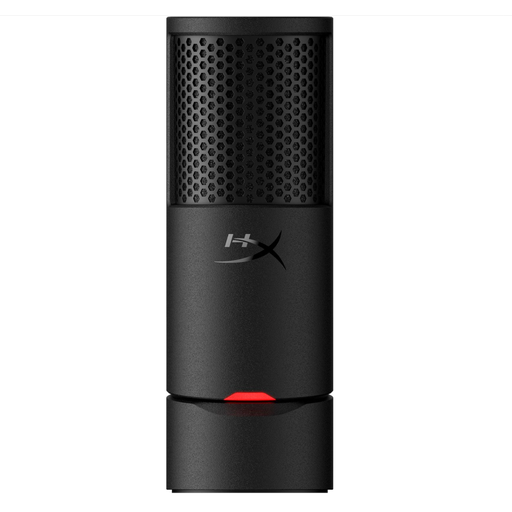
HyperX SoloCast 2 USB Cardioid Black microphone

HyperX SoloCast 2 USB Cardioid Black

A USB microphone for a fixed speaking position, with monitoring and muting controls for use while recording.

Cardioid pickup pattern, 3.5 mm headphone connection, mute button and scissor-arm stand.

For clear speech in a reverberant room, the microphone needs to be close to the speaker; its pickup pattern won’t remove existing room echo.

View at Joybuy
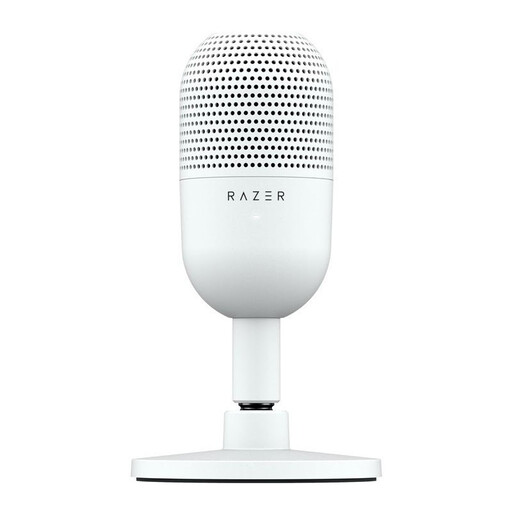
Razer Seiren V3 Mini White USB microphone

Razer Seiren V3 Mini White

A compact USB microphone for a fixed, close speaking position, with tap-to-mute controls.

Supercardioid pickup pattern and tap-to-mute controls.

For clear speech in a reverberant room, the microphone needs to be close to the speaker; its pickup pattern won’t remove existing room echo.

View at Joybuy

Frequently asked questions

Can I put one USB microphone in the middle of the table for the whole family?

That’s not a reliable standard setup in a reverberant room: the voices of people sitting further away will reach the microphone less directly, while reflections may still be audible. Try placing a microphone close to each active speaker and listen to a test recording first.

Can I connect two USB microphones to my laptop at the same time?

It depends on the available ports and software. RØDE describes a setup using multiple compatible USB microphones with RØDE Connect; test the combination you plan to use before the family conversation.

How can I avoid a recording that’s too quiet with the RØDE PodMic USB?

For this specific model, RØDE recommends positioning it around 5–10 cm from the speaker, with the top facing their mouth. Then check the input level and monitor the sound as you record. This distance isn’t a general recommendation for other microphones.

Is a microphone always covered by just a two-year warranty in the Netherlands?

No. ACM ConsuWijzer distinguishes between any manufacturer’s or seller’s warranty and your statutory rights. With normal use, the product must meet what you could reasonably expect from it. If the product is faulty, the seller is responsible for providing an appropriate solution.

Can I share recorded family stories online without any restrictions?

Not without considering the context in which you’re publishing them. According to the Dutch Data Protection Authority, audio recordings in which people can be identified may count as personal data. The household exemption may apply if you share them privately within a limited circle. It doesn’t automatically apply to public or organisational publications, which need a lawful basis under the GDPR. Discuss with participants in advance how you plan to use the recording.
