
Family photographer with limited space
You need to fit everyone into the same frame from a limited distance. Canon Netherlands explains that a shorter focal length captures more of the scene from the same position.


For family portraits in a small studio, you need a lens with a wide enough angle of view to fit everyone into the frame from the space available. A zoom is handy if you want to switch between the whole group and smaller portraits in one session. A fast prime gives you a fixed framing, and a wider aperture doesn’t automatically mean faces at different distances will all be in focus. Check the mount and sensor size, then test your framing with the group arranged as planned.
You need to fit everyone into the same frame from a limited distance. Canon Netherlands explains that a shorter focal length captures more of the scene from the same position.
You photograph the whole family as well as smaller groups, and want to adjust the framing without changing lenses. Sigma specifies the 18–50mm F2.8 DC DN as an APS-C zoom; also check which mount fits your camera.
You combine group shots with individual portraits and need to weigh a wide aperture against having enough depth of field for several faces. Canon Netherlands explains that a wider aperture lets in more light, while Nikon explains that a narrower aperture gives you more depth of field.
First, measure the available shooting distance and the width of the group. Then check the mount and sensor size, and assess the framing and depth of field with a test shot.
| What to consider | What to look for | Who is this important for? |
|---|---|---|
| Fitting the whole family in the frame | Measure the maximum shooting distance and the width of the group; test the desired angle of view on the same sensor size. | If I can’t move any further back and need to fit everyone in at once, I prioritise the width of the frame; around 31% of consumers put fitting the whole family first. |
| Choosing the right camera version | Check your camera model, mount and sensor size against the specific lens version. | If you want to make sure the lens fits your existing camera body first, start by checking compatibility; around 25% of consumers make this their priority. |
| Sharpness in the available light | Take a test shot with faces at the actual distances and check whether the exposure is sufficient at your chosen aperture. | If I want to keep several faces in focus in the available studio light, I consider both depth of field and exposure; around 25% of consumers prioritise this balance. |
| Switching between framings | Decide whether you’ll often switch between the whole group and smaller portraits during the session; check that the zoom range is suitable. | If you want to move from a group shot to smaller portraits without changing lenses, adjustable framing is useful; around 19% of consumers prioritise this flexibility. |
From the same camera position, a longer focal length shows less of the scene. In a small studio, the whole group may therefore fall outside the frame if you can’t move any further back.
Test the framing you want with the actual group width and the maximum distance at which you can position the camera.
A wider aperture lets in more light, but reduces depth of field. Faces at different distances won’t automatically all be in focus.
Take a test group shot at the aperture you plan to use, then check the faces at the front and back.
A lens family may include versions for different mounts and sensor sizes. So, the same model name doesn’t necessarily mean every version will fit your camera.
Before ordering, check your exact camera model, mount, sensor size and chosen lens version.
Sigma’s 18–50mm F2.8 DC DN | Contemporary is an APS-C zoom available in the mounts listed by Sigma. It’s for anyone looking for a wide starting focal length and a constant maximum aperture.
Canon lists the RF 24–50mm F4.5–6.3 IS STM for subjects including family groups and interiors, for use with a compatible EOS R body.
The FE 35 mm F1.8 is a prime lens for a compatible Sony E-mount camera, if its fixed angle of view suits the space available.
Tamron offers the 17–70mm F/2.8 Di III-A VC RXD in separate versions for the mounts listed by the brand.
The NIKKOR Z 35mm f/1.8 S is a fixed 35mm option for a compatible Nikon Z body, if that angle of view is wide enough for your studio.
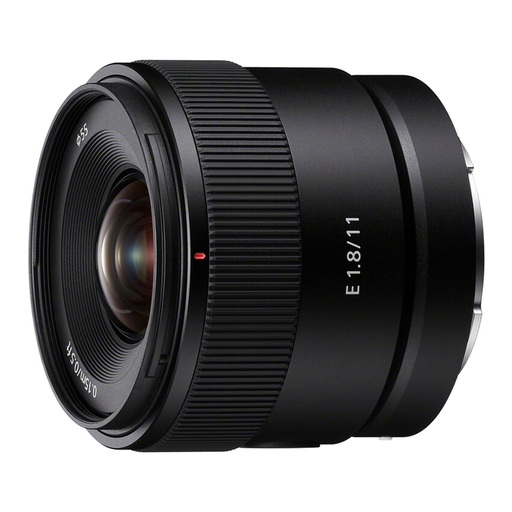
This Joybuy selection focuses on wide group framing from a limited distance: a fixed-focal-length Sony E-mount lens for APS-C. Check that the mount and sensor size match your camera body.
 No image available
The stated 11 mm focal length and 104° angle of view are suited to wide framing. As a prime, this lens doesn’t have a zoom for quickly changing the framing during a session.
The product specifications list 11 mm, F1.8, a 104° angle of view, APS-C and a Sony E mount.
No. F1.8 is the maximum aperture on some lenses, not a setting you have to use. A narrower aperture increases depth of field, but you’ll need suitable exposure. Check every face in a test shot. Nikon explains this relationship between aperture and depth of field.
Compare the mount and sensor size of your exact camera body with the specific lens version. Sigma lists separate mounts and the APS-C format for the 18–50mm F2.8 DC DN, so the model name alone isn’t enough to identify the right version.
A zoom is a good fit if you want to switch between the whole group and smaller framings from the same position during one session. A prime has a fixed angle of view and may offer a wider maximum aperture, but you’ll need to adjust the framing another way and check in advance that the group will fit.
No, the angle of view also depends on the sensor size. Sony gives a full-frame-equivalent focal length of 52.5 mm for the FE 35 mm F1.8 on an APS-C camera, so check the combination of lens and camera body.