
Archive visitor with a full bag
You travel between locations and want to view scans and take notes without constantly having to look for a power socket.


Choose a laptop that’s easy to carry if you’ll be moving between locations frequently. If you’ll be comparing scans with notes for long periods, prioritise screen space, storage and ports. A long stated battery life won’t make an online family history site usable offline: check in advance which files and programmes work without Wi-Fi.
You travel between locations and want to view scans and take notes without constantly having to look for a power socket.
You compare digitised sources, photographs and transcriptions, and would benefit from plenty of screen space and local storage.
You want to carry on working with prepared files while you’re there, and check in advance which websites or apps you’ve chosen actually work offline.
First, consider how often you’ll be carrying your laptop and how long you’ll spend viewing scans alongside your notes. Then check whether your files and genealogy software work without an internet connection, and whether you can connect your existing equipment directly.
| What to consider | What to look for | Who this matters to |
|---|---|---|
| Portability and charging | Check the weight of the exact configuration, the screen size and how you can charge the laptop during your session. | If I’m travelling between archives, I don’t want to carry unnecessary weight, and I want to be able to plan my working time. Portability is the top priority for around 30% of consumers. |
| Scans and storage | Compare the screen space and SSD capacity with the size of your files. The Consumentenbond recommends 512 GB or more if you have lots of large photos and files. | When I’m viewing scans and transcriptions side by side for a long time, I want enough space to read and store them. Around 30% of consumers give screen space and file storage their highest priority. |
| Working offline | Before you leave, turn off Wi-Fi and test whether your chosen app and any files you’ve made available in advance actually open. | If I can’t rely on a stable Wi-Fi connection while I’m there, I want to continue my research using prepared files. Working offline is the main concern for around 20% of consumers. |
| Ports | Compare the ports on the exact configuration with your card reader, external drive and other equipment; also check which accessories are included. | If I want to connect my existing equipment, I want to know in advance whether I can plug it in directly or need an adapter. Around 20% of consumers prioritise ports and accessories. |
Manufacturers state battery life for specific activities and test conditions. Your own screen settings and workload may differ.
Check what the stated battery life is based on, and plan charging around your own working session.
MyHeritage says its website requires a good internet connection. Files available offline will only help if you’ve prepared them in advance and your chosen application supports them.
Before you leave, test on your own laptop whether you can use the files and features you need without Wi-Fi.
Dell offers a range of configuration options. The specifications for Lenovo model 83K000B3ID apply to that specific model code and configuration.
Check the full model code and chosen configuration for memory, storage, ports and keyboard language.
The 13-inch MacBook Air M5 is an option if you’re looking for a compact macOS laptop and mainly work in a browser.
The Dell 14 DC14250 is a configurable Windows option for data entry and source research.
The IdeaPad Slim 3 14IRH10 is a 14-inch Windows range with configurations that may suit your equipment connections.
The Zenbook 14 OLED UX3405 is worth considering if you’re looking for a portable laptop with a 14-inch screen.
This selection includes compact Windows laptops, a larger 15.6-inch screen and 13-inch Apple laptops for research and note-taking on the go.
 Image unavailable
A compact Windows laptop for viewing and entering documents, and storing research files locally.
14-inch 16:10 screen, 8 GB RAM, 512 GB SSD and Windows 11 Home. This configuration has two USB-C ports, two USB-A ports and HDMI.
 Image unavailable
A 14-inch Windows laptop with a touchscreen for viewing sources and taking notes on the go.
1920 × 1200 OLED touchscreen, 16 GB RAM and 512 GB SSD. This configuration has two USB-A ports, two USB-C ports and HDMI. The charger is not included; the product information recommends a compatible USB-C charger of at least 45 W.
 Image unavailable
A larger-screen option if you’d like more room to view digitised documents and notes while researching sources.
15.6-inch Full HD IPS screen, Intel Core 7 150U, 16 GB RAM, 512 GB SSD and Windows 11 Home. This configuration lists USB-C, USB-A, HDMI, Gigabit Ethernet and a microSD card reader.
 Image unavailable
A 13-inch macOS laptop for browser-based research and note-taking, provided the software you need works on macOS.
13.6-inch screen, 24 GB of memory and a 1 TB SSD. The listed configuration weighs 1.23 kg and has two Thunderbolt 4/USB-C ports; check whether your peripherals need an adapter.
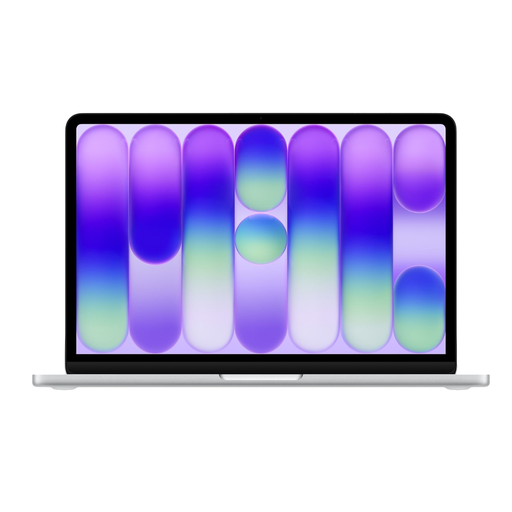 Image unavailable
A 13-inch laptop for mobile research and note-taking, provided the programmes and files you need work with macOS.
8 GB of memory, 512 GB SSD and two USB-C ports. The product information lists a weight of 1.23 kg. The power adapter is not included; the description recommends a USB-C Power Delivery adapter of at least 20 W.
That depends on the service and app you choose. MyHeritage says its website requires a good internet connection. Save any necessary files locally in advance and test your workflow without Wi-Fi; Google warns that some Chromebook apps don’t work offline.
Choose a configuration that suits the size of your files and how many programmes you use at once. The Consumentenbond recommends 8 GB RAM and 256 GB of storage as a starting point for light internet and office work, 16 GB for running several programmes at once, and 512 GB or more if you have lots of large photos and videos. Use this as a buying guide, and consider the size of your own scan collection.
Only if your chosen workflow requires it. A browser-based service may need an internet connection; if you’re using a desktop programme, check that it works with your operating system and test before you leave that you can open your research files.
First, check which privacy rules apply to what you plan to publish. The Autoriteit Persoonsgegevens says that consent is usually required to publish personal data publicly. There is an exception for use solely for personal or household purposes, subject to the stated conditions; a family tree that anyone can find doesn’t automatically qualify.
For distance purchases covered by the rules, the Rijksoverheid states that in many cases you have a 14-day cooling-off period. Check whether the specific purchase meets the relevant conditions; according to the Rijksoverheid, an online purchase from a private seller doesn’t fall under the same definition.