
Researcher with a small, shared desk
You want to keep space beside your keyboard for a mouse and documents, while being considerate of someone you share your room with. Check noise claims for the exact model.


For family history research at a small desk, a compact keyboard is a good fit if you need space for documents and a mouse; choose a full-size model if you often enter number sequences and have enough desk width. CHERRY lists a numeric keypad and a width of 458 mm for the KC 1000. Check the layout and connection of the exact version: manufacturers’ descriptions such as ‘quiet’ are not a measurement of the noise in your room.
You want to keep space beside your keyboard for a mouse and documents, while being considerate of someone you share your room with. Check noise claims for the exact model.
You’re copying names, places and years, and want to decide whether a separate numeric keypad is worth the extra desk width.
You compare sources on a laptop for extended periods and want to position your keyboard, mouse and screen so you’re not working in the same posture for too long.
Start with the desk width you have available and the keys you use most often. Then check that the layout and connection suit your laptop or tablet.
| What to consider | What should you check? | Who should pay particular attention? |
|---|---|---|
| Desk space and noise | Measure the available width and check the position of the arrow keys and Delete key. Check noise information for the exact version. | I want to keep space for documents and a mouse, and I need to consider someone I live with. Around 31% of consumers cite space and quiet as their main reason for buying. |
| Entering names and dates | Try the characters, years and correction keys you usually use on the layout of the version you’re considering. | If I often enter number sequences, I want to know whether a separate numeric keypad is worth the extra space. Around 25% of consumers prioritise data entry. |
| Posture during long sessions | Check whether you can position your keyboard and mouse comfortably and adjust your laptop setup; change your posture regularly. | During longer sessions, I want to position my screen, keyboard and mouse so my workspace remains comfortable. Around 25% of consumers prioritise their working posture. |
| Connection and switching between devices | Check Bluetooth support or available USB ports, the receiver and the layout of the version you’ve chosen. | If I switch between, for example, a laptop and tablet while researching, the connection needs to work with both devices. Around 19% of consumers prioritise switching between devices. |
A manufacturer’s description is not the same as an independent noise measurement; the version and your surroundings also make a difference.
Check noise information for the exact model and don’t base your choice on the word ‘quiet’ alone.
Compact models may not have a separate numeric keypad, and the arrow keys or Delete key may be in a different position.
Decide in advance how often you enter dates and number sequences, and check the layout of the version you’re considering.
If you later find you enter lots of numbers, you may need a separate numeric keypad.
The models reviewed use different connections, such as Bluetooth and a USB receiver.
Check your device’s compatibility, the ports available and which accessories are included with the version you’ve chosen.
Logitech describes the Pebble Keys 2 K380s as a compact Bluetooth keyboard that lets you switch between devices. According to Logitech, the separate MX Keys Mini has backlighting and programmable keys.
Trust describes the compact, rechargeable Lyra as suitable for use with multiple devices, and the wired Primo as a full-size keyboard.
CHERRY describes the KC 1000 as a full-size wired keyboard with a numeric keypad and USB-A connection.
This selection includes compact models for limited desk space and full-size versions for those who want a numeric keypad; there are also options for use with multiple devices.
 Image unavailable
The compact design suits a small desk; the product description mentions quiet scissor keys and connection to up to three devices.
Connects via USB receiver and Bluetooth. No separate numeric keypad; QWERTY US layout.
 Image unavailable
The full-size layout with numeric keypad is suited to entering lots of numbers, but takes up more desk space than a compact model.
The product description mentions quiet scissor keys, a USB receiver or Bluetooth, and USB-C charging. QWERTY US layout.
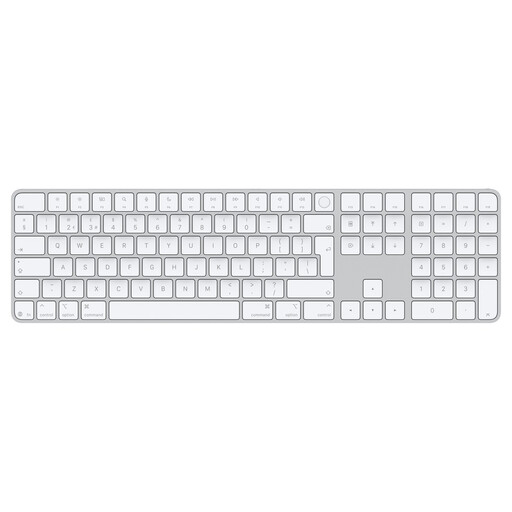 Image unavailable
This full-size version has a numeric keypad and is designed for Mac models with Apple silicon.
The product description mentions Bluetooth, a rechargeable battery and document navigation keys. The stated width is 41,87 cm.
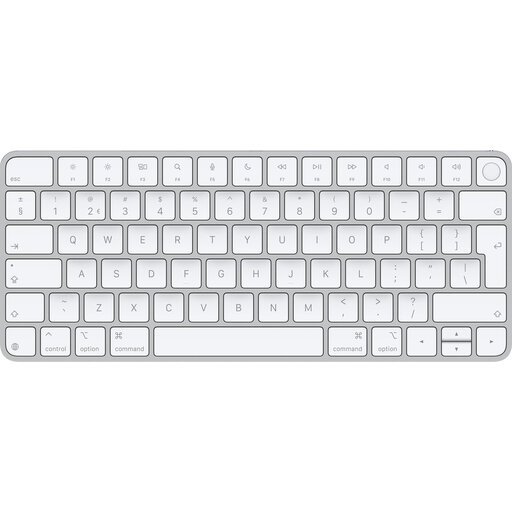 Image unavailable
The compact tenkeyless version is designed for Mac models with Apple silicon and leaves more room on a small desk.
No separate numeric keypad.
 Image unavailable
The compact 60% layout suits a small workspace; bear in mind that it has no separate numeric keypad.
Wired connection, QWERTY US layout and RGB lighting are listed in the product name.
Not necessarily. Archieven.nl allows you to search by names and years, among other things. If you often enter number sequences, compare a full-size model with a numeric keypad against a compact model that leaves room for documents.
Check the supported devices and connections for the exact version. Logitech lists Bluetooth and switching between three devices for the Pebble Keys 2 K380s; Trust lists a USB receiver and two Bluetooth connections for the Lyra.
No. Also consider the position of your screen, keyboard and mouse, and change your posture regularly. Arboportaal describes the demands of working with display screens; a quietness claim alone says nothing about how your workspace is set up.
According to ACM ConsuWijzer, the cooling-off period for an online consumer purchase generally ends 14 days after delivery, subject to legal exceptions. This is separate from the statutory guarantee: if a product does not perform as you could reasonably expect under normal use, the seller must offer an appropriate solution.
Not automatically. Arboportaal describes workplace requirements for employees; for employees who work with display screens for more than 2 hours a day, the screen and keyboard must not be attached to each other. Being a student does not, by itself, mean those employment rules automatically apply to your situation.