
Home bakers looking for Fairtrade cocoa
You want to choose cocoa or chocolate for a separate baking recipe and know exactly whether the Fairtrade claim applies to that ingredient, rather than to a currant bun.


If you’re looking for Fairtrade cocoa for a pepernoten recipe, choose a cocoa ingredient and check what the claim on the packaging applies to; it doesn’t automatically make a currant bun Fairtrade. If you want currant buns, baking them yourself lets you choose the recipe, while with a packaged product you should check the current label.
You want to choose cocoa or chocolate for a separate baking recipe and know exactly whether the Fairtrade claim applies to that ingredient, rather than to a currant bun.
You want to decide whether to bake your currant buns with white flour or wholemeal wheat flour, and can set aside time for the dough to rise.
You’re choosing a packaged currant bun and want to read the ingredients, allergens and any Fairtrade claim on the current packaging before using it.
First decide whether you’re looking for currant buns or cocoa for a separate pepernoten recipe. Then consider which of these three questions matters most to you: the Fairtrade claim, the recipe or the label.
| What to consider | What to check when buying | Who it matters to |
|---|---|---|
| Fairtrade claim | Read the marking and check which ingredients the claim covers. Fairtrade International has several markings, including one for a single Fairtrade ingredient in a composite product. | I want to choose cocoa for a separate baking recipe without assuming that a claim about the cocoa applies to the whole currant bun; an estimated 40% of consumers considering these products prioritise checking this certification. |
| Recipe | Compare the type of flour and the stated fibre per serving; if you’re baking from scratch, allow time for the dough to rise. | When I bake currant buns, I want to choose the type of flour myself and be able to set aside time for the dough; around 30% of these consumers prioritise choosing the recipe. |
| Current label | Check the ingredients and allergen information on the packaging just before use; also check the salt content if it’s relevant to your choice. | When buying packaged currant buns, I want to know which ingredients and allergens the product currently contains; an estimated 30% of these consumers consider checking the label most important. |
Fairtrade International has markings for composite products, including one that applies to a single Fairtrade ingredient. So a claim about cocoa doesn’t automatically tell you anything about a currant bun.
Check which ingredients are covered by the Fairtrade claim on the specific product before assuming it applies to the whole product.
Albert Heijn Allerhande’s currant bun recipes don’t include pepernoten or chocolate as standard ingredients. So a currant bun recipe and cocoa for a separate baking project call for different shopping lists.
First choose which recipe you’re going to make, then check which ingredients it actually calls for.
Albert Heijn notes that product information, including ingredients and allergens, can change. So a product page you read earlier may not match the packaging you’re using.
If you have allergies or specific ingredient requirements, always check the current packaging before using the product.
Relevant if you’re looking for cocoa powder for a separate baking use, not as a label for Fairtrade currant buns.
Relevant for recipes for classic and wholemeal currant buns, and for information on product labels.
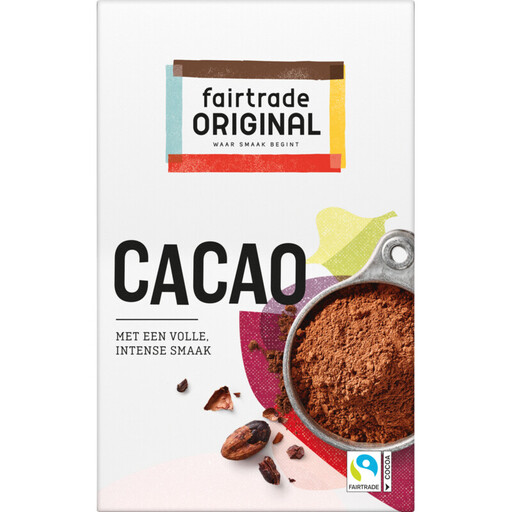
Relevant as a retailer showing Fairtrade Original Cocoa Powder 125 g as a baking product.
This Joybuy product is suited to choosing cocoa powder as a standalone baking ingredient. Check your pepernoten recipe to see whether it calls for cocoa powder; if you’re looking for currant buns, this is a different type of product.
 No image available
Consider this powder for a separate baking recipe that calls for cocoa powder; check whether it’s suitable for your pepernoten recipe.
Quantity: 125 g. Check the current packaging to see what the Fairtrade statement applies to. This is not a currant bun or ready-made chocolate.
No. A claim about Fairtrade cocoa doesn’t automatically apply to a currant bun. For composite products, Fairtrade International has different markings, including one for a single Fairtrade ingredient. So check the claim on the packaging of the product you’re buying.
Check the current ingredients and allergen label for each product separately. The product information for AH Large Raisin Currant Buns lists wheat, milk and lactose, and states that the product may also contain sesame, soya, almonds and hazelnuts; don’t assume this information applies to other currant buns or cocoa.
Because the ingredients and product information can change. Albert Heijn therefore recommends checking the packaging before using the product, even if you’re already familiar with the online information or an earlier pack.