
Gamers who prioritise Fairtrade cocoa
You want to be able to check whether the cocoa in the snack you choose carries a Fairtrade label. If breakfast cake can’t be shown to meet this requirement, you’re open to considering a different kind of snack.


If you want Fairtrade cocoa, only choose a snack whose packaging or product page explicitly confirms this for the exact variant; a chocolate flavour alone is no proof. If breakfast cake is a must-have while you’re gaming, assess it separately for sugars, fibre, portion size and any dietary requirements. Don’t assume a Fairtrade claim for another product applies to it.
You want to be able to check whether the cocoa in the snack you choose carries a Fairtrade label. If breakfast cake can’t be shown to meet this requirement, you’re open to considering a different kind of snack.
You’re looking for breakfast cake to enjoy while gaming and comparing its sugars, fibre and portion size. This nutritional information doesn’t answer the separate question of whether the cocoa is Fairtrade.
First, you need to check whether the exact variant meets your dietary requirements. For example, check for the gluten-free symbol, as well as the ingredients and allergen information. A Fairtrade label doesn’t replace these checks.
First decide whether it has to be breakfast cake, or whether another snack with an explicit Fairtrade cocoa label would also suit you. Then compare the features of the exact variant you want to eat.
| What to consider | What to check | Who is it important to? |
|---|---|---|
| Fairtrade cocoa | Look on the packaging or product page for the exact variant for an explicit Fairtrade cocoa label or an applicable certification mark. | If the cocoa’s origin is my deciding factor, I want to be able to find that claim on the snack I choose. This check is the top priority for around 33% of consumers. |
| Sugars and fibre | Compare the nutritional values per 100 g and, if provided, per portion; also read the ingredients list. | For my snack, I want to know how much sugar and fibre the breakfast cake I actually eat contains. This nutritional profile is the main consideration for around 27% of consumers. |
| Portion size and sharing | Check whether the cake is pre-sliced or packaged as individual bars, and how much a portion weighs. | If I want to share or take something with me while gaming, the packaging needs to suit how I’ll use it. This practical point matters most to around 20% of consumers. |
| Dietary requirements | If you need a gluten-free option, check the label on the exact variant; also read the ingredients and allergen information. | If I have a dietary requirement, the cake I choose must meet it before any other features come into play. Suitability comes first for around 20% of consumers. |
Cocoa in the ingredients list or a chocolate coating doesn’t show how the cocoa was sourced. For example, Jumbo lists Peijnenburg breakfast cake bars with chocolate, but that doesn’t confirm the Fairtrade status of those bars.
Check the Fairtrade label on the packaging or product page for the exact bar.
A retailer may sell a product with an explicit Fairtrade cocoa label, but that doesn’t mean the label also applies to its breakfast cake. PLUS lists a doughnut with Fairtrade Cocoa, but a doughnut isn’t breakfast cake.
Check the product type and Fairtrade label for each individual variant.
The name ‘Wholegrain with no added sugar’ says nothing about any Fairtrade status. A gluten-free label also doesn’t tell you which other allergens a product contains.
Check the nutritional information and allergens on the packaging for the exact product, and check separately for a Fairtrade label.
The fact that a product is breakfast cake doesn’t tell you what type of salt was used in that particular cake.
If iodine matters to your choice, look in the ingredients list for the exact variant for an explicit mention of iodine-containing or iodised salt.
The range includes different types of breakfast cake, including pre-sliced cake and bars with chocolate.
Jumbo offers a gluten-free breakfast cake variant, among other products, and also lists breakfast cake from other brands.
PLUS lists breakfast cake and products with an explicit Fairtrade cocoa label as different product types.
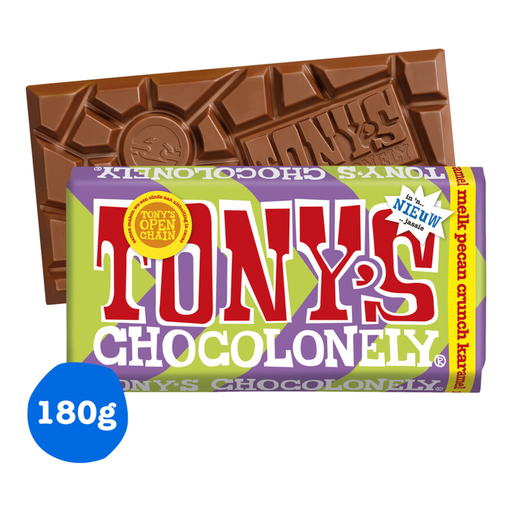
This is a chocolate bar for anyone who values an explicit Fairtrade cocoa label more than having breakfast cake as the product type. Check the label on the packaging of the variant you choose.
 No image available
An option if you’d rather have a chocolate bar than breakfast cake. The product description mentions Fairtrade milk chocolate; check the label on the packaging. This is the 180 g pecan and caramel variant. Compare the sugars per 100 g if you’re keeping an eye on them.
No. Chocolate or cocoa in the ingredients doesn’t prove Fairtrade status. Fairtrade International explains certification marks for products with multiple ingredients; check which label appears on the packaging or product page for the exact product.
Only if breakfast cake isn’t a requirement for you. A chocolate bar is a different type of product, so compare the ingredients, nutritional values and portion size before choosing it for the same snack break.
No. Peijnenburg lists 4,9 g of sugars per 100 g for Wholegrain with no added sugar. Compare the total sugars on the label and check separately for any Fairtrade label.
Read the ingredients list for the exact variant and look for an explicit mention of iodine-containing or iodised salt. Don’t assume which type of salt was used just because the product is breakfast cake.