
If Fairtrade cocoa is your priority
You want to be able to check the Fairtrade status of the cocoa in the product you buy. Breakfast cake with chocolate chosen separately is another option if a chocolate variant doesn’t provide clear information.


For an Italian-themed evening, only choose chocolate breakfast cake if the packaging or current product information for that exact variant confirms the Fairtrade status you want for the cocoa. If you want to check the cocoa separately, you could also serve plain or wholemeal breakfast cake with Fairtrade-certified chocolate chosen separately. Compare portion sizes and read the ingredients and allergen information for the products you buy.
You want to be able to check the Fairtrade status of the cocoa in the product you buy. Breakfast cake with chocolate chosen separately is another option if a chocolate variant doesn’t provide clear information.
You’re looking for breakfast cake with chocolate for dessert or a drinks occasion, and want to know the portion sizes and which sugars or sweeteners are listed on the label.
If rye, other gluten-containing cereals, milk, soya or nuts matter to anyone you’re serving, read the ingredients and any warnings on the packaging of the product you actually buy.
Choose this if: you want to serve the cake with chocolate straight away and can check the Fairtrade status of the cocoa in that exact variant.
Trade-off: a retailer’s general cocoa policy doesn’t necessarily tell you which certification applies to the product in that pack.
Choose this if: you want to select the chocolate separately based on its Fairtrade certification.
Trade-off: you’ll buy and serve two products rather than a ready-made chocolate breakfast cake.
| What to consider | What to check when buying | Who it matters to |
|---|---|---|
| Fairtrade cocoa | Check for a Fairtrade statement on the chocolate you’ve chosen or the exact breakfast cake variant. PLUS says that all cocoa in its own-brand products has been Fairtrade-certified since 2020; if you’re buying breakfast cake from PLUS, also check whether it contains cocoa. | For my dessert board, I want to be able to check the Fairtrade status of the cocoa in what I buy, choosing the chocolate separately if necessary. Around 50% of consumers make checkable certification status their top priority. |
| Chocolate and ease of serving | Choose between a cake with chocolate and a plain base with chocolate on the side. If you’re choosing a ready-to-serve option, check the portion size too. | If I want to fill the board without any extra preparation, I’m mainly looking for a cake I can serve with chocolate straight away. Ease of serving is the top priority for around 30% of consumers. |
| Nutrition information and allergens | Compare sugars on a like-for-like basis, for example per 100 g or per portion, and read the ingredients and allergen information. If the product contains sweeteners, check the warnings on the packaging too. | When I’m considering ingredients or portion size, I want to know what’s in the cake I’ve chosen before serving it. These checks matter most to around 20% of consumers. |
A policy on own-brand cocoa doesn’t automatically mean that a particular breakfast cake contains cocoa, or tell you which certification is stated for the variant you’ve chosen. For example, Albert Heijn says its own-brand cocoa is Rainforest Alliance- or Fairtrade-certified; these two labels don’t mean the same thing.
If Fairtrade cocoa is a condition of your purchase, check the packaging or current product information for the exact variant.
Peijnenburg’s choco bar with no added sugars carries a warning about a possible laxative effect if consumed in excess. The Netherlands Nutrition Centre also gives the sugar content of a 30 g slice of breakfast cake as 11.2 g; don’t treat this as the nutritional value for every variant.
Compare the nutrition information per portion and, if the product contains sweeteners, read the usage warning too.
Breakfast cake can contain rye, and other ingredients and warnings may also be relevant for chocolate variants. The Netherlands Food and Consumer Product Safety Authority explains the labelling requirements for the 14 mandatory allergens.
Read the full ingredients list and any warnings about cross-contamination on the packaging of the product you’re serving.
The Netherlands Nutrition Centre says that bakers aren’t required to use baker’s salt. So don’t assume that all breakfast cake contains iodised baker’s salt.
Check the ingredients list or ask the manufacturer which type of salt is used if it matters to your choice.
Worth considering if you’re looking at a PLUS own-brand product containing cocoa.
Its range includes sliced wholemeal breakfast cake and a separate choco bar.
Stocks an AH Biologisch chocolate breakfast cake and publishes information about its own-brand cocoa.
Its luxury breakfast cake range includes a dark chocolate and nut variant.
This sliced wholemeal breakfast cake is a good fit for a sharing board where you choose the chocolate separately and check its Fairtrade certification independently. The product shown is not itself a chocolate breakfast cake.
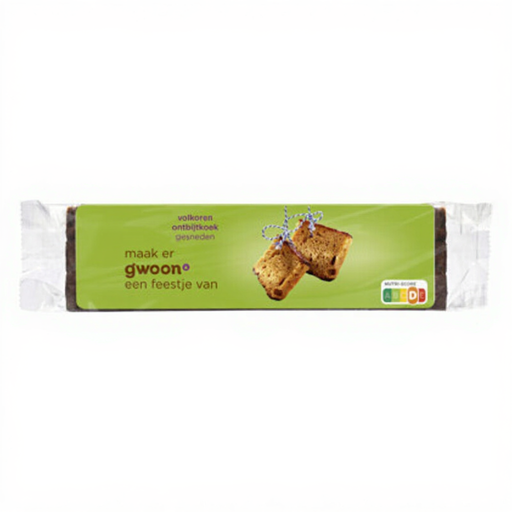 Image unavailable
This sliced wholemeal breakfast cake can be served as a base with Fairtrade-certified chocolate chosen separately.
Pack size: 485 g. Before serving, check the current ingredients and allergen information, especially if rye or gluten is relevant to anyone.
Look for a Fairtrade statement about the cocoa on the current packaging or product information for that exact variant. PLUS says the cocoa in its own-brand products is Fairtrade-certified, but if you’re buying breakfast cake from PLUS, also check whether the product contains cocoa and falls under that own-brand policy.
No. A general cocoa policy isn’t a product-specific Fairtrade statement. Albert Heijn says its own-brand cocoa is Rainforest Alliance- or Fairtrade-certified; check which label appears on the breakfast cake you want to buy.
Read the ingredients list and any cross-contamination warnings on the current packaging. Check which gluten-containing cereals and other relevant allergens, such as milk, soya or nuts, are listed for the variant you’ve chosen.
No, don’t assume that it does. The Netherlands Nutrition Centre says bakers aren’t required to use baker’s salt; check the ingredients list or ask the manufacturer which type of salt is used if it matters to your choice.