Choose a breakfast cake that suits your recipe in terms of ingredients and shape. If you also want to shop Fairtrade, look for an explicit Fairtrade claim on any cocoa or chocolate you add; this doesn’t automatically say anything about the breakfast cake itself. Check each product’s packaging separately, especially if allergens or nutritional information are important to your choice.
Who is this choice relevant to?
Home bakers who want to use Fairtrade cocoa
If you use breakfast cake in a recipe and add cocoa or chocolate, you can check the Fairtrade claim on that ingredient separately. PLUS says that the cocoa in its own-brand products has been Fairtrade-certified since 2020; Jumbo lists Fairtrade Original Cocoa Powder in its range. That doesn’t automatically make the breakfast cake itself Fairtrade.
Bakers who check for allergens
Breakfast cake and chocolate can contain different ingredients that need careful checking. A raisin breakfast cake listed by Jumbo contains rye and wheat, among other ingredients, and carries warnings about the possible presence of other allergens. Check the current label for every product you choose.
Bakers comparing sugars and fibre
If breakfast cake makes up a large part of your recipe, it’s useful to compare the nutritional values per serving and per 100 g. The Voedingscentrum gives 11.2 g of sugars and 1.1 g of fibre for an average 30 g slice of breakfast cake; the values for the variety you choose may differ.
What should you look for when buying?
First decide whether Fairtrade certification matters specifically for the cocoa or chocolate. Then compare breakfast cakes by their ingredients, nutritional information and the form you want to use.
| What to consider |
What to check |
Who is this important to? |
| Fairtrade cocoa |
Look for an explicit Fairtrade claim on the chocolate or cocoa powder you choose. Assess any claim on the breakfast cake separately. |
I want to add cocoa to my breakfast cake recipe and be able to see exactly what the Fairtrade claim applies to. This check matters most to around 42% of consumers. |
| Ingredients and nutritional information |
Read the ingredients and allergen information for both products; compare sugars and fibre per 100 g and per serving. |
If I’m baking for someone who needs to avoid certain ingredients, or I want to compare sugars and fibre, the label determines my choice. This is estimated to be the top priority for 33% of consumers. |
| Shape of the breakfast cake |
Compare sliced and unsliced cakes, or individually wrapped portions, with the amount your recipe calls for. |
For crumbs or pieces I weigh out myself, I want to use the cake differently than I would for individual portions. Around 25% of consumers prioritise this format. |
Common mistakes
-
Assuming Fairtrade cocoa means Fairtrade breakfast cake
A Fairtrade claim on chocolate or in a shop’s cocoa range doesn’t automatically apply to a separate breakfast cake.
Check which product and ingredient the claim applies to. Then choose the breakfast cake based on your recipe and its own label.
-
Assuming ‘no added sugars’ means sugar-free
Peijnenburg lists ingredients including xylitol and rye flour for a variety with no added sugars. On its own, this description doesn’t tell you the total amount of sugars, the allergens or the Fairtrade status.
Read the ingredients list and nutritional information for the exact variety you want to use, and compare them with what your recipe calls for.
-
Trying to identify allergens from the product name
Breakfast cake may contain rye or wheat, while chocolate may list different allergens. The Netherlands Food and Consumer Product Safety Authority stresses the importance of clear allergen information on labels.
Check the current ingredients, highlighted allergens and any ‘may contain’ statements for both products.
Brands and shops to consider
Peijnenburg
Worth considering if you’re choosing breakfast cake for your recipe and want to compare sliced and individually wrapped varieties.
- For a plain variety with no added sugars, Peijnenburg lists xylitol and 17 g of fibre per 100 g; another plain variety comes in individually wrapped slices.
- This product information isn’t a Fairtrade claim for the breakfast cake. Compare the ingredients and format of each variety.
Albert Heijn
A shop where you can compare breakfast cake and individual chocolate products.
- Fairtrade Nederland cites AH Organic chocolate as an example of a Fairtrade-certified product.
- This doesn’t tell you whether a particular Albert Heijn breakfast cake is certified.
Jumbo
Offers separate ranges of breakfast cake and Fairtrade products.
- Jumbo lists Fairtrade Original Cocoa Powder, among other products, as well as different types of breakfast cake, including an unsliced variety.
- Check the Fairtrade claim, ingredients and allergens for each product you choose; a Fairtrade cocoa product doesn’t confirm anything about the breakfast cake.
PLUS
Worth considering if you’re looking for separate cocoa or chocolate with a Fairtrade claim for your baking recipe.
- PLUS says all the cocoa in its own-brand products has been Fairtrade-certified since 2020. PLUS also lists a Fairtrade bar with 70% cocoa.
- The statement about own-brand cocoa doesn’t automatically apply to an entire breakfast cake. Check the current allergen information for the bar you choose, too.
Lidl
A shop that sells breakfast cake and has a separate policy on cocoa in own-brand products.
- Lidl lists Fairtrade, Rainforest Alliance or organic farming as possible certification routes for own-brand cocoa, and says its seasonal Favorina chocolate is Fairtrade-certified.
- This broader cocoa policy doesn’t prove that an individual Lidl breakfast cake is Fairtrade-certified.
Products for breakfast cake and cocoa
These products illustrate the choice between breakfast cake for your recipe and cocoa or chocolate as a separate ingredient. Check the Fairtrade claim and other label information on the product you actually choose.
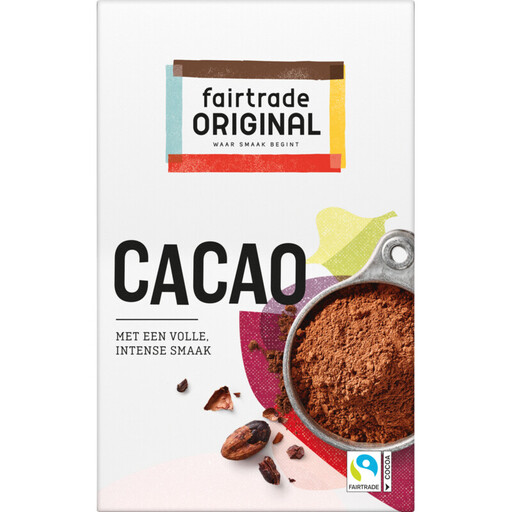 Image unavailable
Fairtrade Cocoa Powder 125 g
For a recipe where you’re choosing cocoa powder separately from the breakfast cake. Check the current packaging to see what the Fairtrade claim applies to, and whether the ingredients suit your recipe.
View at Joybuy
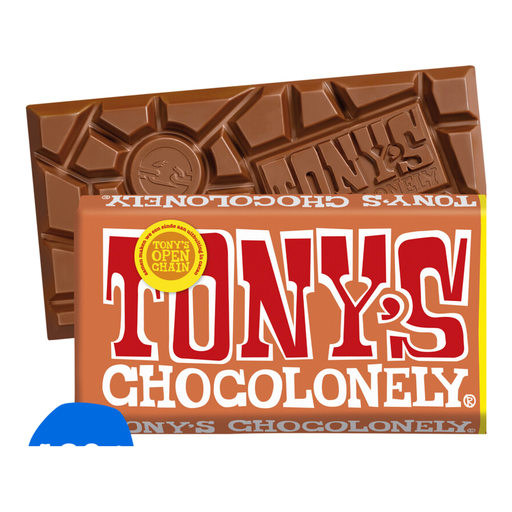 Image unavailable
Tony's Chocolonely Milk Caramel Seasalt 180 g
For anyone considering milk chocolate with caramel and sea salt as a separate ingredient. Check that the flavours, allergen information and way you plan to use the chocolate suit your recipe. Also check the Fairtrade claim on the packaging.
View at Joybuy
 Image unavailable
Snelle Jelle Breakfast Cake Less Sugar-Free 250 g
For anyone looking for breakfast cake to use as part of a baking recipe. Check the ingredients, allergens and nutritional information for this variety; choose cocoa or chocolate separately if a Fairtrade claim on those ingredients is important to you.
View at Joybuy
Frequently asked questions
Is breakfast cake automatically Fairtrade-certified?
No. Don’t assume it is based on the shop, the brand or a Fairtrade claim on another product. Check the breakfast cake’s own packaging or product page for an explicit claim.
How do I choose Fairtrade chocolate for a breakfast cake recipe?
Look for an explicit Fairtrade claim on the chocolate you want to add, and check that the flavour suits your recipe. For example, PLUS lists a Fairtrade bar with 70% cocoa; before using it, check the current ingredients and allergen information, too.
What should I look for if the recipe needs to be gluten-free?
Check the gluten-free claim and current allergen information on both the breakfast cake you choose and the other ingredients. Traditional breakfast cake may contain rye or wheat; the product name alone doesn’t give you enough information.
How should I store breakfast cake and chocolate for baking?
Follow the storage instructions on both packs. Jumbo advises storing its plain breakfast cake in a cool, dry place; also check the best-before date on the product you choose.


