Who is this relevant to?

Stallholders who want to substantiate a cocoa claim

If you want to mention Fairtrade cocoa or Fairtrade chocolate on your menu, choose a biscuit whose current packaging clearly states this. Fairtrade Netherlands says that the cocoa in Verkade biscuits is Fairtrade; even for these biscuits, check how the claim is worded on the specific product you choose.

Stallholders who want to serve portions quickly

If you sell biscuits alongside Dutch doughnuts or hot drinks, pre-set portions can help you serve customers efficiently. Jumbo lists Verkade Lange Nekken in packs of 5 × 2 biscuits; consider whether two biscuits are right for what you plan to offer.

Stallholders who sell biscuits loose

If you display biscuits without packaging or sell them individually, make sure customers can access allergen information before buying. The Netherlands Food and Consumer Product Safety Authority (NVWA) has requirements for providing this information for unpackaged food.

What should you look for?

First, check exactly what the Fairtrade claim covers and how you’ll provide allergen information. Then choose a pack size and a way to source the biscuits that suit your stall.

What to consider What to check before buying Who it matters to
Fairtrade claim for cocoa Check the current packaging to see whether the claim refers to the cocoa, the chocolate or the whole biscuit. Milieu Centraal explains that a Fairtrade logo with a white background may refer only to a certified ingredient. If I make a cocoa claim at my stall, I want to be able to explain exactly what it’s based on. This is the top priority for around 29% of consumers.
Allergens when selling loose Keep a record of the current information for each biscuit and decide how customers can access it before buying. The NVWA also requires you to name the specific type of cereal containing gluten or nut. If I sell unpackaged biscuits, I need to be able to answer questions about allergens before anyone buys. Around 29% of consumers give this information top priority.
Portions and serving Check how many biscuits are included and whether they’re packed individually or in pairs; make sure this suits the way you sell them. When it’s busy, I want to be able to hand over a portion without having to divide up loose biscuits each time. This is the main practical consideration for around 24% of consumers.
Reliable repeat orders Check the pack and Fairtrade claim with every new delivery; a statement about a retailer’s range doesn’t tell you anything about every individual biscuit. If I want to order the same biscuit again, I need to be able to check that the product information still suits my stall. This matters most to around 18% of consumers.

Common mistakes

  • Presenting Fairtrade cocoa as certification of the whole biscuit

    A claim about one ingredient doesn’t automatically apply to all the others. Milieu Centraal points out that a Fairtrade logo with a white background may refer only to a certified ingredient.

    Use the wording on the packaging. For example, write ‘made with Fairtrade cocoa’ if that’s what the product states.

  • Applying a retailer-wide claim to every biscuit

    Lidl says that its own-brand cocoa comes from a range of certified sources, including Fairtrade, Rainforest Alliance and organic farming. ALDI mentions Fairtrade chocolate in its range. Neither statement confirms the status of any particular biscuit.

    For each variety you choose, check the current packaging for the Fairtrade claim, ingredients and allergens.

  • Selling loose biscuits without accessible allergen information

    For unpackaged food, the NVWA requires allergen information to be available before purchase. A label kept behind the stall won’t help if customers can’t access the information.

    Keep an up-to-date written or digital record available where you sell the biscuits. You can provide information verbally if you meet the NVWA’s conditions.

  • Looking only at the number of biscuits in a pack

    At a stall, it makes a difference whether you have to divide the biscuits up or can serve them in ready-made portions. If you display them unpackaged, you’ll also need to provide allergen information appropriately.

    Compare the pack size with the way you plan to sell the biscuits, and decide how you’ll store and serve them before ordering.

Brands and retailers to explore

Verkade

A useful option for chocolate biscuits if you want to be able to explain the source of the cocoa claim.

  • In 2022, Fairtrade Netherlands reported that all the cocoa in Verkade chocolate bars and biscuits is Fairtrade. The product information for Verkade Chocorondjes states that they contain Fairtrade milk chocolate.
  • This doesn’t automatically mean every ingredient in every biscuit is Fairtrade-certified. Check the packaging you choose and the allergen information separately.

Albert Heijn

A retailer where you can check product information, not a blanket guarantee of Fairtrade biscuits.

  • For its organic extra-dark chocolate bar, Albert Heijn states that the required quantity has been traded as Fairtrade and verified using mass balance.
  • This example is about a chocolate bar, not a biscuit. Check each biscuit using its own product information.

Jumbo

A retailer where you can compare pack sizes for individual biscuits.

  • Jumbo lists Verkade Lange Nekken as a pack of 5 × 2 biscuits, 150 g.
  • A Fair Trade category or product listing doesn’t confirm which ingredients are certified in every individual biscuit.

Lidl

A retailer where it’s important to distinguish between a cocoa policy and the claim on a specific biscuit.

  • Lidl says the cocoa in its own-brand products comes from farming certified as Fairtrade, Rainforest Alliance or organic.
  • As this covers different certifications, you can’t conclude that a particular Lidl biscuit contains Fairtrade cocoa.

ALDI

A possible place to look for Fairtrade chocolate, but biscuits still need to be checked separately.

  • ALDI includes Fairtrade chocolate in its Fairtrade range.
  • Check the biscuit’s own packaging; a statement about chocolate doesn’t confirm the Fairtrade status of every biscuit.

Biscuits to serve at your stall

This selection focuses on a Verkade biscuit with a claim about Fairtrade ingredients and packs of two. If you plan to serve it at your stall, also check the current allergen information.
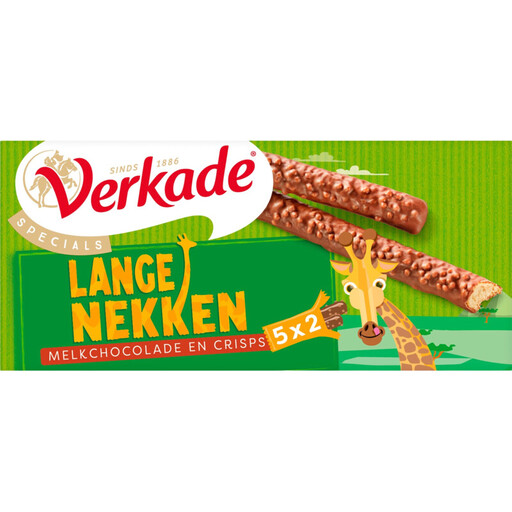
Verkade Long Necks, pack of 10

Verkade Long Necks, 10 biscuits

The packs of two may suit serving pre-set portions. The product information mentions Fairtrade ingredients, so don’t describe the biscuit as fully Fairtrade-certified unless the product information specifically supports this.

Before selling the biscuits loose, check the current label and make sure customers can access the allergen information before buying.

View at Joybuy

Frequently asked questions

Can I sell biscuits loose alongside Dutch doughnuts?

Yes, provided customers can access the required allergen information before buying. The NVWA requires you to give information about the relevant allergens in unpackaged food. For cereals containing gluten and nuts, you must also name the specific type. You can provide this information in writing or electronically, and you may give it verbally if certain conditions are met.

Does a Fairtrade logo mean the whole biscuit is certified?

Not always. Milieu Centraal says that a Fairtrade logo with a white background may refer only to a certified ingredient. So check whether the product information refers to Fairtrade cocoa, Fairtrade chocolate or the whole biscuit.

Which allergens should I check in chocolate biscuits?

Check the current label for the biscuit you’ve chosen, including any statements about possible traces. For Verkade Chocorondjes, Albert Heijn lists milk, wheat and cereals containing gluten, among other allergens, and also mentions possible traces of egg, peanuts, hazelnuts, almonds and soya. Don’t apply this product-specific information to a different biscuit.

Is a supermarket’s Fairtrade page enough proof for a biscuit?

No. A statement about a retailer’s range doesn’t confirm the claim for every individual biscuit. Use the page to find products, but base the information you give at your stall on the current claim on the packaging you’ve chosen.
