
Fairtrade-conscious lunch packer
You want to take chocolate with you for lunch and want to make sure the Fairtrade label applies to the chocolate product you choose.


A plain currant bun is a good choice if you mainly want something to take with you for lunch. If you’d also like Fairtrade chocolate, check the label on the specific chocolate product, or on a bun that actually contains chocolate: the published ingredient lists for the Jumbo and PLUS currant buns we checked do not mention cocoa. Check the allergen information for both products before combining them, too.
You want to take chocolate with you for lunch and want to make sure the Fairtrade label applies to the chocolate product you choose.
You’re looking for a packaged bun to take with you and want to know how to store any buns left over, following the label instructions.
You compare the ingredients and allergens in the specific currant bun and, if you’re adding one, the separate chocolate product.
When to choose it: choose a packaged currant bun if a bun to take with you is what you’re mainly looking for.
Limitations: a supermarket’s Fairtrade cocoa policy or chocolate range tells you nothing about the status of this bun.
When to choose it: add a separate chocolate product if you can check its Fairtrade label on the product itself.
Limitations: they remain two separate products; the label on the chocolate does not automatically apply to the currant bun.
| What to consider | What to check when buying | Who it matters most to |
|---|---|---|
| Fairtrade cocoa | Check the Fairtrade label on the packaging or product page for the exact bun or chocolate you’ve chosen. | If Fairtrade cocoa is the deciding factor for me, I want to see that the label applies to the product I’ve chosen. For around 38% of consumers, this would be their first consideration. |
| Taking it with you and storage | Compare the number of buns and the storage instructions; only consider freezing if the label says you can. | When I take lunch with me, I want to store the buns at home and handle them on the go according to the storage instructions. Convenience on the go would come first for around 37% of consumers. |
| Ingredients and allergens | Read the current ingredients list, allergen information and ‘may contain’ warnings for each product you choose; compare nutritional information per 100 g or per portion on a like-for-like basis. | Before eating, I want to know which ingredients and allergens are in my bun and any chocolate. For around 25% of consumers, this label information would carry the most weight. |
A supermarket may sell Fairtrade chocolate without a separate currant bun containing chocolate or carrying a Fairtrade label.
Check the label on the packaging or product page for the product you’re actually choosing.
The mention of baker’s salt doesn’t tell you how much iodine is in that particular currant bun.
Check the latest product information and contact the manufacturer for more details if the iodine content matters to your choice.
Even if the currant bun is suitable for you, separately chosen chocolate may contain different ingredients or have different ‘may contain’ warnings.
Check the allergen information for both the bun and the chocolate, making sure you check the exact variant each time.
PLUS sells currant buns and communicates separately about Fairtrade cocoa in its own-brand products.
Jumbo sells packaged raisin currant buns, with product information available for a lunch on the go.
Albert Heijn has a category for currant and muesli buns, and also outlines its policy on cocoa in own-brand products.
Lidl lists currant buns as an in-store product and describes its Way To Go chocolate bars as separate products.
ALDI lists raisin currant buns and offers Fairtrade chocolate in a separate range.
You could consider this chocolate bar as a separate product to have alongside a currant bun. The bar is not a currant bun; if the Fairtrade label is important to you, check it on the packaging.
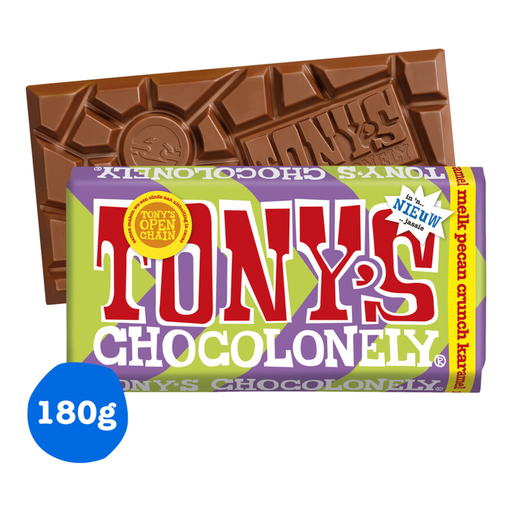 Image unavailable
A separate chocolate bar for anyone who wants to take chocolate as well as a currant bun; it’s no substitute for the bun.
Before choosing this variant, check the Fairtrade label, ingredients and allergens on the packaging.
The published ingredient lists for the Jumbo and PLUS currant buns we checked do not mention cocoa or Fairtrade cocoa. So don’t assume these buns carry a Fairtrade chocolate label because of another product or a supermarket-wide policy; check the label on the variant you’re buying.
No. A cocoa policy doesn’t mean that every currant bun contains cocoa or carries its own Fairtrade label. Check the ingredients and labels for the specific bun; if you choose chocolate to have alongside it, check that separate product too.
Follow the storage instructions on the packaging of the buns you choose. For the variants we checked, Jumbo and PLUS advise storing them in a cool, dry, dark place; PLUS also says to freeze them at home on the day of purchase and use them within one month.