When making a cake with currant buns, first choose chocolate or cocoa powder with a Fairtrade claim on the product you’ve selected. Then check that its form and flavour suit your recipe, and check the ingredients and allergens in both the cocoa product and the currant buns. A Fairtrade claim for cocoa says nothing about the ingredients in the currant buns.
Who is this choice relevant to?
Consumers looking for Fairtrade cocoa
You want to know whether the Fairtrade claim applies to the chocolate or cocoa you’re actually buying. A retailer’s general sustainability policy doesn’t replace the information on the packaging of the product you’ve chosen.
Home bakers who want to choose the chocolate flavour
Your recipe calls for chocolate or cocoa powder, and you want to know which form and cocoa percentage will work. Albert Heijn lists chocolate cake and marble cake among the uses for its organic extra-dark bar with 72% cocoa.
Bakers who need to check allergens
You’re using two separate products in one cake, so check both packages. For example, the raisin and currant buns described by Jumbo contain wheat and milk. You should also check the latest allergen information for your chosen chocolate.
What should you look for when buying?
Consider the currant buns and the chocolate or cocoa powder as separate purchases: the certification, how the product will be used in your recipe, and the labels each answer a different buying question.
| What to look for |
What to check when buying |
Who is it relevant to? |
| Fairtrade claim |
Check that the claim appears on your chosen chocolate or cocoa product, and read what it applies to. For its organic extra-dark bar, Albert Heijn explains that Fairtrade sourcing follows the mass balance principle. |
If the sourcing claim is my main reason for choosing a cocoa product, I want to know what the claim on that specific package means. Around 42% of consumers would prioritise verifiable Fairtrade status. |
| Form and flavour |
Check whether the recipe calls for a bar or cocoa powder. For chocolate, compare the stated cocoa percentage; don’t assume you can use the same quantities for powder and a bar. |
For cake batter, I want to choose an ingredient that suits the chocolate flavour and the form specified in the recipe. This suitability for baking would be the main consideration for around 33% of consumers. |
| Ingredients and allergens |
Read the latest information for both the currant buns and the cocoa product, including warnings about possible traces of allergens. |
When I’m combining two products, I need to know what’s in both before using them. For around 25% of consumers, checking ingredients and allergens would be the first thing to influence their purchase. |
Common mistakes when making this choice
-
Assuming Fairtrade applies to all the ingredients
A claim may apply specifically to cocoa. Albert Heijn also describes a mass balance system for its organic extra-dark bar: the volume purchased as Fairtrade is verified, but physical mixing with non-certified ingredients may occur.
Read what the claim applies to on your chosen bar, and check the ingredients list as well.
-
Only reading the chocolate label
The currant buns have their own ingredients and allergens. Jumbo lists wheat and milk among the ingredients in its raisin and currant buns; a certification on the chocolate doesn’t change that.
Compare the latest allergen information on both packages before using them in the same cake.
-
Assuming ‘baker’s salt’ tells you the iodine content
The term baker’s salt in an ingredients list doesn’t, by itself, tell you how much iodine is in the currant buns you’ve chosen.
If you need this information to make your purchase, ask the manufacturer about the ingredients in the specific currant buns.
-
Confusing a brand policy with the availability of a bar
Product ranges can change. For example, Jumbo says on a page for Fair Trade Original dark chocolate that the product is no longer available in its online range.
Check the product page or shop shelf shortly before buying, and assess any alternative bar on the basis of its own Fairtrade claim and ingredients.
Brands to compare
These brands offer a starting point when choosing chocolate or cocoa separately for a cake with currant buns. Always check the specific variety you want to use.
Albert Heijn
For its AH Organic Extra Dark Bar with 72% cocoa, Albert Heijn mentions Fairtrade sourcing and uses including chocolate cake and marble cake.
- The product information links this specific bar to a Fairtrade claim and specific baking uses.
- Albert Heijn explains that this bar uses mass balance, which means physical mixing with non-certified ingredients may occur. Check the allergen information on the packaging too.
PLUS
PLUS says that the cocoa in its own-brand products has been Fairtrade certified since 2020, and labels a 200 g dark chocolate bar as containing Fairtrade cocoa.
- The 200 g dark chocolate bar is a specific product you can assess for its Fairtrade claim and suitability for your recipe.
- A statement about the own-brand range doesn’t replace the ingredients and allergen information for the bar you’ve chosen.
Lidl
Lidl describes its Way To Go products as fully Fairtrade certified.
- The Way To Go range is a good place to look for a chocolate bar with a Fairtrade claim.
- Check whether any added ingredients in the flavour you choose will work in your recipe, and read the allergen information.
ALDI / Moser Roth
ALDI displays a Fairtrade mark on the Moser Roth dark chocolate bar with 70% cocoa.
- The stated cocoa percentage gives you a specific detail to compare with your recipe requirements.
- The Fairtrade claim and cocoa percentage alone don’t tell you whether the bar is suitable for every cake recipe; check the ingredients too.
Jumbo
Jumbo lists Fair Trade Original Cocoa Powder, 125 g, in its Fairtrade range, alongside its separate range of currant buns.
- Cocoa powder is worth considering when your recipe specifically calls for it.
- Use the quantity of cocoa powder specified in your recipe rather than replacing it with a chocolate bar without adjusting the quantities.
Chocolate for currant bun cake on Joybuy
This bar is an option if you’re looking for chocolate to use separately in a cake with currant buns. Check your recipe and the latest packaging before deciding whether this particular variety is suitable.
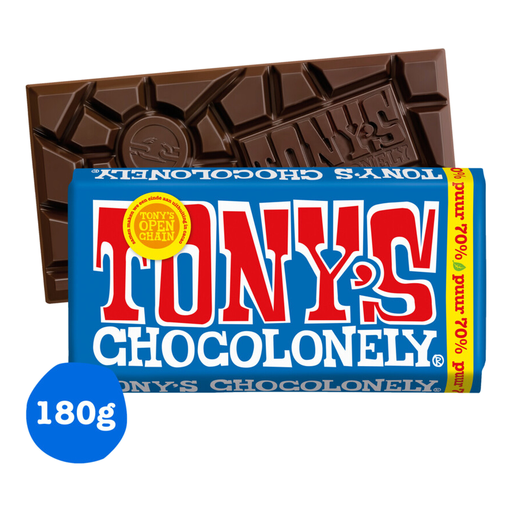 Image unavailable
Tony's Chocolonely Dark 70% 180 g
A chocolate bar to consider if your recipe calls for dark chocolate: the product information mentions Fairtrade and baking as a use.
The title states 70% cocoa and a weight of 180 g, but the product information gives conflicting cocoa percentages. If your recipe depends on the percentage, check the latest packaging.
Check the latest allergen information too: the available product details mention soya and possible traces of egg, nuts, cereals containing gluten and milk, among other things.
View on Joybuy
Frequently asked questions
How can I check the Fairtrade claim on chocolate for my cake?
Look for the Fairtrade claim on the packaging or product page for your chosen chocolate, and read what it applies to. Albert Heijn says that the required quantity for its organic extra-dark bar is traded and verified as Fairtrade; the product information also describes possible physical mixing under the mass balance principle.
Are currant buns the same as Fairtrade baking chocolate?
No. Currant buns are a bread product that you choose separately from any chocolate or cocoa for the cake. The raisin and currant buns described by Jumbo contain ingredients including wheat flour, raisins and currants; you should check the Fairtrade claim on the cocoa product you add to the cake.
Which allergens should I check in currant buns with chocolate?
Read the allergen information on the latest packaging for both products, including warnings about possible traces. Jumbo lists wheat and milk for its raisin and currant buns; the warnings for the chocolate depend on which bar you choose.
Can I tell how much iodine is in currant buns from ‘baker’s salt’?
No, that ingredient listing doesn’t give the iodine content of the specific currant buns. If you need this information, ask the manufacturer about the ingredients in the variety you’ve chosen.


