
Home baker who looks for Fairtrade
You want to choose chocolate for cookies and be able to tell from the packaging whether the Fairtrade mark applies to the composite product or specifically to the cocoa.


When choosing chocolate for cookies, first check the packaging to see exactly what the Fairtrade mark covers. According to Fairtrade International, for a composite product the mark may apply to all ingredients available under Fairtrade terms, or specifically to one ingredient, such as cocoa. Then choose the format that suits your recipe. Baking-stable chips are designed to hold their shape; you can chop a bar into chunky pieces yourself, but a bar is not automatically baking-stable.
You want to choose chocolate for cookies and be able to tell from the packaging whether the Fairtrade mark applies to the composite product or specifically to the cocoa.
You’re choosing between chips that remain recognisable during baking and a bar that you can chop yourself into chunky, uneven pieces.
If other people will be eating the cookies, you’ll want to check the ingredients, allergens and any warnings on the packaging before you start baking.
Start by checking what the mark on the packaging means. Then decide what kind of chocolate pieces your recipe calls for and check the ingredients on the product you’re actually buying.
| What to consider | What to check when buying | Who it matters to |
|---|---|---|
| Fairtrade mark | Check whether the mark applies to the composite product or to a named ingredient, such as cocoa. Also read the explanation on the back. | If I want to use Fairtrade cocoa, I need to know what the mark on this chocolate covers. Around 33% of consumers put this check first. |
| Shape during baking | Look for a clear description such as baking-stable if the pieces need to hold their shape; otherwise, choose the size you want and chop a bar yourself. | For cookies with recognisable chips, I want a different result from cookies made with chunky pieces from a bar. Shape is the main consideration for around 27% of consumers. |
| Ingredients and allergens | Check the ingredients list, declared allergens and any warning about possible traces on the packaging of the product you’re buying. | If someone eating the cookies needs to avoid certain ingredients, I want to check the chocolate before adding it to the dough. Around 20% of consumers prioritise this check. |
| Availability | Check whether your chosen chocolate is currently available and whether an alternative has the same mark and format you’re looking for. | If my usual shop doesn’t have the baking chocolate I want, I look for an alternative that still suits my recipe. This practical consideration comes first for around 20% of consumers. |
Fairtrade International distinguishes between marks for composite products and the Fairtrade Sourced Ingredient mark, which applies to a named ingredient.
Check which ingredient the mark covers and read the explanation on the back before assuming that other ingredients are Fairtrade too.
A certification mark doesn’t tell you whether chocolate will hold its shape in the oven. Albert Heijn describes Dr. Oetker Chocolate Chips as baking-stable, while Lidl describes its Way To Go bars as Fairtrade-certified. These claims relate to different properties.
Check the Fairtrade mark you’re looking for and any description such as baking-stable separately on the product you choose.
A name such as dark chocolate or chocolate chips doesn’t tell you which allergens or warnings appear on that specific pack.
Check the packaging again if you buy a different variety, size or updated pack.
A product page may remain online even after the item has been removed from the online range; Jumbo notes this for a Fair Trade Original chocolate product.
Check current availability and review the label of any alternative you choose.
Chocolate bars to chop yourself if you’re looking for clear information about Fairtrade.
A chocolate range for anyone who wants to look at the sourcing approach as well as whether the product suits their recipe.
Chocolate bars for anyone who wants to choose the size of the pieces in their cookies.
An alternative for anyone who wants to use cocoa powder in chocolate cookie dough instead of pieces from a bar.
This Joybuy selection includes a dark chocolate bar that you can chop yourself for cookies. Check the Fairtrade mark and allergens on the packaging of this variety; the fact that it’s a bar doesn’t tell you whether it’s baking-stable.
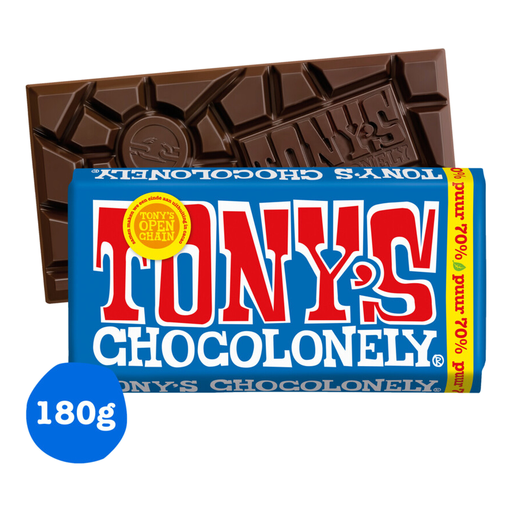 Image unavailable
For cookies with chopped chocolate, you can choose the size of the pieces yourself with this bar.
Check the packaging to see which Fairtrade mark applies and which allergens are listed. Don’t assume the pieces will hold their shape during baking.
Not necessarily. For composite products, Fairtrade International distinguishes between a mark that covers all ingredients available under Fairtrade terms and the Fairtrade Sourced Ingredient mark, which applies to a specific ingredient such as cocoa. Read the mark and the explanation on the packaging.
No, it depends on the shape you want your chocolate to have. Albert Heijn describes Dr. Oetker Chocolate Chips as baking-stable chips that hold their shape; for chunky, uneven pieces, you can chop up a bar. Check for any Fairtrade mark you’re looking for separately from this baking property.
Yes, you can chop a bar into pieces for cookie dough, but don’t assume they’ll hold their shape in the same way as baking-stable chips. Choose a variety to suit the flavour and additions you want, and check the current certification mark and allergens on the packaging.
Before baking, check the ingredients list, declared allergens and any warning about possible traces on the packaging of the exact chocolate you’re using. Don’t rely on the product name alone or on a variety you looked at previously.
No, the mark relates to Fairtrade sourcing terms and doesn’t assess nutritional value. Check the ingredients and nutrition information for your chosen chocolate separately.