What should you look for when choosing?
Start with what your allergy rules out, then check for any cross-contamination warning. Only after that should you compare claims about Fairtrade chocolate or other product features.
| What to consider | What to check when buying | Who is this most important for? |
|---|
| Ingredients and allergens |
Read the ingredients list and allergen information for the exact variant and pack you’ve chosen. |
If my allergen is listed as an ingredient, I won’t choose the biscuit, regardless of the chocolate claim. For around 36% of consumers, checking the ingredients would be the main priority. |
| Cross-contamination |
Also read warnings such as ‘may contain …’ and assess them in line with your own medical or dietary advice. |
If my allergen isn’t listed in the ingredients, I still want to know whether there’s a relevant cross-contamination warning. For around 29% of consumers, this would be the first thing to assess. |
| Fairtrade cocoa |
Look for a specific Fairtrade statement for the cocoa or chocolate in the flavour you’ve chosen. |
If a biscuit is suitable for my allergy, I want to be able to see exactly what the Fairtrade claim applies to. For around 21% of consumers, this would be the most important next step. |
| Specific product variant |
Check what a label such as ‘gluten-free’ or ‘vegan’ covers, and read the full allergen information as well. |
For example, I might be looking for a gluten-free chocolate biscuit, but I still need to check separately for other relevant allergens. For around 14% of consumers, a specific product variant would be the first place to start. |
Biscuits at Joybuy
These Verkade biscuits show two ways to search: a milk chocolate biscuit and an Oaties variant labelled gluten-free. For both, check the current packaging for your allergens, any warnings and the Fairtrade statement for the variant you’ve chosen.
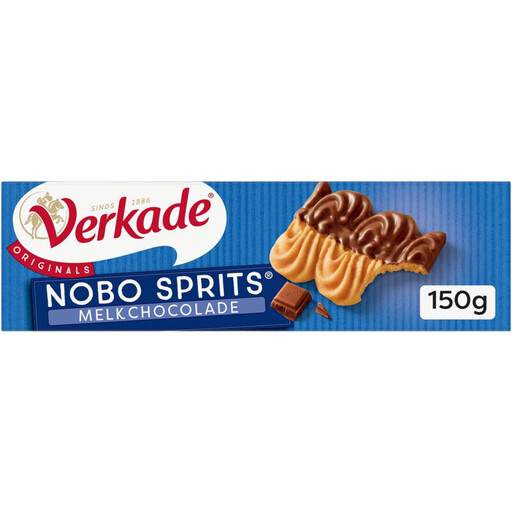 Image unavailable
Verkade Nobo Spritzed Milk Chocolate 150 g
For anyone considering a milk chocolate biscuit and checking its suitability for their allergy on the packaging.
In particular, check the ingredients and warnings that matter to you, and see whether the Fairtrade statement appears on this variant.
View at Joybuy
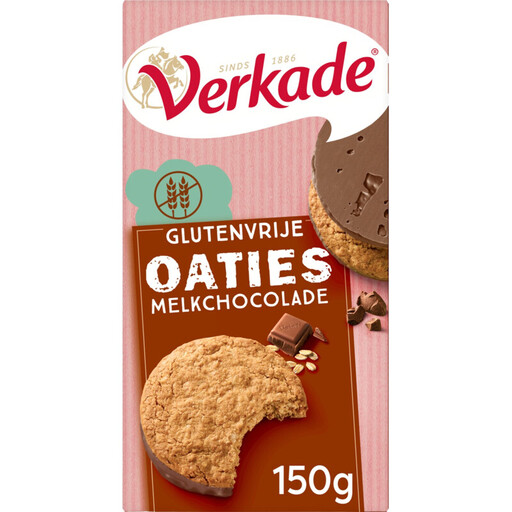 Image unavailable
Verkade Gv Oaties Milk Chocolate 150 g
For anyone specifically looking for a chocolate biscuit labelled gluten-free; Verkade describes Oaties Milk Chocolate as gluten-free.
This is a milk chocolate variant containing oats. Check separately for other relevant allergens and any warnings, and look for the Fairtrade statement on this pack.
View at Joybuy
Frequently asked questions
Is a Fairtrade statement enough to choose a biscuit if you have a food allergy?
No. A Fairtrade statement for cocoa or chocolate doesn’t tell you whether allergens are present. Read the ingredients, allergen information and any cross-contamination warning on the current packaging.
Which allergens should I check on a biscuit pack?
At the very least, check for the allergens that matter to you, both in the ingredients and in any warnings. For biscuits, these might include wheat and other cereals containing gluten, milk, egg, soya, peanuts and nuts. The Netherlands Food and Consumer Product Safety Authority explains how allergens are listed on labels.
What does ‘may contain nuts’ mean?
It’s a warning about possible cross-contamination, not a statement that nuts have deliberately been added as an ingredient. Assess a warning in relation to your specific allergy and in line with your own medical or dietary advice. The Netherlands Food and Consumer Product Safety Authority explains the rules that have applied to prepacked foods in the Netherlands since 1 January 2026.
Can I rely on allergen information in an online product description?
Use an online product description to compare variants, but check the packaging of the biscuit you’ve chosen before eating it. Recipes and label information may differ from details you looked at online previously.
Is a gluten-free chocolate biscuit also suitable if I have a milk allergy?
Not just because it’s labelled ‘gluten-free’: that tells you nothing about milk. Verkade Oaties Milk Chocolate is described as gluten-free, but it’s a milk chocolate variant. Check the current ingredients and allergen information before deciding whether a product is suitable for your dietary needs.


