Who is this choice relevant to?

Weekend treat-lovers who want to check the Fairtrade cocoa

You’re looking for a chocolate biscuit to enjoy at breakfast or with a coffee afterwards, and want to be able to see what the Fairtrade claim means on the product you choose. Fairtrade Netherlands advises checking the explanation on the back of the pack if the logo has an arrow.

Families looking for a pack to share

You want to know how many portions are in a pack and may need to check the current ingredients and allergen information for someone at the table.

Breakfast-lovers who want to leave room for a treat

You’d like a biscuit with your weekend breakfast, without replacing breakfast foods such as wholemeal bread, porridge, yoghurt or fruit. The Netherlands Nutrition Centre lists these as possible parts of a breakfast.

What should you look for when choosing?

Start with the Fairtrade claim on the specific chocolate biscuit. Then check the portion size, nutritional information and ingredients that matter to the people you’re having breakfast with.

What to look forWhat to check before buyingWho is this most important to?
Fairtrade cocoa Look for a mark or a specific cocoa claim on the product you’ve chosen. If the Fairtrade logo has an arrow, read the explanation on the pack. If I make Fairtrade cocoa a requirement, I want to be able to check the claim on my own pack. This is the top priority for around 36% of consumers.
Flavour and sharing Check the type of biscuit, chocolate or filling, and how many portions are in the pack. For a shared weekend treat, I’m looking for a biscuit that suits our tastes and is easy to divide. This is the main consideration for around 29% of consumers.
Portion size and nutritional information Compare the portion with the nutritional values per portion and per 100 g, including sugars and saturated fat. I want to have a biscuit with breakfast without replacing breakfast with biscuits. Around 21% of consumers pay most attention to this.
Availability Check the current product page or the pack in store; don’t rely solely on a general range statement. When I’m doing the weekend shop, I want to be able to choose a specific biscuit without overlooking the Fairtrade claim. This practical consideration matters most to around 14% of consumers.

Common mistakes

  • Assuming a retailer’s cocoa policy means every biscuit carries a Fairtrade claim

    Albert Heijn says that its own-brand cocoa is Rainforest Alliance or Fairtrade certified. Lidl says its own-brand cocoa is Fairtrade, Rainforest Alliance certified or organic. Neither policy tells you which mark is on the chocolate biscuit you’ve chosen.

    Check the mark or explicit Fairtrade cocoa claim on that specific product.

  • Assuming Fairtrade cocoa is physically segregated

    Fairtrade Netherlands allows mass balance for cocoa: Fairtrade and non-Fairtrade cocoa can be mixed during processing, while volumes are monitored throughout the supply chain.

    If physical traceability is essential to you, read the explanation of the Fairtrade logo with an arrow on the packaging before choosing.

  • Taking the mark as an indication of nutritional value

    A Fairtrade claim relates to the sourcing of relevant ingredients, not the nutritional value of a chocolate biscuit. The Netherlands Nutrition Centre does not include chocolate in its Wheel of Five.

    Check the nutritional information and portion size for the biscuit you’ve chosen, and decide what other foods to serve at breakfast.

  • Guessing the allergens from the photo or brand name

    The relevant ingredients and allergens depend on the specific biscuit. A photo won’t show the full ingredients list or any warnings.

    If you have an allergy or coeliac disease, read the current allergen information on the packaging before eating.

Brands and retailers to explore

Verkade

Worth considering if you’re looking for a Verkade chocolate biscuit with a specific cocoa claim.

  • Verkade says it uses Fairtrade-certified cocoa for the chocolate on and in its biscuits. Albert Heijn lists Fairtrade cocoa for Verkade Chocorondjes milk chocolate.
  • Check the pack you’ve chosen for the latest ingredients, allergen information and explanation of the mark.

Albert Heijn

A retailer where you can check a product-specific cocoa claim alongside its own-brand policy.

  • The product page for Verkade Chocorondjes milk chocolate mentions Fairtrade cocoa.
  • Albert Heijn says its own-brand cocoa is Rainforest Alliance or Fairtrade certified; this policy doesn’t confirm that every own-brand biscuit is Fairtrade.

Lidl

A retailer whose cocoa policy can help you narrow down your search for a biscuit.

  • Lidl says that cocoa in its own-brand products is Fairtrade, Rainforest Alliance certified or organic.
  • Check the packaging of each chocolate biscuit to see which mark or cocoa claim it carries.

ALDI

A retailer with a Fairtrade range that also includes chocolate.

  • The range information gives you a starting point for looking for Fairtrade chocolate.
  • A listing in the range doesn’t confirm a Fairtrade claim for an individual chocolate biscuit; check the pack you’ve chosen.

Jumbo

A retailer with separate categories for chocolate biscuits and Fairtrade products.

  • These categories can help you find a biscuit that suits you.
  • A listing in either category doesn’t confirm that a specific chocolate biscuit is Fairtrade.

Chocolate biscuits on Joybuy

This selection features a shortbread-style biscuit with milk chocolate, for anyone specifically looking for a Fairtrade claim for the chocolate to enjoy with a weekend breakfast.
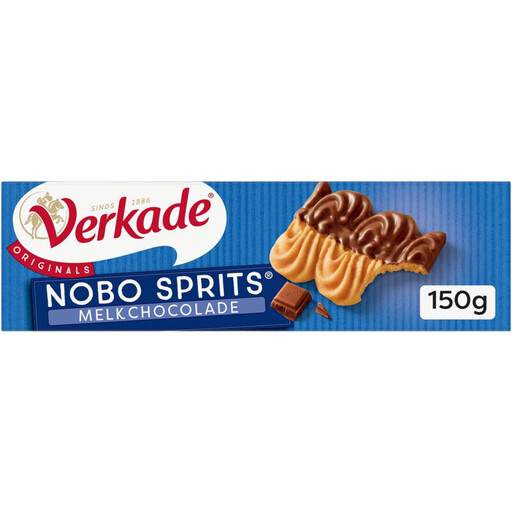
Verkade Nobo Spritzed Milk Chocolate, 150 g pack

Verkade Nobo Spritzed Milk Chocolate, 150 g

A shortbread-style biscuit with milk chocolate, perfect as a weekend breakfast treat. Joybuy describes the chocolate coating as Fairtrade milk chocolate; the pack contains 150 g. Check the current label for ingredients, allergens, portions and any explanation of the mark.

View at Joybuy

Frequently asked questions

Is the cocoa in a Fairtrade chocolate biscuit always physically traceable?

No, not necessarily. Fairtrade Netherlands allows mass balance for cocoa, which means Fairtrade and non-Fairtrade cocoa can be mixed during processing. If the Fairtrade logo has an arrow, check the back of the pack for an explanation of the ingredients and sourcing method.

Can a chocolate biscuit replace a weekend breakfast?

A Fairtrade claim doesn’t make a chocolate biscuit a breakfast replacement. The Netherlands Nutrition Centre doesn’t include chocolate in its Wheel of Five and lists wholegrain products, yoghurt and fruit among possible breakfast choices. Also check the biscuit’s portion size and nutritional information.

Which allergens should I check in chocolate biscuits?

Check the ingredients and allergen information on the current packaging for the specific biscuit, especially if anyone at the table has an allergy or coeliac disease. According to the Netherlands Food and Consumer Product Safety Authority, designated allergens must be clearly listed on the label. Don’t try to work out the ingredients from the product photo.

Does a sustainable cocoa policy mean every biscuit is Fairtrade?

No. Albert Heijn says its own-brand cocoa is Rainforest Alliance or Fairtrade certified, while Lidl says its own-brand cocoa is Fairtrade, Rainforest Alliance certified or organic. For a Fairtrade option, check the claim on the individual chocolate biscuit.

How should I store chocolate biscuits after opening?

Follow the storage instructions on the packaging you’ve chosen. For Verkade Chocorondjes milk chocolate, Albert Heijn advises storing in a cool, dry place and resealing the pack after opening. For other biscuits, check the label on the pack.
