
Vandaag of morgen in huis

Kwaliteit gegarandeerd

Welkomstaanbiedingen ontgrendelen: GRATIS bezorging | Tot 80% korting | Gratis 30 dagen JoyPlus-proefperiode
Download de app
A facial sunscreen SPF 50 needs to be more than just a high number on the bottle. The texture, UVA protection, ingredients and how you plan to use it all determine whether you’ll enjoy applying it every morning. If you buy a face sunscreen without checking these points, you risk falling into a few common traps.
SPF mainly tells you about protection against UVB rays, which cause redness and sunburn. For daily sun protection, UVA protection is just as important. UVA penetrates deeper and plays a role in visible skin ageing and pigmentation.
So alongside SPF 50 or SPF 50+, look for an indication of UVA protection. On Korean sunscreens you’ll often see PA+++ or PA++++. This is a rating for UVA protection within the Asian classification system. On products for the European market, the UVA symbol inside a circle is a useful check.
A sunscreen that feels sticky, pills under make-up or leaves a white cast is often applied too sparingly or skipped altogether. That makes a theoretically high level of protection far less effective in practice.
A lightweight sunscreen or fluid usually works better for oily or combination skin. A hydrating sunscreen with glycerine, hyaluronic acid, panthenol or rice extract can be more comfortable for dry skin. If you’re looking for a mineral sunscreen, be aware that zinc oxide or titanium dioxide can leave a visible cast on some skin tones.
“For sensitive skin”, “anti-pigment” and “soothing” are no guarantee that a product will suit everyone. Check the ingredients list and look out for perfume, alcohol denat., essential oils and known personal allergens.
According to a brand’s own research or product information, certain ingredients may support a particular function, but that doesn’t guarantee the same result for every user. If you have reactive skin, it’s wise to test the product on a small area first. Stop using it if irritation occurs and consult a doctor or dermatologist if symptoms persist.
SPF 50 doesn’t mean you can stay in the sun all day without reapplying. Protection also depends on how much you apply, how evenly you spread it, sweating and towel drying.
Apply your facial sunscreen as the last step of your morning routine, before make-up. Spread the product over your face, ears and neck. Many product instructions suggest roughly two finger-lengths for the face and neck as a practical guideline. Always check the directions on the packaging.
Reapply approximately every two hours when outdoors, and repeat after swimming, exercise, heavy sweating or towel drying. A product that isn’t water-resistant is less suitable for prolonged activities near water.
None of these categories automatically suits every skin type. Look at the full INCI list and at the properties that matter to you, such as fragrance-free, alcohol-free, water-resistant or suitable under make-up.
A lightweight gel-cream or lotion can suit oily skin. A cream with glycerine, sodium hyaluronate or ceramides can offer more comfort for dry skin. Niacinamide appears in several formulas, but its presence alone doesn’t guarantee a specific visible result.
For pigment-prone skin, consistent UVA and UVB protection is the foundation. A product like NIVEA SUN Face Luminous Anti-Spot lists the ingredient Luminous630 and refers to an anti-pigment function. According to the brand’s own information, this ingredient helps reduce pigment spots; treat this claim as brand information and follow the usage instructions.
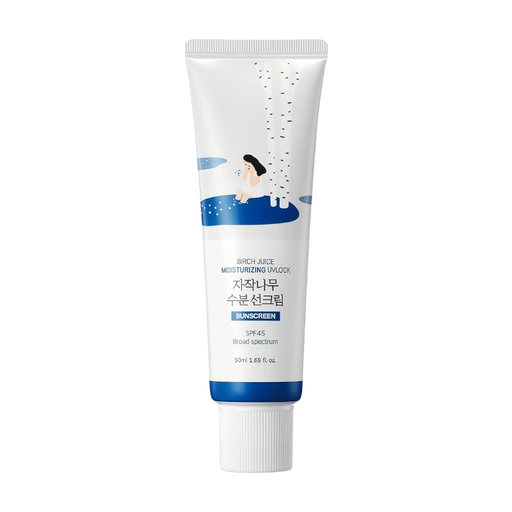
Why this fits the profile: A daily formula with 50 ml content and hydrating ingredients such as glycerine and hyaluronic acid. Suitable for anyone looking for a simple start without a mineral filter.
The ingredients list includes several chemical UV filters, so a typical zinc oxide white cast isn’t the main concern. Avoid contact with the eyes.
50 ml; glycerine, sodium hyaluronate and niacinamide in the ingredients list; apply as the last step of your routine.
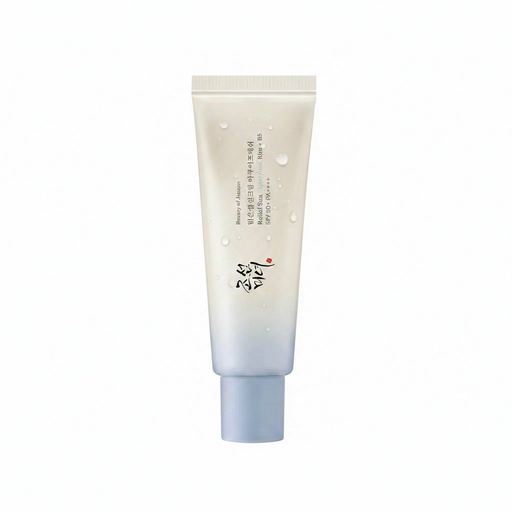
Why this fits the profile: The product information states SPF 50+ PA++++, a watery texture, rice water and panthenol. This suits daily use and sunscreen under make-up.
According to the product description, the lightweight, fragrance-free formula is designed to absorb quickly without white cast or greasy feel.
SPF 50+ PA++++; rice water and panthenol; according to the product information, fragrance-free and alcohol-free.
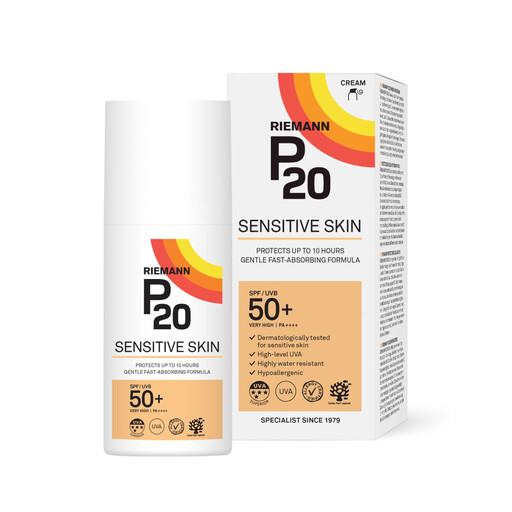
Why this fits the profile: The bottle contains 200 ml and the product information is aimed at sensitive skin. This can be practical for the face, neck and other exposed areas during frequent outdoor use.
The larger bottle is suitable for regular use. The usage instructions warn that applying too little product significantly reduces protection.
200 ml content; SPF 50+; ingredients list includes glycerine and multiple UV filters.
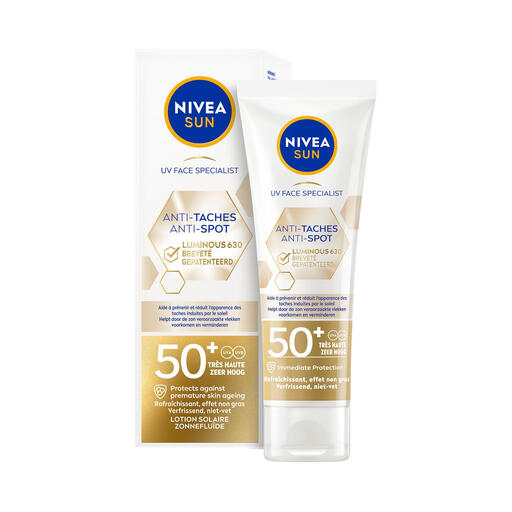
Why this fits the profile: This face cream combines SPF 50+ with a product claim around pigment spots. That makes it relevant for anyone seeking daily protection against new sun-related discolouration.
The product description explicitly mentions UVA and UVB protection. The claim around Luminous630 comes from NIVEA and does not replace dermatological advice.
SPF 50+; designed for the face; contains glycerine and sodium hyaluronate according to the ingredients list.
We’ve put together a full, up-to-date list of products that fully meet these strict selection criteria and comply with current European safety regulations.
Use enough product to cover your face, ears and neck evenly. If you apply too little, you won’t achieve the protection stated on the label. Reapply after swimming, sweating, towel drying and prolonged sun exposure.
Yes, ideally choose a lightweight formula that absorbs quickly and doesn’t pill when you apply make-up over it. Let your skincare and sunscreen set for a moment first. A sunscreen without white cast can be more practical under foundation, especially on darker or tanned skin.
Check the expiry date and batch number on the packaging. Store the tube in a cool place away from direct sunlight. A change in smell, colour or texture is a reason to stop using the product. Once opened, replace it according to the period indicated on the packaging.
