
Vandaag of morgen in huis

Kwaliteit gegarandeerd

Welkomstaanbiedingen ontgrendelen: GRATIS bezorging | Tot 80% korting | Gratis 30 dagen JoyPlus-proefperiode
Download de app
Facial sunscreen should be part of your daily skincare routine, even on days when you’re mostly indoors or just walking in the British sun. Yet the choice isn’t always straightforward. A high SPF, for example, doesn’t tell you everything about the texture, comfort or suitability for your skin type.
Many shoppers come up against three common pitfalls:
For daily use, SPF30 or SPF50 is a practical starting point. If you spend a lot of time outdoors, develop pigmentation quickly or have a fair complexion, you might opt for facial sunscreen SPF50. Products with SPF50+ offer high protection against UV radiation according to the product information, but how well they work also depends on how much you apply and how often you reapply.
PA is an additional rating that mainly appears on Korean sunscreens. PA++++ indicates a high level of UVA protection within that classification system. Always check the European labelling and the current information on the packaging as well.
Dry skin often benefits more from a hydrating sunscreen with glycerine, hyaluronic acid or a cream-based formula. For oily or blemish-prone skin, a light lotion, gel or serum may feel more comfortable. Look out for terms like “non-comedogenic”, but treat these as product information rather than a guarantee that every skin type will react without issue.
With sunscreen for sensitive skin, a fragrance-free formula and a short, clear ingredients list are possible points to consider. Even a product without fragrance can still contain ingredients you may be sensitive to. If in doubt, test a small amount on a limited area of skin first.
Apply facial sunscreen as the last step of your morning routine, before make-up. Don’t forget your ears, neck and hairline. Apply enough product; a thin layer reduces the protection compared with the value stated on the packaging. When you’re outdoors, sweating, swimming or drying off, you need to reapply according to the usage instructions.
A sunscreen stick can be handy for on the go, but it’s harder to apply evenly than a cream or serum. Use a stick mainly as a top-up and check that all areas of your face are covered.

Why this fits the profile: According to the product information, this Korean sunscreen has SPF50+ and PA+++, a light cream texture and a fragrance-free formula. That makes it a practical choice as a first daily facial sunscreen.
The combination of a light texture and a fragrance-free formulation reduces the chance that the cream will go unused because of a heavy feel or strong scent.
50 ml, SPF50+ PA+++, rice extract according to the ingredients list and suitable for daily use.
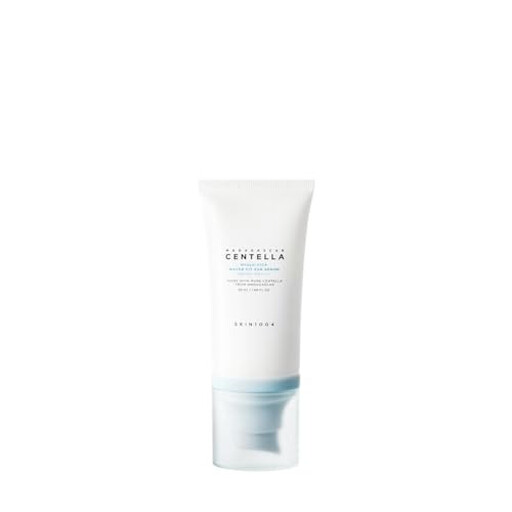
Why this fits the profile: The serum texture is designed for users who want a fast-absorbing daily sunscreen with SPF50+ and a light finish.
The product description mentions a light formula with no sticky feel and no white cast, two features that make daily use easier.
SPF50+, serum-like texture, centella asiatica and hyaluronic acid listed in the ingredients.

Why this fits the profile: The compact 12 ml packaging is handy for holidays, bike rides or reapplying on the go. The product information states SPF50+ and water resistance.
The small size lowers the barrier to taking sunscreen with you, so reapplying isn’t only dependent on using it at home.
SPF50+, milky formula, 12 ml and according to the product description suitable for the face and other exposed areas.
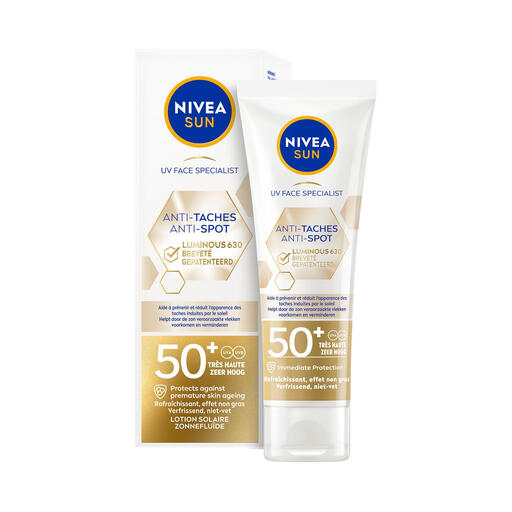
Why this fits the profile: This facial sunscreen SPF50+ is aimed at daily UV protection and an even-looking complexion. According to NIVEA’s own information, the formula contains Luminous630 to target pigmentation.
The SPF50+ rating makes the UV protection verifiable. Don’t expect a sunscreen to remove existing spots for everyone; consistent application remains important.
SPF50+, designed for the face, Luminous630 according to the manufacturer and a handy 40 ml size.
We’ve put together a full, up-to-date list of products that fully meet these strict selection criteria and comply with current European safety regulations.
Not everyone needs SPF50 every day, but it’s a practical choice if you spend a lot of time outdoors, have a fair complexion, pigmentation or are exposed to intense sun. A lower SPF can be suitable for limited outdoor use, as long as you apply enough and reapply according to the packaging.
Use enough to cover your face, ears and neck evenly. A common guideline is about two finger-lengths of product for your face and neck combined, but the dosage on the packaging takes priority. Too little product significantly reduces the protection.
Yes. Choose a formula that absorbs quickly and let it set properly before applying make-up. A serum, gel or light lotion often works better under foundation than a rich cream. Reapply when you’re outdoors; a sunscreen stick or compact size can be practical for this.
