
Vandaag of morgen in huis

Kwaliteit gegarandeerd

Welkomstaanbiedingen ontgrendelen: GRATIS bezorging | Tot 80% korting | Gratis 30 dagen JoyPlus-proefperiode
Download de app
A face cream with SPF combines daily skincare with protection against UV radiation. That sounds straightforward, but the differences between a day cream with SPF 30, an SPF 50 facial sunscreen and a moisturising sun cream are significant. The wrong choice can leave your skin feeling tight, looking shiny or becoming irritated – or result in a product you do not apply often enough.
That is why the Joybuy Product Recommendation Officer focuses mainly on verifiable details: SPF level, ingredients, texture, water resistance, fragrance and the information provided on the packaging.
SPF mainly indicates protection against UVB radiation. A product with SPF 30 is suitable for many everyday situations, but for prolonged time outdoors, visits to the beach or intensive exercise, SPF 50 or SPF 50+ may be the more sensible choice. Also check that UVA protection is clearly stated on the packaging.
No cream makes prolonged sun exposure harmless. Avoid strong sunlight where possible, wear protective clothing and reapply as directed.
Brands often link UV protection to skin ageing or pigmentation. According to NIVEA’s own research, the VITAL Soy SPF 30 day cream can visibly improve elasticity after one week and make deep wrinkles less visible after two weeks. These are brand claims based on specific test conditions, not guaranteed results for every user.
A sunscreen for pigmentation can help limit new sun-induced discolouration, but existing marks will not automatically disappear. So first look at the SPF, UVA protection and suitability for daily use.
A rich cream can feel pleasant on dry skin, but may feel too heavy on oily or combination skin. Mattifying sunscreens often contain starch, silica or other texture-enhancing ingredients. A fragrance-free face cream with SPF can be a sensible option if you prefer to avoid fragrances.
Always check the ingredients list. Alcohol denat., parfum and fragrance allergens such as limonene, linalool and citronellol may not feel comfortable for everyone. If you have sensitive skin, testing a small amount on a limited area is advisable.
Pay attention to the amount you apply. A thin layer reduces the level of protection compared with the value stated on the packaging. Apply the product evenly to your face and neck, following the manufacturer’s instructions.
For SPF for dry skin, glycerine, hyaluronic acid, argan oil, shea butter and squalane are ingredients that can suit a nourishing routine. On their own, they do not indicate exactly how pleasant a formula will feel, but they can provide useful guidance when comparing products.
For SPF for sensitive skin, fragrance-free formulas are worth considering. According to the product information, Clinique Moisture Surge SPF 25 is offered as 100% fragrance-free and allergy-tested. However, its SPF is lower than that of an SPF 50 facial sunscreen.
If you want to reduce shine, look for a mattifying sunscreen or a dry-touch formula. NIVEA UV Face Shine Control lists tapioca starch, rice starch and silica among its ingredients. According to NIVEA’s own research, the product provides a long-lasting mattifying effect; results may vary depending on your skin type.
A day cream with SPF is convenient for brief daily exposure. A separate facial sunscreen is often more practical when you need to apply a generous amount or reapply regularly. Size is also worth considering: 40 to 50 ml is compact enough for a handbag, while 150 ml, as with NIVEA Protect & Hydrate, may offer better value for frequent use.
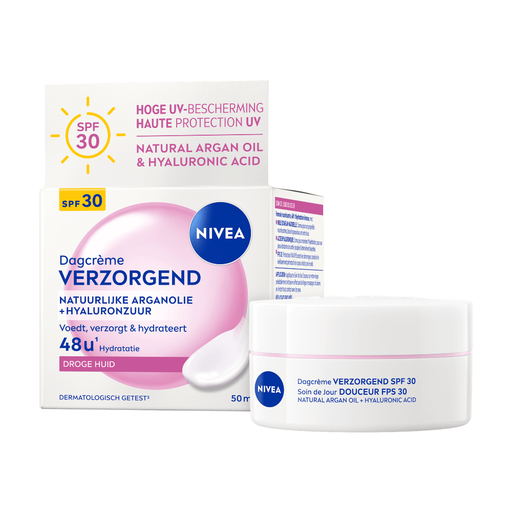
Why it suits this profile: A 50ml day cream for dry skin that combines skincare and SPF 30 in one morning step.
The product information lists glycerine, argan oil and hyaluronic acid for a nourishing formula. However, check that fragrance is not an issue for you.
SPF 30, hydrating ingredients and a size suitable for everyday use.
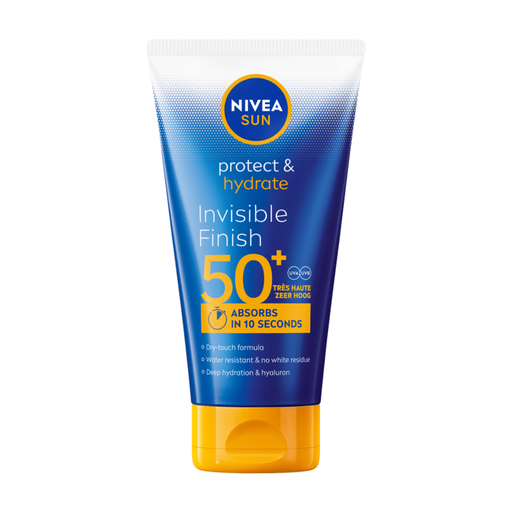
Why it suits this profile: Ideal if high protection, a larger size and a lightweight finish are important to you.
The manufacturer states that it has a water-resistant dry-touch formula, absorbs quickly and leaves no white cast. However, it does contain fragrance allergens.
SPF 50+, 150 ml, water resistance, plus glycerine and hyaluronic acid in the ingredients list.
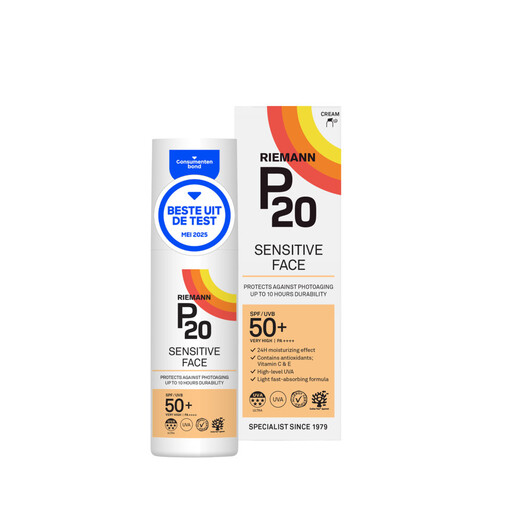
Why it suits this profile: A compact choice for outdoor use, travel and situations where reapplication is important.
The instructions emphasise applying generously and reapplying after drying yourself or heavy sweating. This makes it less easy to forget that too little product can reduce protection.
SPF 50+, panthenol, glycerine and squalane; the packaging states that it is suitable for the face and sensitive skin.
We have compiled a complete, up-to-date list of products that fully meet these strict selection criteria and the applicable European safety regulations.
For everyday use with limited exposure, SPF 30 may be suitable. For prolonged time outdoors, exercise or strong sunlight, an SPF 50 facial sunscreen is a practical choice. Apply enough and reapply as directed on the label.
Yes. Apply your skincare first, then use the facial sunscreen as the final step. Wait briefly until the previous layer has absorbed. A separate SPF 50 may be more convenient when you need more product than a day cream would normally provide.
Follow the expiry date and the open-jar symbol indicating the period after opening on the packaging. Store the product somewhere cool and dry, away from direct sunlight. A change in smell, colour or texture is a reason to stop using the product.
