
Vandaag of morgen in huis

Kwaliteit gegarandeerd

Welkomstaanbiedingen ontgrendelen: GRATIS bezorging | Tot 80% korting | Gratis 30 dagen JoyPlus-proefperiode
Download de app
A good face sunscreen SPF 50 should offer more than just a high protection factor on the label. The formula also needs to be pleasant enough to apply generously every morning and to reapply when you’re outdoors. If you only look at marketing claims, you’ll quickly end up with a product that stings around the eyes, leaves a visible white cast, or feels too greasy under make-up.
As a Joybuy Product Recommendation Officer, I filter product information by verifiable points: the stated SPF, UVA rating, UV filters, texture, volume, water resistance and warnings. This is how you compare a face sunscreen based on the features that actually matter in practice.
SPF mainly relates to protection against UVB rays, which cause redness and burning, among other things. Also look for a UVA rating, such as PA++++, or an explicit mention of UVA protection. UVA rays are relevant all year round, even on cloudy days and through glass.
A product with SPF 30 can be suitable for daily use, but if you’re spending a long time outdoors, have fair skin, or want extra peace of mind, you’ll usually look at SPF 50 or SPF 50+. No sunscreen makes prolonged exposure sensible without additional measures.
A liquid or Korean sunscreen often feels comfortable, but that doesn’t mean you need less of it. For the face and neck, the practical measure of roughly two finger lengths is commonly used. Apply the product evenly as the last step of your morning routine, ideally 15 to 30 minutes before sun exposure.
A thin layer may feel nice, but it reduces protection if the recommended amount isn’t used. You can apply it in two layers to minimise streaks and a heavy feel.
Water resistance does not mean you don’t need to reapply after swimming, sweating or towel drying. Always check the instructions for use. A product with mineral filters, such as zinc oxide or titanium dioxide, may give a slight white cast according to the product information, especially on darker skin tones. Spreading it well helps, but the result varies by formula and skin type.
Terms like “suitable for sensitive skin” are also no guarantee that everyone will tolerate the formula. Check for fragrance, alcohol, essential oils and individual allergies. If you have sensitive skin, test a small amount first.
Look for a clearly stated SPF 50 or SPF 50+. For Korean sunscreen, you’ll often also see PA++++. This rating indicates high UVA protection according to the PA system. For products sold in Europe, also check the information on the packaging and the instructions for use.
A chemical formula uses organic UV filters. For example, the BIRCH Juice Moisturizing Sunscreen lists Diethylamino Hydroxybenzoyl Hexyl Benzoate, Ethylhexyl Triazone and other chemical UV filters in the ingredients list.
A mineral sunscreen typically uses zinc oxide and/or titanium dioxide. The Haruharu Wonder Black Rice Pure Mineral Sunscreen and the AXIS-Y Complete No-Stress Physical Sunscreen both list zinc oxide. Mineral formulas can be interesting if you want to avoid chemical filters, but check the finish and possible white cast.
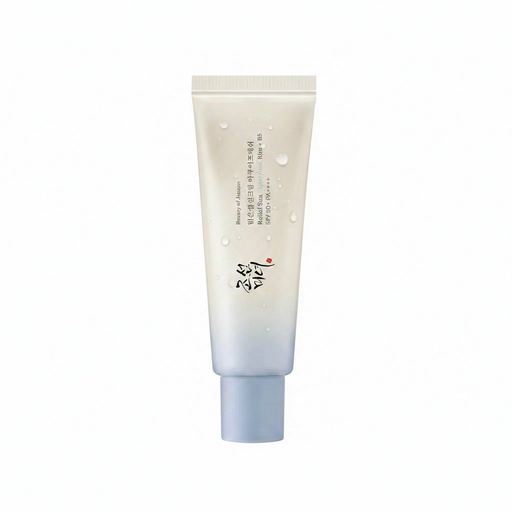
Why this fits the profile: The product information states SPF 50+, PA++++, a light cream texture and use for adults on the face. This makes it a practical entry point for daily skincare.
The description mentions no white cast and fast absorption. However, do check the current packaging and test the finish on your own skin.
SPF 50+ and PA++++; according to the product information, fragrance-free, alcohol-free and vegan.
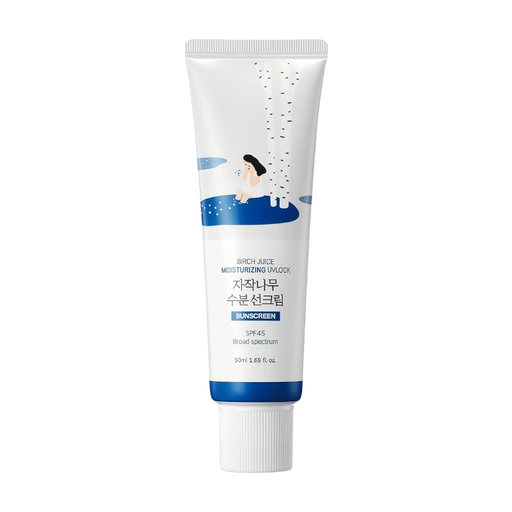
Why this fits the profile: This formula combines several listed UV filters with glycerine, sodium hyaluronate, hydrolysed hyaluronic acid and niacinamide. That suits a dry or dehydrated skin.
The ingredients list makes the filter choice verifiable, rather than relying solely on a general “high protection” claim.
50 ml; hydrating ingredients; explicit instruction to reapply every two hours.

Why this fits the profile: The product description mentions SPF 50+, a light milk texture and water resistance. The 12 ml size is handy for a bag or short trip.
The stated water resistance is better suited to outdoor activities than a non-water-resistant daily cream. Reapplication is still necessary.
SPF 50+; milk formula; water resistance according to the product description.
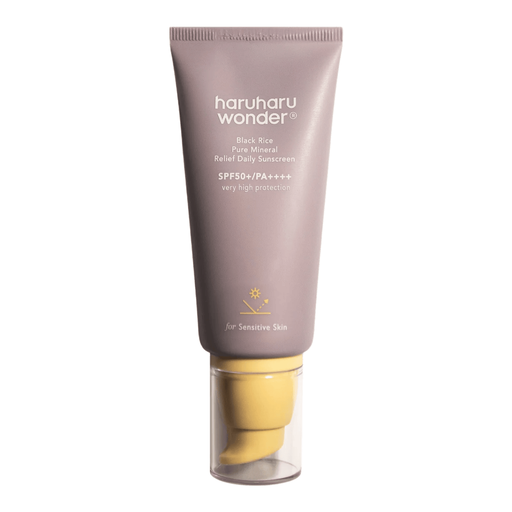
Why this fits the profile: The ingredients list mentions zinc oxide as a mineral UV filter, alongside sodium hyaluronate, glycerine and ceramide NP.
The product information warns that zinc oxide can initially give a slight white cast. Thorough massaging is therefore important.
50 ml; mineral formula with zinc oxide; mention of ceramide NP and hyaluronic acid in the ingredients list.
We’ve put together a full, up-to-date list of products that fully meet these strict selection criteria and current European safety regulations.
With prolonged sun exposure, reapplying roughly every two hours is a standard instruction. Do this sooner after swimming, heavy sweating or drying off with a towel. If you’re mainly indoors and not near a window, the practical frequency may differ, but applying generously in the morning remains important.
Check the expiry date, batch number and the jar-open symbol on the packaging. Store sunscreen in a cool, dry place away from direct sunlight and high temperatures. A change in smell, colour or texture is a reason not to use the product any longer. For the exact shelf life, follow the guidance on the packaging.
This varies by formula. Some products are fragrance-free and contain mild or hydrating ingredients, while others contain fragrances, alcohol or multiple plant extracts. Check the full ingredients list, do a patch test, and stop if you experience redness, itching or irritation. A product description is not a personal medical assessment.
