
Same-day & Next-day Delivery

Quality Guaranteed

Unlock Your Welcome Offers: FREE Delivery | Up to 80% OFF | Free 30-day JoyPlus trial
Download the APP
A face mask can be a lovely addition to your skincare routine, but not every mask suits every skin goal. A thin sheet mask is handy for a quick moisture boost, while a hydrogel mask often stays on for longer. If you focus mainly on terms such as “glass skin”, “collagen” or “anti-ageing”, it can be easy to buy a product that doesn’t fit your routine.
As a Joybuy Product Recommendation Officer, I filter the key product information in a practical way. This helps you compare Korean face masks, Japanese face masks, eye masks and retinol face masks based on verifiable features rather than marketing language.
Words such as “rejuvenating”, “anti-wrinkle” and “glass skin” often describe the desired effect, not a guaranteed outcome. According to some brands’ own research, users may report more hydrated skin or a smoother-looking complexion after one application. Results from these studies won’t necessarily be the same for everyone.
So, focus on the ingredients list, wear time, amount of essence and recommended frequency of use.
A collagen face mask doesn’t always contain a high amount of collagen. Hyaluronic acid alone doesn’t determine how a mask works either: the formula may contain several forms of hyaluronic acid, glycerine, panthenol, ceramides or fragrance. If you have sensitive skin, it’s especially important to check the full ingredients list and look for potential fragrance ingredients.
Wearing a mask for longer doesn’t automatically mean better results. A sheet mask can dry out and become uncomfortable. Hydrogel masks designed to turn transparent have a different recommended wear time. Always follow the instructions on the packaging, and don’t sleep in a mask unless the product specifically says you can.
A sheet mask is usually made from fabric or cellulose and soaked in a liquid essence. It’s a handy option for 10 to 20 minutes of use. A hydrogel mask has a gel texture and often fits closely to the skin. Some products turn transparent after a few hours.
A peel-off product, such as a collagen glass skin mask, dries to form a film that you peel off. This can feel quite different from a hydrating face mask that you leave to absorb. So, check the texture and how long you need to wear it first.
Compare not just the price, but also the number of masks and the amount of essence in each pack. Individually wrapped masks are handy for travel and limit contact with the rest of the supply. For jars of eye patches, a spatula is useful for hygienic application.
Also check the INCI ingredients list, expiry information, batch number and warnings. European cosmetic products must display certain information on the packaging. Packaging language can vary for products from international ranges, so always check the label and product page.
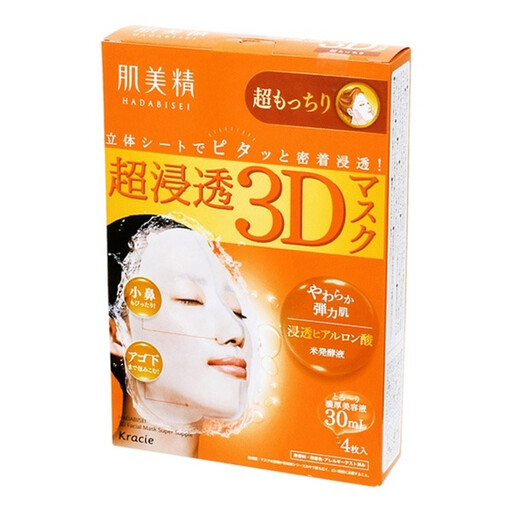
Why it suits this profile: A handy pack of four Japanese face masks is a good way to try out how a 3D sheet fits your face.
The product information specifies 30 ml of essence per mask, four masks and a pre-shaped 3D sheet. That makes the size and contents clear in advance.
Hyaluronic acid, lemon extract, a 3D shape and made in Japan, according to the product description.
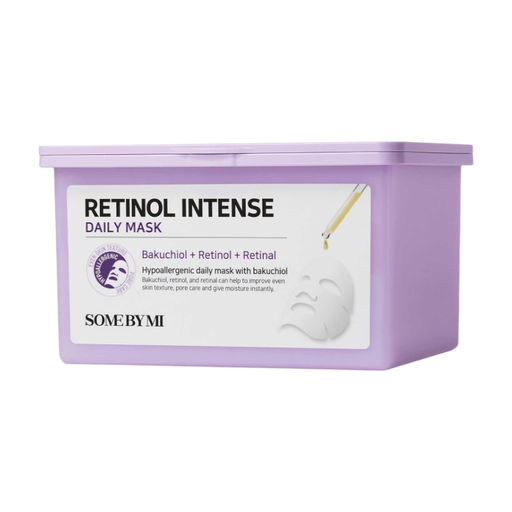
Why it suits this profile: A pack of 30 sheet masks is a good fit for people who want to use a retinol face mask regularly as part of a set routine.
The product information states that it contains 0.1% retinol and retinal. This gives you more specific information about the active ingredients than a general anti-ageing claim.
Thin microfibre sheet, retinol, retinal, bakuchiol and several forms of hyaluronic acid, according to the ingredients list.
We’ve put together a complete, up-to-date list of products that meet these strict selection criteria and the applicable European safety requirements.
It depends on the formula. A hydrating face mask without strong active ingredients is often used a few times a week, following the instructions on the packaging. A retinol face mask needs more care. You may want to start by using it less often, and stop if irritation occurs. Never reuse a sheet mask.
Many sheet masks are used for 10 to 20 minutes, but instructions vary by product. A hydrogel mask may be designed to stay on for two to three hours or until it turns transparent. Don’t leave a mask on for longer than indicated, and avoid contact with the eyes.
They can be, but check the ingredients first. Fragrance, essential oils, acids and retinol may cause sensitivity for some people. If you’re unsure, do a patch test on a small area of skin and don’t use the mask on broken or irritated skin. If redness, swelling, itching or a burning sensation persists, stop using the product and seek medical advice.
