
Vandaag of morgen in huis

Kwaliteit gegarandeerd

Welkomstaanbiedingen ontgrendelen: GRATIS bezorging | Tot 80% korting | Gratis 30 dagen JoyPlus-proefperiode
Download de app
A face mask can be a simple addition to your routine, but there is a huge range to choose from. Sheet masks, Korean face masks, hydrogel masks and overnight masks also work in different ways. If you only go by words such as “glow”, “lifting” or “intensive care”, you can easily end up buying a product that does not suit your skin or your usual routine.
Terms such as brightening, anti-ageing and collagen often describe a product’s positioning rather than a guaranteed cosmetic result. According to the brand’s own research, certain ingredients may contribute to the claimed effect, but your experience will also depend on your skin type, how often you use the product and the rest of your routine.
So start by checking the ingredients list and the instructions for use. Niacinamide, glycerine, panthenol, hyaluronic acid and ceramides, for example, are often used in hydrating formulas. That does not automatically mean that every product containing one of these ingredients will feel the same or provide the same user experience.
A face mask for dry skin usually needs moisture-retaining ingredients and a formula that does not dry out too quickly. A purifying face mask containing clay may be more suitable for oily or combination skin. For sensitive skin, fragrance, essential oils and exfoliating acids are important points to consider.
“Suitable for all skin types” is a product description, not a guarantee that the formula will feel comfortable for everyone. Always check the ingredients and, if you have sensitive skin, carry out a patch test on a small area of skin first.
A sheet mask that you leave on for 10 to 20 minutes suits a short skincare routine. An overnight mask stays on all night and may therefore be more practical for dry skin, but it could feel too rich for someone with oilier skin. A hydrogel mask that needs to be left on for several hours requires more planning.
Before buying, check how long the mask should be used, whether it needs to be rinsed off and whether it is intended for single use.
First decide what you are looking for:
Also check whether the formula contains fragrance or essential oils. This is particularly relevant when you are looking for a face mask for sensitive skin.
A sheet mask is a sheet soaked in essence that you throw away after use. It is convenient for a short treatment and is often available in multipacks. A hydrogel mask generally fits closely to the skin and has a gel-like texture. Some varieties are worn for several hours.
A wash-off mask is rinsed off after a set period of time. This type is often available in clay or cream formulas. You use an overnight mask as the final step in your evening routine and leave it on while you sleep.
Do not just compare the price of a jar or pack. Also work out the cost per use. A set of ten sheet masks may offer better value for regular use, while a 60 ml jar provides multiple applications.
Check the expiry information on the packaging and store the product according to the instructions. Many masks should be kept in a cool, dry place away from direct sunlight. Do not use a mask on damaged or severely irritated skin, and stop using it if you experience a burning sensation, redness or swelling.
The following selection is based on verifiable product information, such as size, ingredients, application time and intended use.
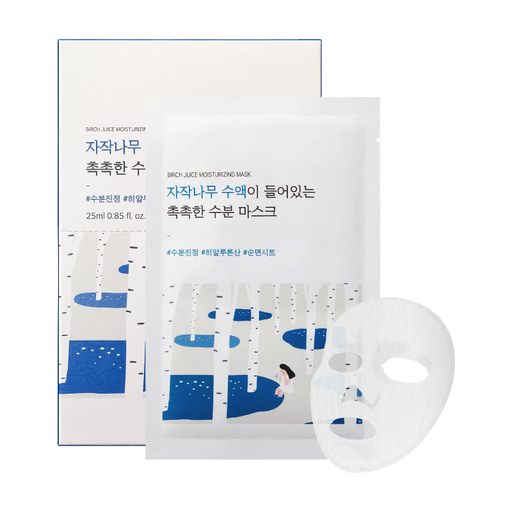
Why it suits this profile: The pack contains ten individual 25 ml sheet masks. This makes it an accessible way to try a hydrating face mask without immediately choosing a jar or an intensive overnight formula.
The product information states an application time of 10 minutes and clearly lists glycerine, birch sap, sodium hyaluronate and allantoin. This makes the purpose and application easy to assess.
Ten individual masks, a short application time and an essence formula with hydrating ingredients.

Why it suits this profile: This hydrogel mask is intended for users looking for a longer treatment and a richer formula. The set contains four masks of 34 grams each.
The instructions specify a wearing time of 3 to 4 hours during the day or use overnight. This means you know in advance that it is not a quick five-minute mask.
The product information lists a hydrogel texture, hyaluronic acid, panthenol and several ceramides.
Would you like to compare a cream, gel or wash-off formula? Take a look at the cream mask range too.
We have put together a complete, up-to-date list of products that fully meet these strict selection criteria and the applicable European safety regulations.
That depends on the type. Many sheet masks are used once or a few times a week. A clay mask or exfoliating mask may need to be used less often. Follow the instructions on the packaging and reduce the frequency if your skin feels tight or looks red.
A sheet mask is often left on for around 10 to 20 minutes. A wash-off mask is usually rinsed off after 10 to 20 minutes. A hydrogel mask or overnight mask can be left on for several hours. The brand’s specific instructions should always be followed.
Choose a simple formula and check for fragrance, essential oils and exfoliating acids. A face mask for sensitive skin should first be tested on a small area of skin. Stop using it immediately if irritation occurs, and do not use a mask on damaged skin.
