
Same-day & Next-day Delivery

Quality Guaranteed

Unlock Your Welcome Offers: FREE Delivery | Up to 80% OFF | Free 30-day JoyPlus trial
Download the APP
A face mask for pores can be a useful addition to your skincare routine, but not every product suits every skin type. A clay mask for oily skin works differently from a hydrating face mask. Terms such as “refine pores”, “detox” and “for acne” can also suggest greater results than the ingredients list supports.
As a Joybuy Product Recommendation Officer, I therefore focus mainly on verifiable information: ingredients, application time, size, skin type and warnings. This helps you avoid buying a mask that is too drying, contains too little product or does not fit into your routine.
Pores are part of the skin and do not disappear because of a mask. A product can temporarily leave the skin feeling smoother or remove excess sebum, making pores appear less visible. You should therefore read claims about “refining pores” as a cosmetic effect, not a permanent change.
A mask that dries hard can leave your skin feeling tight. This is particularly unhelpful for dry or sensitive skin. Look at the combination of clay or mud with hydrating ingredients, such as glycerine, panthenol or hyaluronic acid. The recommended application time is also important: leaving it on for longer does not automatically improve the result.
A mask for blackheads may, for example, contain salicylic acid. Some formulas combine this with glycolic acid, gluconolactone or essential oils. This may be relevant if you are looking for a more intensive routine, but it calls for extra caution. Do not use several exfoliating products at the same time and always follow the label.
A sebum-absorbing mask often contains kaolin, bentonite, illite or other types of clay. These ingredients are commonly found in a clay face mask and are practical for a shiny T-zone. A mud mask may also contain mineral-rich mud.
A sheet mask works differently. It is usually designed to leave an essence containing hydrating or soothing ingredients on the skin temporarily. For combination skin, a combination can be useful: clay on the nose and forehead, and a hydrating face mask on drier areas.
Check the ingredients list for salicylic acid, betaine salicylate, glycolic acid, gluconolactone and caprylyl salicylic acid. These are exfoliating ingredients found in some masks. If you have sensitive skin, a patch test is advisable.
Fragrance and citrus or mint oils may also be worth considering. A product without allergenic fragrances is not automatically suitable for everyone, but it can be a straightforward choice if you prefer to avoid perfume.
Compare more than just the price. Also check the quantity and number of applications:
A wash-off face mask is generally used once to a few times a week, depending on the formula and how your skin responds. Stop using it if redness, itching or a burning sensation persists.
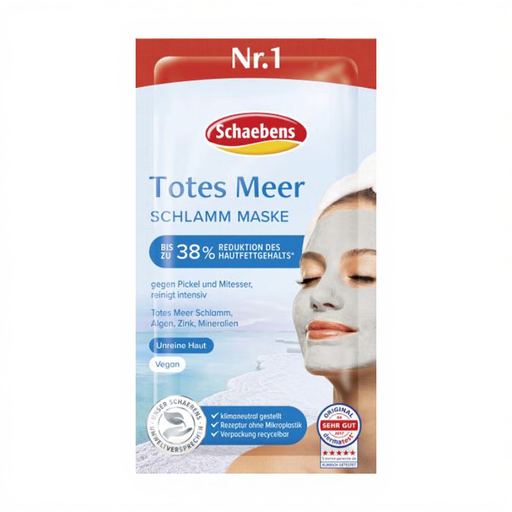
Why it suits this profile: The 15 ml sachet offers an accessible way to try a mud mask without immediately buying a large pack.
The product information states a clear application time of 10-15 minutes and instructs you to avoid the eye and lip area.
15 ml, with Dead Sea mud, kaolin, aloe vera and chamomile according to the ingredients list; dermatologically tested according to the product information.
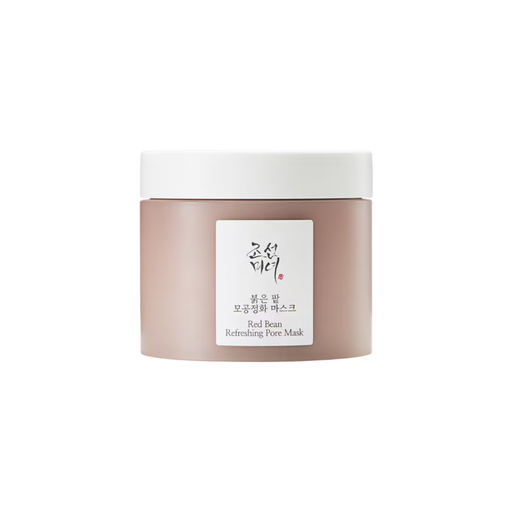
Why it suits this profile: This Korean skincare product is suitable for users who want to combine pore cleansing with a less drying formula for home use.
The formula combines kaolin with glycerine and red bean ingredients, so it is not focused solely on absorbing sebum.
140 ml in a tube, with a recommended application time of 5-10 minutes and, according to the product information, vegan and paraben-free.
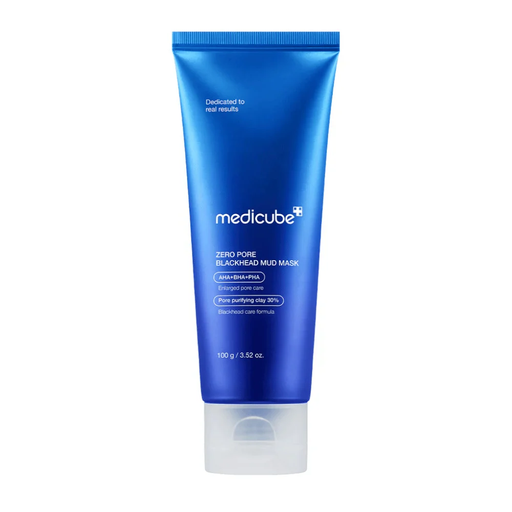
Why it suits this profile: A suitable option if you are specifically looking for a mask for blackheads and check ingredients such as clay, salicylic acid and other acids beforehand.
The product information explicitly lists AHA, BHA and PHA. This allows you to better match the formula to your existing routine and skin tolerance.
Contains kaolin, bentonite, salicylic acid, glycolic acid and gluconolactone according to the ingredients list; the recommended application time is around 3 minutes.
When using a mask for acne or blackheads, avoid scratching or rubbing hard. A cosmetic mask is not a substitute for treatment by a doctor or pharmacist if you have persistent skin problems.
We have compiled a complete, up-to-date list of products that fully meet these strict selection criteria and the applicable European safety regulations.
That depends on the formula. Many clay and mud masks are designed for use once to three times a week. Use a mask containing acids according to the label, and preferably not on the same day as other exfoliants. A hydrating sheet mask can often be incorporated into a routine more easily.
According to the product description, a mask may help remove excess sebum and surface impurities. The effect is generally temporary. Blackheads can return due to sebum production, skincare products and other factors. Expect maintenance rather than a permanent solution.
It can be, but choose carefully. If necessary, apply the product only to the T-zone, use the shortest recommended application time and apply a hydrating product afterwards. Avoid a formula if you have previously reacted to an ingredient, and stop using it if irritation occurs.
