
Vandaag of morgen in huis

Kwaliteit gegarandeerd

Welkomstaanbiedingen ontgrendelen: GRATIS bezorging | Tot 80% korting | Gratis 30 dagen JoyPlus-proefperiode
Download de app
Buying a face cream seems simple, until you have to choose between a moisturising face cream, a ceramide cream, a Korean face cream or an anti-ageing face cream. Packaging often promises radiant skin, long-lasting hydration and a stronger skin barrier. But a bold claim doesn’t always tell you whether the formula suits your skin type.
As a Joybuy Product Recommendation Officer, I filter the most important product information in a practical way. This helps you see what to look out for and which face cream is suited to dry, sensitive, combination or mature skin.
Words such as “lifting”, “restoring” and “glow” often describe the desired appearance, but don’t always indicate a measurable result. For example, according to Estée Lauder’s own research, some participants reported that their skin looked firmer and their wrinkles less visible when using the Youth Power Cream. This is a brand claim, not a guarantee for every user.
So always check the full ingredients list, the skin type the product is intended for and the instructions for use.
A niacinamide cream, hyaluronic acid cream and retinol cream can each have a different place in your routine. However, introducing several new products at once makes it difficult to tell which formula feels comfortable or may be causing irritation.
Start with one new face cream and use a small amount. If you have sensitive skin, it’s a good idea to do a patch test according to the product information. Stop using the product if you experience redness, stinging or other irritation.
A larger pack isn’t automatically better value if the texture doesn’t suit your skin. A rich cream may feel comfortable as a cream for dry skin, but feel too heavy on combination skin. A light gel cream may be comfortable during the day, but not provide enough protection for dry skin in winter.
Look at the size, texture, when to use it and recommended skin type, rather than focusing only on the price per pack.
For dehydrated or dry skin, ingredients such as glycerin, panthenol, betaine, squalane and hyaluronic acid are worth looking out for. Hyaluronic acid helps attract and retain moisture in the upper layers of the skin. However, the effect depends on the complete formula and on using a cream that helps limit moisture loss.
A moisturising face cream with a gel texture can feel comfortable on combination or oily skin. A richer cream with oils, shea butter or fatty ingredients is often better suited to dry skin, especially if your skin feels tight.
If you’re looking to “restore the skin barrier”, it’s worth checking for ceramides, cholesterol, fatty acids, panthenol and squalane. These ingredients feature in various formulas designed to leave skin feeling comfortable and hydrated.
A ceramide cream isn’t automatically suitable for everyone. Also check for fragrance, essential oils and the overall texture. If you have sensitive skin, a shorter ingredients list may be easier to assess. Always check the packaging for the latest ingredients information too, as formulas can change.
An anti-ageing face cream may contain ingredients such as retinol, bakuchiol, adenosine, niacinamide or peptides. Product information often links these ingredients to a smoother or firmer appearance. That doesn’t mean wrinkles are guaranteed to disappear.
Retinol needs extra care. According to the product information, Retinol 0.1 Cream advises starting slowly, for example by using it a few times a week, and only increasing frequency if your skin tolerates it. Use appropriate sun protection during the day and don’t immediately combine it with several other powerful active products.
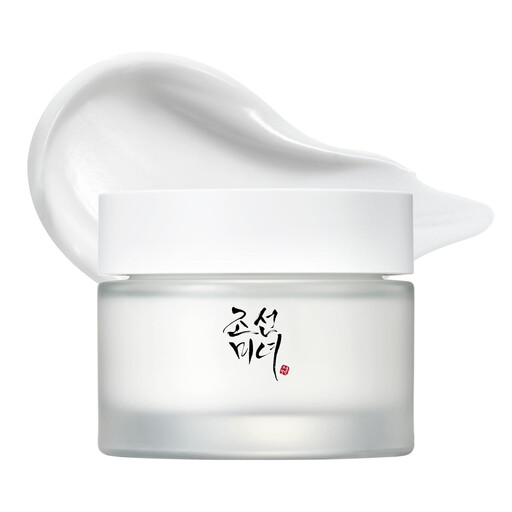
Why it suits this profile: This Korean face cream combines a creamy texture with ingredients including niacinamide, honey extract, rice extract and ceramide NP. The formula is intended for daily use on the face and is marketed for all skin types.
The product information lists specific ingredients and a size of 50 ml, so you don’t have to rely on terms such as “glow” alone.
Niacinamide, ceramide NP and a fragrance-free formula according to the product details; suitable as a face day cream.

Why it suits this profile: According to the product description, this gel cream is suitable for dry, very dry, combination and oily skin. Its lightweight texture can work well under make-up or as extra care for dry areas.
The product details tell you in advance that it has a gel cream texture and comes in a 30 ml size, and list claims such as alcohol-free, fragrance-free and non-comedogenic.
Gel cream for morning and evening use; according to the product information, free from alcohol, fragrance, parabens and phthalates.

Why it suits this profile: According to the ingredients list, this formula focuses on hydration and barrier support, with multiple ceramides, cholesterol, panthenol, squalane and different forms of hyaluronic acid.
The ingredients are clearly specified, and the product information recommends a patch test, especially if you have sensitive skin.
80 ml size; ceramides, hyaluronic acid, panthenol and cholesterol in the ingredients list; intended for morning and evening use.
We’ve compiled a complete, up-to-date list of products that meet these strict selection criteria and current European safety regulations.
Store the cream according to the instructions on the packaging. Check the expiry date or period after opening, and close the jar or bottle securely. If you have sensitive skin, fragrance and certain plant extracts may be worth checking for, so read the ingredients list before buying.
Choose a cream for dry skin with hydrating ingredients such as glycerin, panthenol or hyaluronic acid, combined with ingredients that help limit moisture loss. A richer texture with ceramides, squalane or shea butter may feel comfortable. Test a new formula on a small area of skin first.
Yes, a light gel cream or fast-absorbing face day cream is often practical under make-up. Let the cream absorb for a little while first, and don’t use more product than you need. Make-up may move around more easily over a very rich formula.
That depends on the size and how much you use each time. A 30 ml pack is generally more compact than an 80 or 100 ml jar. Always follow the period-after-opening and expiry information on the packaging, even if there’s still product left.
