
Cautious pouffe owner
You want to remove a stain, but first you need to check which cleaning method is suitable for your pouffe’s upholstery. BISSELL recommends checking the upholstery care label.


First, check whether your pouffe’s care instructions allow wet cleaning. A spray-and-extraction cleaner isn’t suitable if the fabric must not be wet-cleaned. If wet cleaning is allowed and you mainly need to tackle localised stains, compare the dimensions of the whole appliance with your storage space, including the hose, cord and nozzles. Larger tanks can be useful for bigger cleaning jobs, but they don’t automatically make an appliance a better choice for a small home.
You want to remove a stain, but first you need to check which cleaning method is suitable for your pouffe’s upholstery. BISSELL recommends checking the upholstery care label.
You’re looking for a spot cleaner that you can store along with its hose, cord and nozzles. Compare the complete set-up with the space you have available.
You may also want to clean other suitable upholstery, so you’re comparing the nozzles, tank capacity and how to clean the appliance after use.
Suitable for: a pouffe whose care instructions allow wet cleaning, when you mainly need to tackle small areas.
Keep in mind: check that both the appliance and its separate parts will fit in your storage space.
Suitable for: anyone who regularly cleans several suitable fabric surfaces and wants to compare different nozzle widths or larger tank capacities.
Keep in mind: larger tanks and brushes aren’t necessarily useful for one small pouffe and may take up more storage space.
Suitable for: anyone who wants to clean seams or other suitable fabric surfaces as well as upholstery.
Keep in mind: check which parts are included with the exact model and how much space the appliance takes up.
Suitable for: a pouffe whose care instructions only allow another method, such as dry cleaning only.
Keep in mind: don’t use a spray-and-extraction cleaner on that pouffe. If the instructions are unclear, ask the furniture manufacturer for advice.
Start by checking your pouffe’s care instructions, then work out how much space you have for the appliance and its parts. The percentages below show one clear priority for each concern.
| What to consider | What to look for | Who considers this important? |
|---|---|---|
| Upholstery suitability | Read the care label or ask the pouffe manufacturer which cleaning methods are allowed. Try an approved method on an inconspicuous area first. | If your main concern is whether you can use water on your pouffe, checking the fabric care instructions is your first step. Around 36% of consumers prioritise upholstery suitability. |
| Storage size and room to manoeuvre | Compare the dimensions of the exact model with your available space, and check where the hose, cord and nozzles can be stored. | If you have limited cupboard or floor space, you’ll want to know whether the complete appliance will fit and can be positioned securely during use. Around 29% of consumers give storage space top priority. |
| Reach and capacity | Check the capacity of the clean and dirty water tanks, the nozzles included and the reach of the hose and cord. | If you regularly clean other suitable furniture as well as your pouffe, tank capacity and a choice of nozzles may matter more. Around 21% of consumers focus mainly on regular cleaning jobs. |
| Cleaning after use | Check how to empty the dirty water tank, whether there’s a rinse function and which cleaning solution the manual allows. | If you mainly want to know how much cleaning the appliance needs after use and which solution to use, check the maintenance steps and compatibility. Around 14% of consumers prioritise maintenance and ongoing supplies. |
An appliance designed for upholstery doesn’t tell you whether the specific fabric on your pouffe can be cleaned with water. Using a method that doesn’t follow the care instructions could damage the upholstery.
Check the label first or ask the pouffe manufacturer for instructions. Don’t treat unclear guidance as permission to wet-clean it.
Using the wrong wet-cleaning method could damage the upholstery.
The hose, cord and nozzles also take up space and need to be stored somewhere after use.
Compare your available storage space with the dimensions of the complete set-up, and think about where you’ll put the appliance while cleaning.
Remember to leave room for the separate parts, too.
Extra capacity can be useful for several cleaning jobs, but you may not need it for one small pouffe, and a larger model may be less suited to the space you have.
Choose the tank capacity based on the surfaces you’ll actually clean and whose care instructions allow wet cleaning.
The amount supplied with an appliance isn’t the same as a supply for repeated use. The solution must also be suitable for the model, as stated in its manual.
Check what’s included in the pack, the dosing instructions and model compatibility before using a different solution.
You may need to buy a suitable cleaning solution separately for ongoing use.
Rowenta describes the Clean It Compact IN3010 as suitable for spot cleaning, while the Clean It IN5011 is designed for use with larger tanks and two brush widths.
The international manufacturer’s page describes the SE 3 Compact Home as a spray-extraction cleaner for upholstery and other uses.
The Philips 3000 Series XW3193/11R1 described is a refurbished model with a 3-in-1 nozzle for use on furniture and other surfaces.
BISSELL describes the SpotClean Plus 3724N as a portable spray-and-extraction cleaner for upholstery and other uses.
These products are included to help you compare upholstery cleaners and spot cleaners. Before use, check that your pouffe’s care instructions allow wet cleaning and that the model and accessories will suit your space.
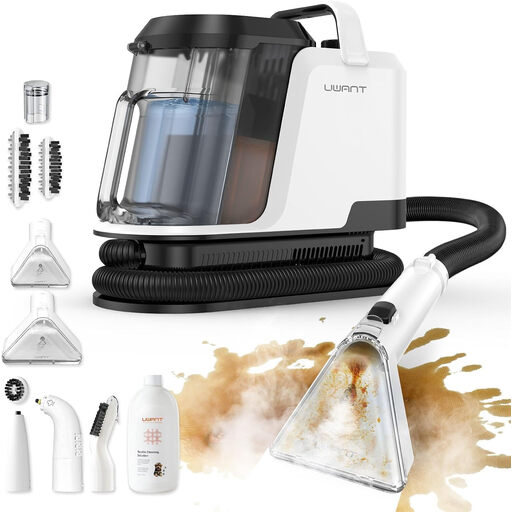 No image available
Compare this model only for a pouffe whose care instructions allow wet cleaning; check that the method described is suitable for the fabric.
18 kPa; 600 W; 3-in-1; separate clean and dirty water tanks; one-touch self-cleaning.
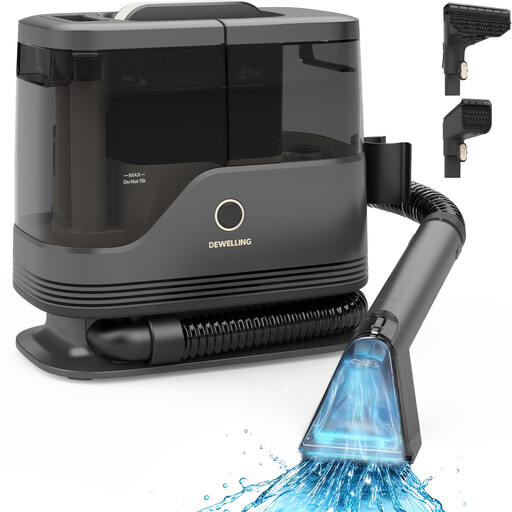 No image available
A portable model to compare if your pouffe’s care instructions allow wet cleaning.
400 W; 13 kPa; clean and dirty water tanks; self-cleaning function on the handle.
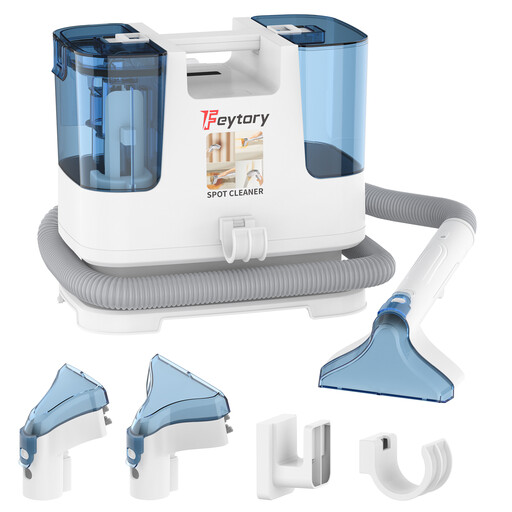 No image available
Compare this spot cleaner if you’re looking for a model for localised cleaning and the upholstery can be wet-cleaned.
15 kPa; 0.6 and 1.5-litre tanks; compact design.
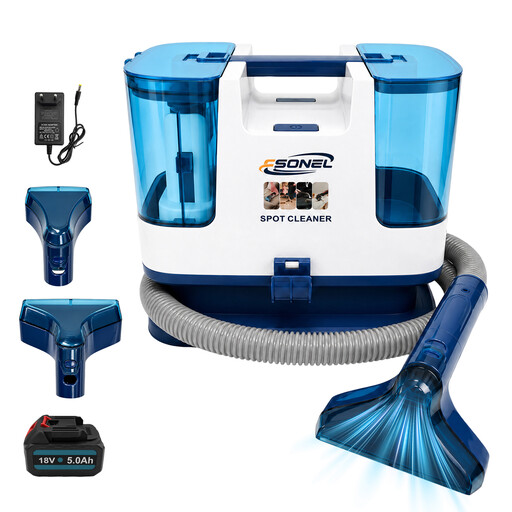 No image available
A cordless model to compare if you don’t want to use a mains cable. First, check that the cleaning method is suitable for your pouffe’s fabric.
400 W; 17 kPa; cordless; single-battery model.
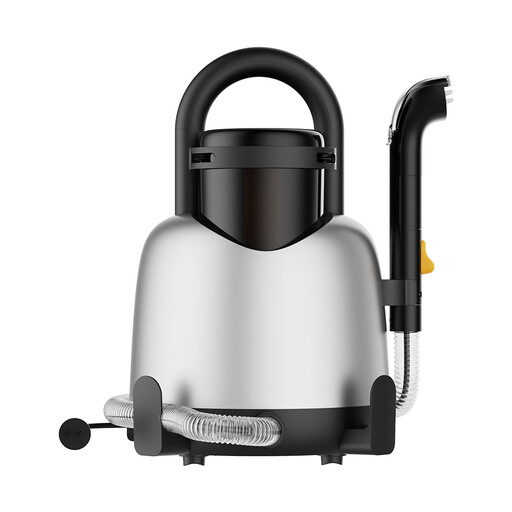 No image available
Compare this corded upholstery cleaner only if wet cleaning is allowed for your pouffe.
1,700 W; corded; 5-in-1 brush set; self-cleaning function.
No, it depends on the care instructions for that particular pouffe. BISSELL lists W and WS for its water-based method, but those codes don’t give general permission to clean every fabric or use every appliance. If the instructions are unclear, ask the pouffe manufacturer for advice.
Compare the dimensions of the exact model with the space you have available, allowing room for the hose, cord and nozzles too. Also check that you have a suitable place to position the appliance while cleaning.
Empty and clean the dirty water tank as directed in your model’s manual. Use a rinsing accessory or function only as instructed in the manual. Rowenta lists an accessory of this kind for the IN3010, while Kärcher lists a function for the SE 3 Compact Home.
It depends on the model, what’s included in the pack and how often you use it. Rowenta states that the IN3010 comes with 250 ml and sells a cleaning solution for the Clean It range separately. Check compatibility and the instructions before putting a different solution in the tank.