What should you look for when buying?
| What to consider |
What to look for when buying |
Who is this important for? |
| Capturing small details |
Check the lens mount, maximum magnification and the space between the lens and the fabric. |
If I want to fill the frame with small stitches or fibres, I focus on lens magnification and room for lighting. Around 33% of consumers prioritise these details. |
| Framing and lighting |
Decide how you want to frame your shots, then check the camera position and lighting in your own studio. |
If you switch between wide shots and close-ups in a small home studio, you’ll need enough room to position both the camera and lighting. Around 27% of consumers prioritise this combination. |
| Colour and sharpness |
Plan a consistent lighting set-up and check that your preferred workflow supports RAW and focus bracketing. |
If I want to compare fabrics, I want to keep colour and sharpness as consistent as possible. Around 20% of consumers prioritise this comparability. |
| The complete set-up |
Check which lens is actually included and whether it’s compatible with the camera body. |
If you want to put together a complete, usable set-up, consider the body, lens and everything else you’ll need. Around 20% of consumers prioritise planning the complete set-up. |
A standard set-up may be enough for a whole piece of fabric or an overall pattern; for small stitches and fibres, the magnification of the specific lens is what matters. Canon lists a maximum of 0.5× for the RF 35mm F1.8 Macro IS STM, while Nikon specifies 1:1 for the Z MC 50mm f/2.8 and Fujifilm for the XF30mmF2.8 Macro. These lens specifications don’t automatically tell you how much room you’ll have for lighting.
For repeatable results, don’t base your choice on a single camera feature. Plan for consistent lighting conditions and white balance too. RAW gives you room to adjust the white balance afterwards. For textured fabric, you can combine several focus points using focus stacking, but this requires extra shots and post-processing.
Cameras at Joybuy
Cameras at Joybuy that may suit this subject; for fabric details, consider the lens, magnification and room for lighting in your chosen set-up.
 No image available
DJI Osmo Pocket 4 Standard Combo
If you want to try different framings, the product title mentions 2× lossless zoom.
The title also lists a 1″ CMOS sensor, 4K/240fps, 3-axis stabilisation, 107 GB of built-in storage and a 2″ rotatable screen. Check whether the lens and working distance suit the smallest fabric details you want to capture.
View at Joybuy
 No image available
KOMERY G7 5K digital camera, white
If you’re looking for a camera with zoom for changing your framing, the product title mentions 18× zoom.
The title also mentions 80MP UHD. Check whether the lens and working distance are suitable for the fabric details you want to photograph.
View at Joybuy
 No image available
Komery W6 digital camera
If you want to try different framings, the product title mentions 12× optical zoom.
The title also mentions 4K, WiFi and 64MP. Check whether the lens and working distance suit the details you want to capture.
View at Joybuy
 No image available
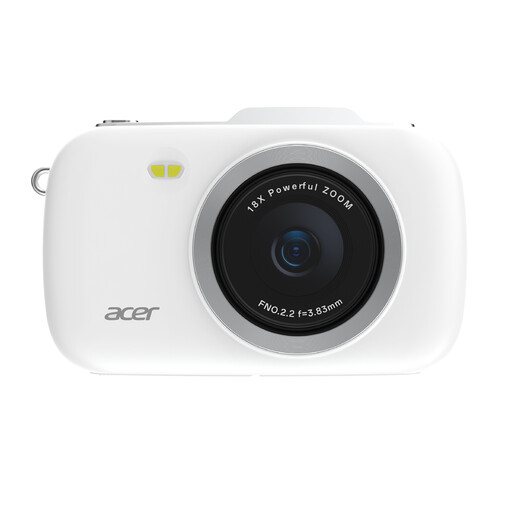
KOMERY G7-A 4K digital camera, white
If you want to try different framings, the product title mentions 18× zoom.
The title also lists 80MP UHD. Check whether the lens and working distance suit the fabric details you want to capture.
View at Joybuy
 No image available
Sony ZV-E10 with 16–50mm zoom lens, black
This camera comes with a 16–50mm zoom lens, making it an option if you want to try different framings.
The product information lists an APS-C camera with 24.2 MP and E-mount, supplied with an E PZ 16–50mm lens. Check whether the lens offers the magnification and working distance you need for fabric details.
View at Joybuy
Frequently asked questions
Do you need a 1:1 macro lens for every fabric shot?
No. The magnification you need depends on how small the detail is that you want to fill the frame with. You don’t automatically need a separate 1:1 lens for a larger piece of fabric or an overall shot; check your desired framing with the specific lens.
How can you keep colour and texture consistent between shots?
Use controlled lighting and consistent white balance. RAW gives you room to adjust the white balance afterwards. For textured fabric, you can take several shots at different focus points and combine them if needed.
What costs and consumer rights should you consider when buying a camera in the Netherlands?
Check which lens and other components are included in the set, as you may need to buy a macro lens separately. For consumer purchases, statutory guarantees apply alongside any manufacturer’s guarantee, according to ACM ConsuWijzer. If a purchase is used mainly or exclusively for business, consumer protection doesn’t automatically apply; the relevant rules depend on how it’s used.
Can you always reclaim VAT on a camera bought for business use?
No. VAT recovery depends on the tax authority’s rules and your circumstances. VAT on costs relating to exempt or non-taxable supplies can’t be reclaimed.


