Who is this relevant for?

Drying napkins without using floor space

If you dry a small number of fabric napkins and would rather use a suitable door, wall or railing than a freestanding airer, this could be for you. Tomado and Brabantia describe hanging airers for different places; always check that your chosen spot is suitable for the model.

Regularly drying laundry indoors

If you often dry other laundry indoors as well as napkins, you may want to weigh up whether active heating is worth the electricity and the space needed for the setup. According to the manufacturer, Silvergear offers both a heated drying tower and a heated winged airer.

Taking care with fabrics and placement

If you want to check the care label on reusable napkins and the placement instructions for an electric airer first, this is worth considering. GINETEX explains the symbols for natural drying; the European Commission explains that the manufacturer is responsible for the conformity assessment and CE marking of products covered by the relevant rules.

What should you consider when choosing?

Compact, unheated hanging airer

A good fit if: you dry a few napkins and have a suitable place to hang the airer. Tomado lists a drying length of 2 m for the Iseo 2.

Bear in mind: the airer occupies the hanging spot while in use and doesn’t provide active heating.

Larger, unheated hanging airer

A good fit if: you hang small loads of laundry as well as napkins and have a suitable ledge. Brabantia lists 4.5 m of drying space and adjustable arms for ledges up to 11 cm wide.

Bear in mind: the hanging spot and the space in front of it need to be large enough; this airer doesn’t provide active heating.

Heated drying tower

A good fit if: you regularly dry more laundry indoors and have floor space for a tower. Silvergear lists a rated power of 300 W for its Premium drying tower.

Bear in mind: a tower needs floor space and electricity; the rated power alone doesn’t tell you how much each drying session will cost.

Heated winged airer

A good fit if: you want to spread out your laundry and have a suitable spot on the floor. For the Premium model reviewed, Silvergear lists 20 heated bars and 230 W.

Bear in mind: the airer takes up floor space while in use; compare running time and energy consumption, not just the wattage.

Consideration What to check before buying Who is this most important for?
Setup space and storage Measure the space with the airer unfolded and check that the hanging ledge and storage space suit the number of napkins you dry at once. If I’m only drying a few napkins and don’t want to give up floor space, I’ll first look for a suitable place to hang an airer. Setup space and storage are the top priorities for around 36% of consumers.
Regularly drying laundry indoors Consider how much laundry you dry at once, how much floor space the airer takes up, and its power rating and usage instructions. If I often dry more laundry indoors, I want to know whether heating is worth the extra space and electricity for me. Around 29% of consumers prioritise regularly drying laundry indoors with heat.
Fabric care and placement Read the care label and the instructions for the exact airer, including the specified placement and connection requirements. I want to make sure the drying method suits my napkins and that I can meet the placement requirements. Fabric care and safe placement are the main concerns for around 21% of consumers.
Electricity costs and service Compare actual usage in kWh based on the power rating and running time; also check who the seller is. I want to factor in electricity costs and what happens if the product develops a fault before I choose. These are the top priorities for around 14% of consumers.

Common pitfalls

  • Only checking the folded dimensions

    A hanging airer can get in the way of a door or passage when in use, while a tower also needs floor space when opened out.

    Measure the setup area, including the space in front of the airer, and check which hanging spot the manufacturer recommends for your chosen model.

  • Assuming heat will solve damp in your home

    Laundry on a heated airer still adds moisture to the indoor air. A cover or heating doesn’t replace the need to remove moist air.

    Plan for ventilation when drying laundry indoors. Milieu Centraal recommends extra ventilation when you dry laundry inside.

  • Assuming lower wattage means lower cost per drying session

    The rated power alone doesn’t tell you how long a drying session takes or how much electricity it uses in total.

    Compare the power rating with the actual running time, then work out the energy consumption in kWh using your own electricity tariff.

  • Treating a product listing as proof of safety

    A stated power rating or product page alone doesn’t prove that the exact electrical model meets the applicable requirements.

    Before buying, check the model identity, the instructions and the applicable conformity information.

Brands to compare

Silvergear

Offers heated drying towers and winged airers for anyone considering active heating.

  • For the Premium models reviewed, Silvergear lists 300 W for the drying tower and 230 W for the winged airer.
  • Check the space required and the information for the exact model you’re considering; wattage alone doesn’t determine energy use per drying session.

Tomado

Offers unheated hanging airers for smaller drying jobs and for anyone who needs more drying line.

  • Tomado lists a drying length of 2 m for the Iseo 2 and 9 m for the Den Haag 9, spread across 13 lines.
  • Both models are unheated; check that your hanging spot and the available space will work while the airer is in use.

Brabantia

Among other products, offers an unheated hanging airer for smaller loads of laundry.

  • For the hanging airer reviewed, Brabantia lists 4.5 m of drying space and adjustable arms for ledges up to 11 cm wide.
  • The ledge must fit within the stated dimensions, and there must be enough room to hang and use the airer.

Leifheit

The Classic 25 is a foldable, unheated hanging airer for a suitable place to hang it.

  • Leifheit lists a drying length of 2.5 m and dimensions of 18 × 55 × 30 cm for this model.
  • The product description is aimed mainly at balcony railings; don’t assume that another hanging spot will be suitable.

Airers on Joybuy

This selection includes a wall-mounted airer and freestanding airers, including an electrically heated model. Compare the fixing method or floor dimensions, the available drying length and whether you need active heating.
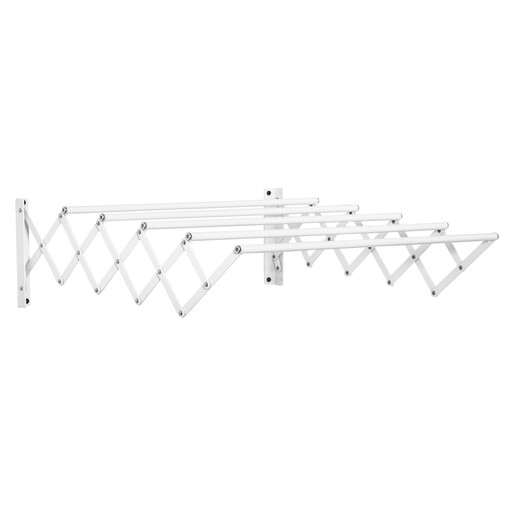
Foldable wall-mounted airer with 5 rails, 63.5 × 60 × 20 cm

Foldable wall-mounted airer with 5 rails, 63.5 × 60 × 20 cm

A good fit if you want to keep the floor clear and have a suitable wall for mounting.

The product name lists 5 rails. The airer needs to be mounted on a wall, so check the location and fitting instructions.

View on Joybuy
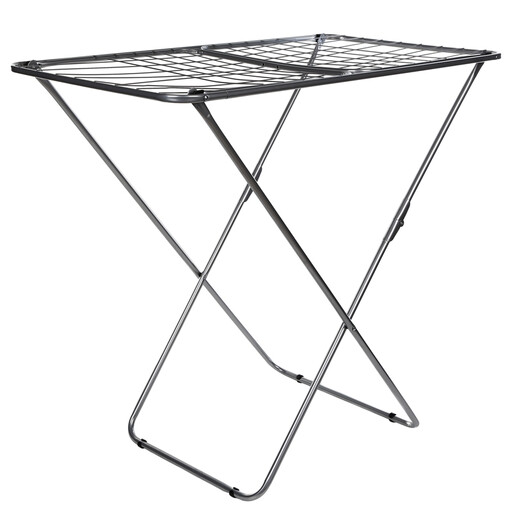
5five airer with 18 m of drying line

5five airer, 18 m of drying line

An option if you want to dry other laundry as well as napkins and have enough room for the airer.

The product name lists 18 m of drying line.

View on Joybuy

Foldable electric heated airer with 2 side wings, 230 W, 144 × 53 × 91 cm, silver

Electric heated airer with 2 side wings, 230 W, 144 × 53 × 91 cm, silver

A good fit if you’re looking for active heating and can set aside a suitable space on the floor.

The product name lists 230 W and a foldable design. The description mentions stable positioning, ventilation and a clearance of 31 cm from walls. Check the applicable conformity information for this exact model too; the stated power rating doesn’t confirm compliance.

View on Joybuy
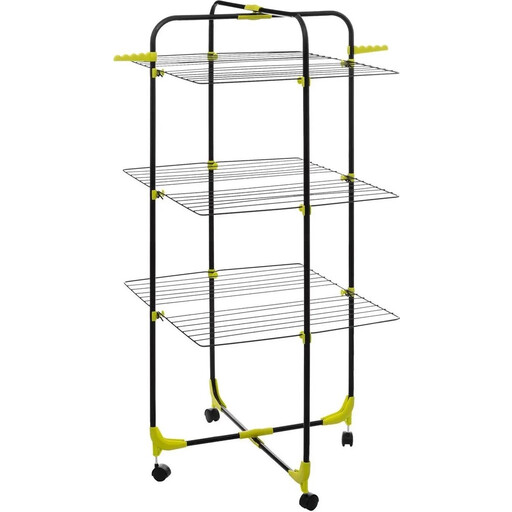
5five Mojave foldable drying tower with 30 m of drying line

5five Mojave drying tower, 30 m, foldable

An option if you want the listed drying length and can make room for it on the floor.

The product description lists dimensions of 65 × 70 × 137 cm and says self-assembly is required.

View on Joybuy

Frequently asked questions

How do you choose between a hanging airer and a heated airer for a few napkins?

First, measure the hanging spot and count how many napkins you want to dry at once. A suitable hanging airer avoids the need for a floor-standing frame; active heating is mainly worth considering if you regularly dry more laundry indoors and are happy with the space and electricity it needs. It hasn’t been established that your napkins will dry faster.

Do you need to ventilate when drying laundry indoors?

Yes. Milieu Centraal recommends extra ventilation when you dry laundry indoors; a cover or heating doesn’t remove the need to get rid of moist air.

Can you dry any fabric napkin on a heated airer?

Don’t assume so without checking. Follow the napkin’s care label and the instructions for the specific airer. A symbol for natural line drying or flat drying doesn’t automatically mean that contact with a heated surface is allowed.

Which rules apply to an electric airer?

Electrical equipment within the scope of Directive 2014/35/EU must meet the applicable safety requirements and CE obligations. The consolidated text of that directive on EUR-Lex is dated 30 May 2026; the European Commission explains that the manufacturer is responsible for the conformity assessment and CE marking. Check whether the rules apply and review the information for the exact model.

How do you estimate the electricity costs of an electric airer?

Multiply the power rating in kilowatts by the actual running time in hours to calculate energy use in kWh, then multiply that by your own tariff. Without knowing the running time, you can’t work out the cost per drying session; a lower wattage alone doesn’t tell you what it will cost.
