
Stitch-detail photographer
You want to show seams, stitches or fibres in sharp, close-up detail. Compare maximum magnification, the camera mount and the space in front of the lens.


You don’t automatically need a macro lens to photograph a fully folded piece of fabric. First, check whether your current lens gives you the framing and focus you want. For small stitches or fibres, a suitable macro lens makes more sense; compare its maximum magnification with the space available for lighting. Deep folds may require extra shots for focus stacking, which combines images taken at different focus points.
You want to show seams, stitches or fibres in sharp, close-up detail. Compare maximum magnification, the camera mount and the space in front of the lens.
You want to keep several folded layers recognisable in the frame. Start with framing and depth of field, and first check what your current lens can already do.
For repeated shots under artificial light, space for lamps and a consistent white balance are practically important. Nikon Netherlands recommends keeping the white balance and lighting as consistent as possible.
| Consideration | What to look for when buying | Who is this important to? |
|---|---|---|
| Small stitches and fibres | Decide what the smallest detail you need to show is, then compare the maximum magnification of the exact lens. Check the mount too. | If I want to show stitches or fibres clearly, I prioritise magnification and a suitable lens version. Around 26% of consumers say detail is their main requirement. |
| Complete folds | First, try framing your shot with your current lens. Check whether the front and back layers are sufficiently sharp. | For a recognisable composition showing several folds, I want to see the whole picture rather than zoom in as far as possible. Around 21% of consumers prioritise the complete composition. |
| Space for lighting and colour | Compare the working distance, not just the minimum focus distance. Assess your setup and white balance under the lighting you use. | If I place lamps close to the fabric and want colours to match from one photo to the next, the space in front of the lens matters. Around 21% of consumers prioritise this. |
| A compatible camera mount | Make a note of your camera model and mount, then check the full lens name and version. | I want a lens that fits my current camera, so it’s a practical choice too. For around 21% of consumers, compatibility is the main consideration. |
| Avoiding an unnecessary purchase | Take a test shot at the portfolio size you have in mind, then work out what your current lens is missing. | If my current lens already captures the complete fold well, I only want to buy something new if it will genuinely make a difference to my photos. Around 11% of consumers prioritise this. |
Minimum focus distance is measured from the camera’s sensor plane; working distance is the space in front of the lens. Only the latter tells you how much room you’ll have for lighting in front of the lens.
Look up the working distance of the exact model and check that it suits your tabletop setup.
Too little clearance could mean your planned lighting won’t fit where you want it.
Higher magnification makes small details appear larger, but makes it harder to frame the complete fold. Your existing lens may already be enough to show the whole picture.
First, take a test shot of both the entire fold and the smallest detail you want to show.
Depth of field can be limited when shooting close up. Canon Europe describes focus stacking as a way to combine several planes of focus; this requires taking separate shots.
Check that your camera and editing method are suitable for achieving the sharpness you want across several layers.
Focus stacking requires extra shots and editing time.
For a compatible Sony E-mount camera, the FE 90 mm F2.8 Macro G OSS, model SEL90M28G, offers 1:1 magnification. Sony also lists optical stabilisation.
For a compatible Canon RF camera, the RF 100mm F2.8L Macro IS USM is an option if you need more than 1:1 magnification.
For the Fujifilm X system, Fujifilm says the XF30mmF2.8 R LM WR Macro combines a 30 mm focal length with up to 1:1 magnification.
According to Sigma, the 105mm F2.8 DG DN MACRO | Art is a 1:1 lens available in separate Sony E and L-Mount versions.
For a compatible Nikon Z camera, Nikon describes the NIKKOR Z MC 105mm f/2.8 VR S as a 1:1 lens for close-ups.
For a compatible Micro Four Thirds system, the M.Zuiko Digital ED 90mm F3.5 Macro IS PRO is a specialist option for very small details.
This product selection is aimed at capturing a wide view of a folded piece of fabric, with close-ups at lower magnification. It isn’t intended for magnifying the smallest stitches or fibres.
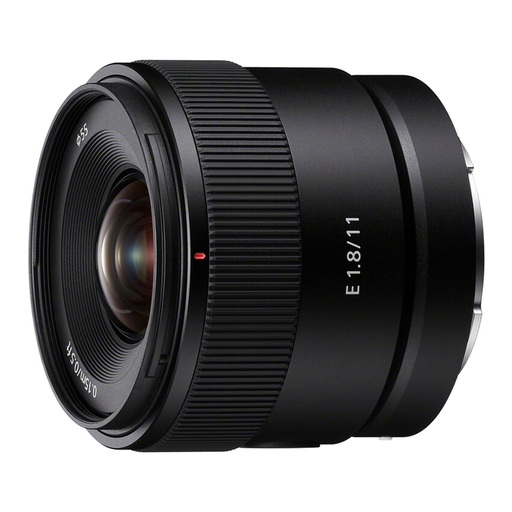 No image available
The wide 104° angle of view could work well for framing a spacious fabric composition. Check that your camera uses the Sony E mount.
Minimum focus distance: 15 cm. Stated magnification: 0.13× with autofocus and 0.20× with manual focus. This is an option for close-ups at lower magnification, not for showing very small stitches or fibres at a large scale.
Not necessarily. First, check whether your current lens gives you the framing and focus you want. 1:1 is mainly relevant when you want to reproduce a small detail at life size on the sensor.
Start by considering the shooting angle and depth of field. For a static subject, focus stacking can combine several shots taken at different focus points. Check whether your camera and editing software support this method.
Keep the lighting as consistent as possible and check the white balance when the light changes. Nikon Netherlands recommends keeping the lighting conditions consistent. White balance changes how colours are rendered, not the lens’s magnification or working distance.
For eligible distance purchases from a business, you generally have a 14-day cooling-off period, with some exceptions. The Dutch government distinguishes between buying from a business and buying from a private individual. Consumer purchases must also conform to the contract. According to the Dutch government, the Netherlands has no fixed statutory warranty period, and you should contact the seller if a product is faulty.