Choose the magnification based on how much of the fabric pattern and how many small details you want to show in your portfolio. Then check that the lens mount is compatible with your camera. For recognisable patterns, a 1:1 macro lens can be a useful starting point. For individual, very small fibres, 2:1 may be a better fit, but it requires extra care with lighting and focusing. If you also want to photograph larger subjects, consider the lower magnification of a more versatile close-up lens.
Who is this advice for?
Fabric and weaving portfolio creator
Wants to show the fabric’s texture clearly without losing its recognisable pattern. Venus Optics/Laowa and Adaptalux highlight magnification and light placement as important considerations when photographing texture.
Photographer of fibres and fine stitches
Wants to make small details fill the frame and is prepared to focus carefully and position the light precisely. Laowa describes a 2:1 version for capturing details this small.
Creator with a range of photography needs
Wants to photograph larger pieces or other subjects as well as fabric details, and is weighing maximum magnification against versatility. Nikon describes the Z MC 50mm as both a 1:1 macro lens and a lens for everyday photography.
What should you consider when choosing?
First check your camera’s lens mount, then decide what kind of framing you need for your portfolio.
Versatile close-ups up to 0.5x
A good fit if: you photograph larger motifs or portraits as well as fabric details.
Trade-off: at 0.5x, the subject appears half life-size on the sensor compared with 1:1. Canon specifies a maximum magnification of 0.5x for the RF 85mm F2 Macro IS STM.
1:1 macro for patterns and details
A good fit if: you want to capture weaves, stitches and small finishing details while keeping enough of the fabric visible to provide context.
Trade-off: depth of field becomes shallow when focusing close up, so check there’s room for side lighting too. Sony, Nikon, Sigma and Tamron specify 1:1 for the versions mentioned.
2:1 macro for very small fibres
A good fit if: individual fibres or a very small area are your subject, and you have a compatible APS-C camera.
Trade-off: the Laowa 65mm versions mentioned use manual focus. At 2:1, the lens may restrict the light reaching the subject, and the surrounding fabric pattern will disappear from view more quickly.
| Consideration |
What should you check? |
Who is this important for? |
| Recognisable pattern |
Decide how much of the weave you want to keep visible, then compare this with the maximum magnification. |
If I want the fabric’s repeating pattern to remain recognisable in my portfolio, I choose my framing before going for the highest magnification. Pattern recognition is the top buying priority for around 36% of consumers. |
| Fine fibres and stitches |
Compare 1:1 and, if relevant, 2:1 magnification with the size of the smallest detail you want to show. Check that manual focusing suits the way you work. |
If I want individual fibres or small stitches to fill the frame, I accept that less of the surrounding fabric will be visible. Around 29% of consumers prioritise these fine details. |
| Lighting and working space |
Check the clearance in front of the lens at your chosen magnification, so there’s room for side lighting or a diffuser. |
When I want to reduce shadows on fabric, I consider the space I need for my light and for precise focusing. Lighting setup and working distance are top priorities for around 21% of consumers. |
| Other uses |
Check the exact mount and weigh the macro magnification you need against other subjects in your portfolio. |
If I want to use the same lens to photograph larger pieces or other subjects, I consider versatility alongside macro magnification. Around 14% of consumers say broader use is their top priority. |
Common mistakes when choosing a macro lens
-
Automatically choosing the highest magnification
At high magnifications, the recognisable weave may fall outside the frame, leaving less room for light to reach the subject.
Choose a magnification based on both the smallest detail and how much of the fabric you want to keep recognisable.
-
Confusing minimum focusing distance with working distance
Sony Netherlands measures minimum focusing distance from the sensor plane. The clearance between the fabric and the front of the lens is a different distance.
Check the working distance at the magnification you plan to use, and see whether there’s still room for side lighting or a diffuser.
-
Assuming a similar model name means it’s the right version
Lenses with similar names may have different mounts or be designed for different sensor formats.
Before buying, compare the full lens version and mount with your exact camera model.
Recommended brands for macro photography
Tamron
The 90mm F/2.8 Di III MACRO VXD, model F072, is a 1:1 option for compatible Sony E or Nikon Z cameras.
- Tamron lists flat-field correction for the F072, which may be worth considering when photographing flat textiles.
- Flat-field correction is a manufacturer claim, not an independent comparison. Check the version for your mount.
Sony
The FE 90mm F2.8 Macro G OSS (SEL90M28G) is designed for the Sony E mount.
- Sony specifies 1.0x maximum magnification and Optical SteadyShot.
- The stated minimum focusing distance of 0.28 m is measured from the sensor plane; it isn’t the clearance in front of the lens.
Canon
The RF 100mm F2.8L Macro IS USM and RF 85mm F2 Macro IS STM are two different options for compatible Canon RF cameras.
- Canon specifies up to 1.4x for the RF 100mm and up to 0.5x for the RF 85mm.
- Maximum magnification differs, so these versions aren’t equivalent when it comes to capturing the smallest details.
Nikon
The NIKKOR Z MC 105mm f/2.8 VR S and Z MC 50mm f/2.8 both offer 1:1 magnification for compatible Nikon Z cameras.
- Nikon also describes the Z MC 50mm as suitable for everyday photography, as well as macro shots.
- Nikon states that, when taking close-up photographs with the Z MC 50mm, there’s around 5 cm between the front of the lens and the subject. Bear in mind where you’ll place your light.
Laowa
The 65mm f/2.8 2X Ultra-Macro is a specialist 2:1 option for APS-C cameras. Versions are available for mounts including Fujifilm X and Sony E.
- Its maximum magnification is designed for capturing very small details.
- The lens uses manual focus. Laowa warns that at 2:1, the lens may block light from reaching the subject.
Sigma
The 105mm F2.8 DG DN MACRO | Art offers 1:1 magnification for full-frame mirrorless cameras with an L-Mount or Sony E mount.
- Sigma specifies a minimum focusing distance of 29.5 cm.
- That isn’t the same as the working clearance in front of the lens. Also check that the available mount is compatible with your camera.
Lenses at Joybuy for close-ups and context
These Joybuy lenses are suited to fabric close-ups and images that also show the surroundings. They aren’t a substitute for a 1:1 or 2:1 macro lens when very small fibres are the main subject.
 No image available
Sony E 50mm f/1.8 OSS Black
The product information mentions close-up photography. This option is better suited to larger fabric textures and contextual shots than to filling the frame with very fine fibres.
50 mm, f/1.8 and OSS; Sony E mount.
View at Joybuy
 No image available
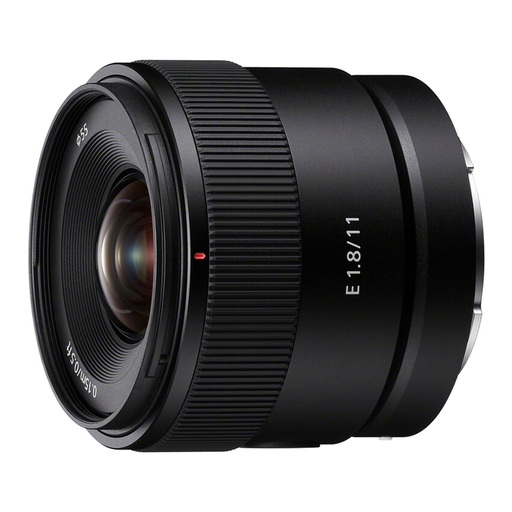
Sony E 11mm f/1.8 APS-C Wide Angle Prime Lens (SEL11F18)
The product information mentions close-ups and an ultra-wide-angle design. This makes it suitable for images that show the surroundings as well as the fabric, rather than filling the frame with individual fibres.
11 mm, f/1.8 and APS-C; ultra-wide-angle lens.
View at Joybuy
Frequently asked questions
How do you know whether a macro lens is compatible with your camera?
Compare the exact camera model name with the mount of the lens version on offer. Sigma makes the 105mm version mentioned for L-Mount and Sony E; Canon RF lenses are designed for compatible RF cameras. The same focal length alone doesn’t tell you whether a lens is compatible.
How do you photograph raised stitches without the rest appearing blurred?
Start with a stable setup and test your focus point and aperture. If the depth of field isn’t sufficient for macro photography, you can combine shots taken at different focus points. Check for artefacts when working with complex fabrics. Side lighting can help bring out the texture.
What should you know about warranties and returns when buying from a Dutch online shop?
For eligible online consumer purchases, the ACM generally allows a cooling-off period of up to 14 days after delivery, with some exceptions. Check which terms apply to your purchase. The statutory guarantee is separate: according to the ACM, the seller is responsible for ensuring the product meets the standards you can reasonably expect with normal use.


