
Seller who wants to show fabric colours accurately
You photograph bags for a shop or portfolio and want the colours to look consistent from one shot to the next. Adjustable white balance and a repeatable set-up are worth considering.


Your current smartphone may be all you need for overview shots of fabric bags, provided the lighting, background and set-up are right. A mirrorless camera is worth considering if you want more control over white balance, need to reproduce the same framing regularly or want close-ups of stitching and fabric texture. If you do, compare the complete kit rather than just the camera body.
You photograph bags for a shop or portfolio and want the colours to look consistent from one shot to the next. Adjustable white balance and a repeatable set-up are worth considering.
You want to capture details of the fabric, seams and finish as well as full shots of the bag. The right lens and its focusing capabilities are therefore important.
You want to get started by a window without buying a new camera straight away, and first compare your existing phone with a mirrorless camera kit.
First, test whether your phone meets your needs with a fixed background and stable set-up. Only then consider whether you need a camera with interchangeable lenses for regular product shots or close-ups.
| What to consider | What to look for when buying | Who is this most relevant to? |
|---|---|---|
| Fabric colour in changing window light | Check whether you can adjust the white balance and take a reference photo in the same lighting conditions. | If I photograph the same fabric at different times, I want to minimise colour differences caused by changing light. Around 33% of consumers give colour accuracy top priority. |
| Texture, stitching and finish | Compare the magnification and focusing distance of the exact lens, and check the mount and the space you’ll need to work in. | If you want to show seams and fabric texture in close-up, focus on the lens and the space around the bag. Detailed photos are a top priority for around 27% of consumers. |
| Repeatable set-up | Check how you can keep your camera or phone steady in the same position and whether the screen angle suits your workspace. | When photographing a range of bags for a shop, I want to keep the framing and background consistent with ease. A simple, fixed workflow is the main priority for around 20% of consumers. |
| Total kit cost | Compare the camera body and kit with the same lens requirements; also check whether you already have the lens, battery, memory card and tripod you need. | If I mainly want to know whether a new camera is worth buying, I include any extra items I still need. Around 20% of consumers focus first on the total purchase cost. |
RTINGS.com’s product photography guide emphasises that how you present and light products can matter more than choosing a particular camera.
First, test your current equipment with a fixed background and set-up. Then decide whether you need more detail or editing options.
A new camera may be an unnecessary purchase if what you need most is a steadier set-up or better-controlled lighting.
The stated close-up magnification applies to specific lenses and isn’t automatically available with every lens on the same camera.
Check what’s included in the kit, along with the mount, magnification and working distance of the exact lens, before comparing kits.
A suitable close-up lens may need to be bought separately.
A colour profile and white balance are separate settings. Nikon recommends checking the white balance again when lighting conditions change.
Compare the photo with the bag under the lighting you use, then choose a suitable colour profile and white balance deliberately.
The ACM distinguishes between contracts used mainly for personal purposes and those used mainly for business purposes.
Before paying, check in what capacity you’re buying and which terms and conditions apply to the contract.
The features listed are manufacturer specifications or attributed reviews; they don’t guarantee accurate colour reproduction for your fabric bags. Also check which lens comes with the kit you choose.
The EOS R50 is an APS-C camera with an RF mount. The RF system also includes a lens designed for close-ups.
The Z50II has a tilting screen, and the Z system includes a separate macro lens.
The X-S20 is an APS-C mirrorless camera with RAW shooting and in-body image stabilisation.
The α7 IV is a full-frame camera that you might also consider for other photography or video work.
This selection ranges from pocket cameras for photography and video to a Sony APS-C camera with a zoom lens. Check that your chosen camera and kit suit the fabric details you want to capture and the equipment you already own.
 No image available
The product name mentions photography and video; try it with your own bags to see whether close-ups show enough detail.
The product name lists 4K, 44 MP and 16× digital zoom.
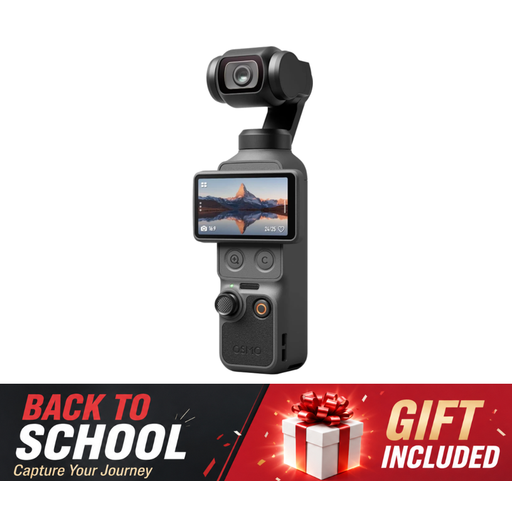 No image available
The product name mentions photography and video. Take a test shot to check whether the camera suits the framing you want for your bag and fabric details.
The product name lists a 1-inch CMOS sensor, 4K/240fps video, 2× lossless zoom, 107 GB of built-in storage and a 2-inch rotating screen.
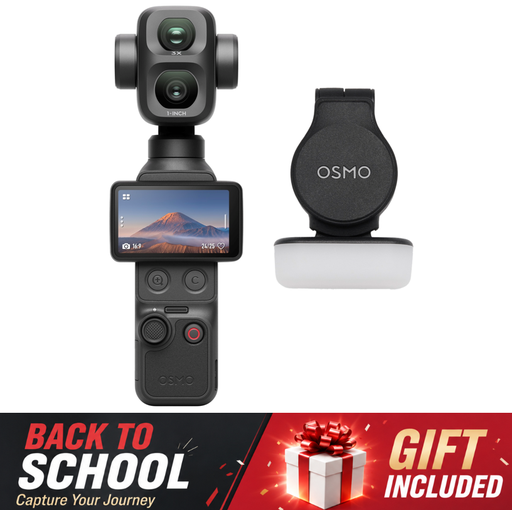 No image available
The product name describes a camera for photography. Try it with your own subject to see whether the framing and close-ups meet your needs.
The product name lists a 1-inch CMOS sensor and 4K/240fps video.
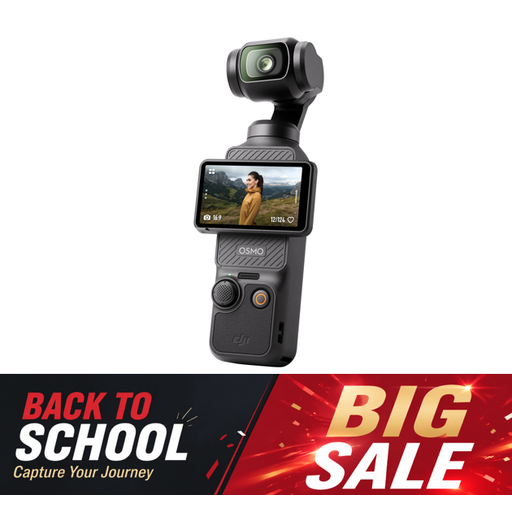 No image available
The product name mentions photography and video. Take a test shot of your bag to see whether the camera suits the way you want to work.
The product name lists a 1-inch CMOS sensor, 4K/120fps video, stabilisation and a 2-inch rotating touchscreen.
 No image available
According to the product description, the kit includes a 16–50mm lens. Check whether it’s suitable for both overview shots and the details you want to capture.
The description lists an APS-C sensor, E mount and a Product Showcase setting. It also says that an adapter or charger and an SD card aren’t included.
Not necessarily. Start with your current smartphone if it takes overview shots with enough detail. RTINGS.com emphasises the importance of presentation and lighting in product photography. Consider a mirrorless camera if you need more control over settings, consistent framing or close-ups.
Keep your set-up and lighting as consistent as possible, and check the white balance again when the light changes. Nikon explains that an earlier white balance setting may no longer be suitable when lighting conditions change.
Not for every overview shot. If you want to show seams or fabric texture in close-up, compare the magnification and working distance of a compatible lens. Canon specifies up to 1:2 for the RF 35mm F1.8 MACRO IS STM lens; Nikon specifies 1:1 for the Z MC 50mm f/2.8.
Use a fixed background and keep your camera or phone in the same position. Canon recommends a tripod for consistent composition; also check the white balance again if the window light changes.
For a distance purchase covered by consumer rules, you’ll generally have 14 days from delivery to change your mind. The ACM says there’s no fixed two-year period for the statutory guarantee: what matters is what you can reasonably expect from the product. Consumer protection doesn’t automatically apply to a contract used mainly for business, so check in what capacity you’re buying.